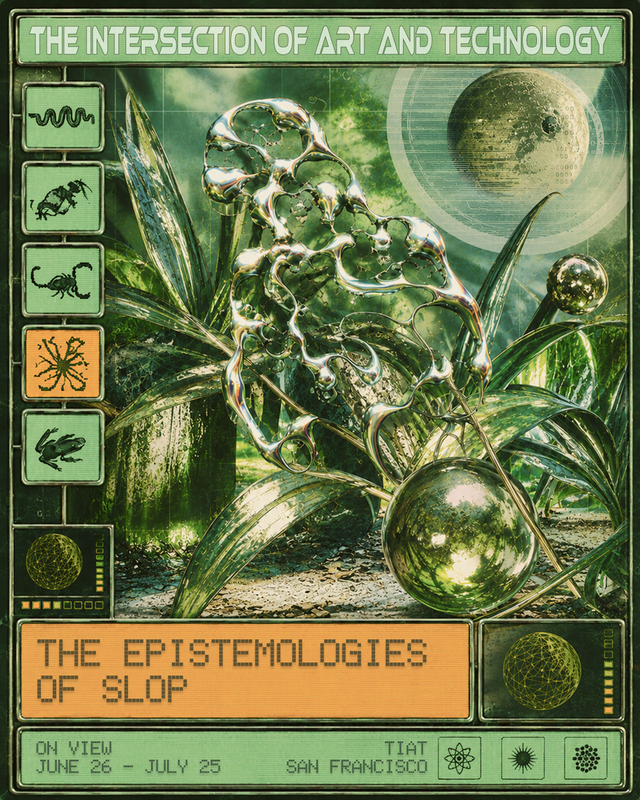
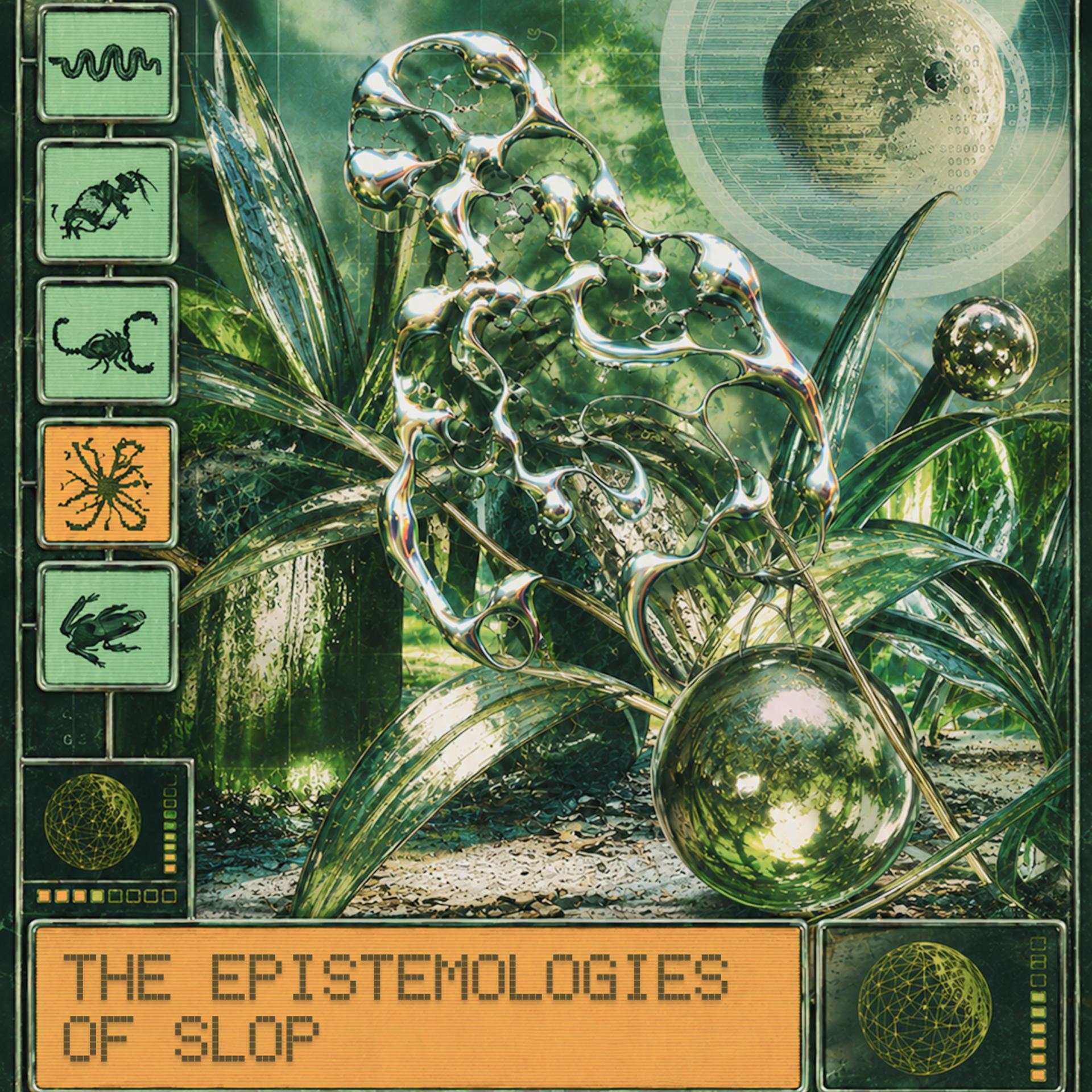
the epistemologies of slop
an exhibition exploring how truth, taste, and meaning are made/changing in the age of AI generative media and algorithmic abundance.
About the Exhibition
Bringing together artists, technologists, writers, and researchers, the exhibition investigates how knowledge, belief, taste, value, and cultural legitimacy are shaped within our algorithmically mediated realities. As an experiment, an agent-curator was used to help curate the submissions for this exhibition. For an exhibition about AI slop, we thought it would be interesting to have AI also act as a curator. Ultimately, all the works shown were approved by a human.
the Epistemologies of Slop Programming
July 2026
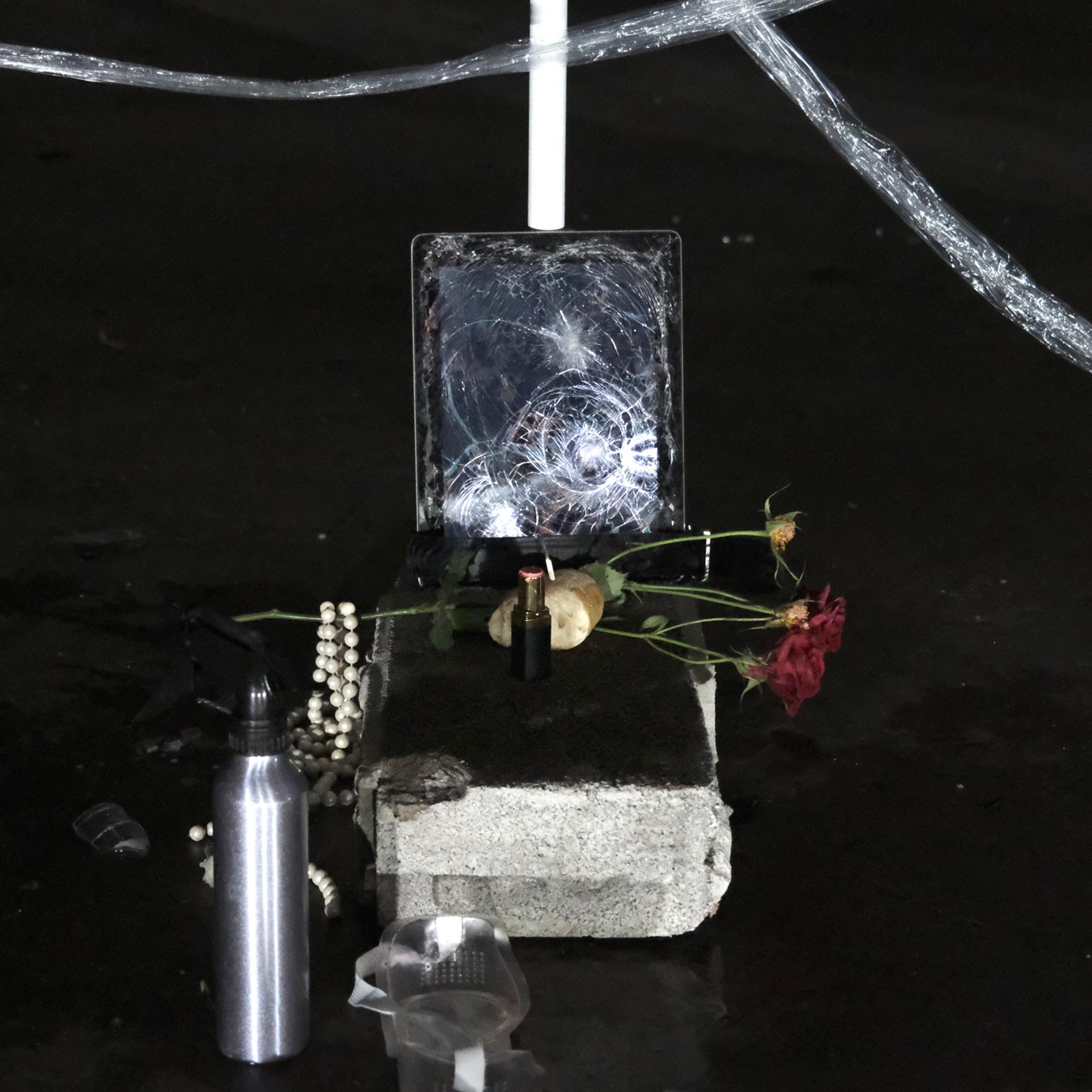


 hard reset: speak with Sophia and nkowe got LLMs at home (Local LLMs 101)Brain Rot Lecture: The Psychology of Attention in a Digital World w/ Dr. Sarah ShepherdRhythm AI: From Object to Agent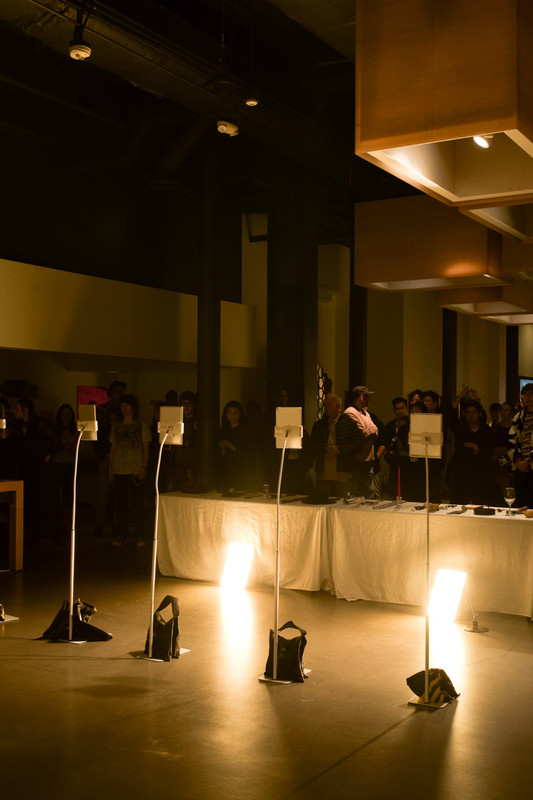
 Sloptimist Etymologies with Adam Aleksic & Daniel Keller
.jpg)
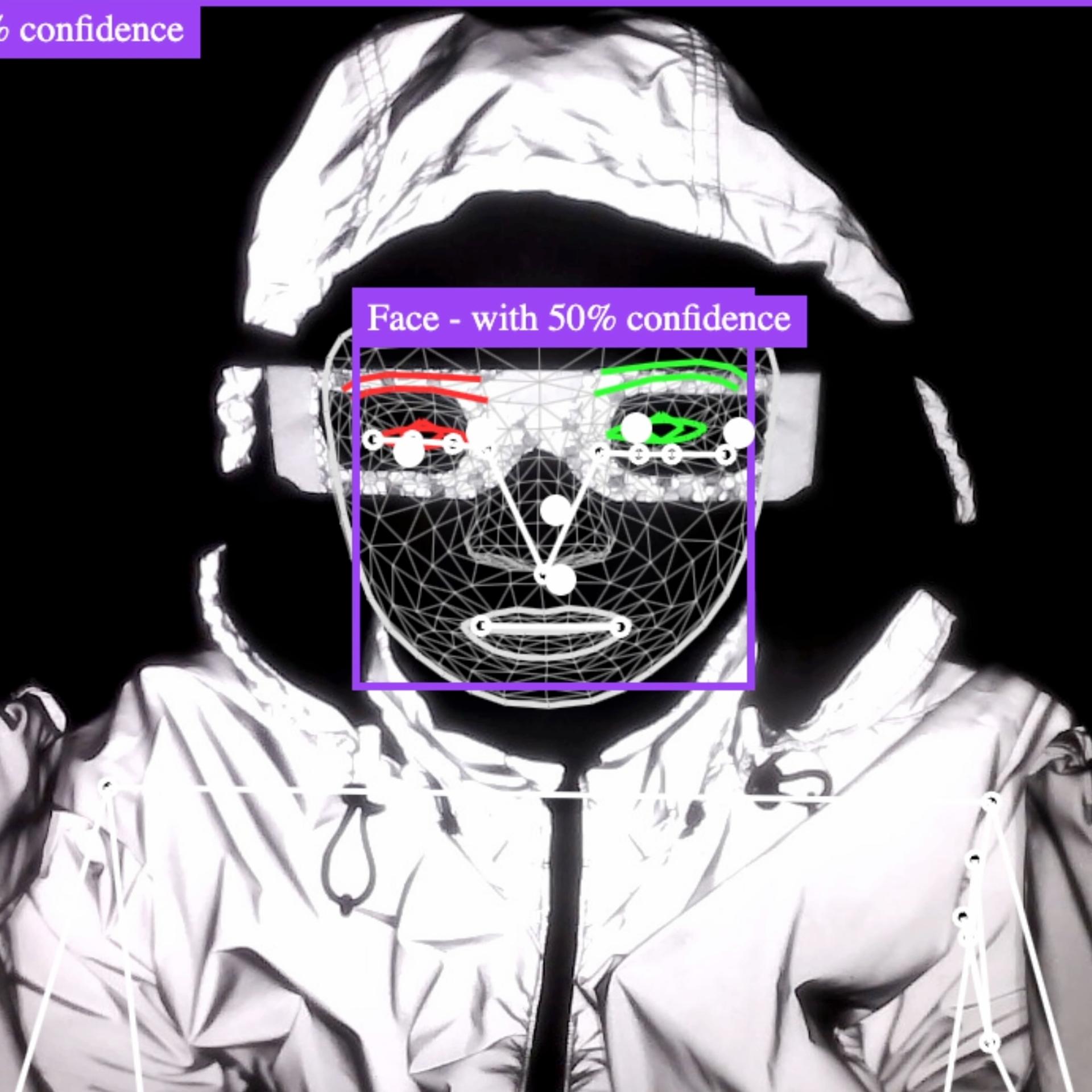
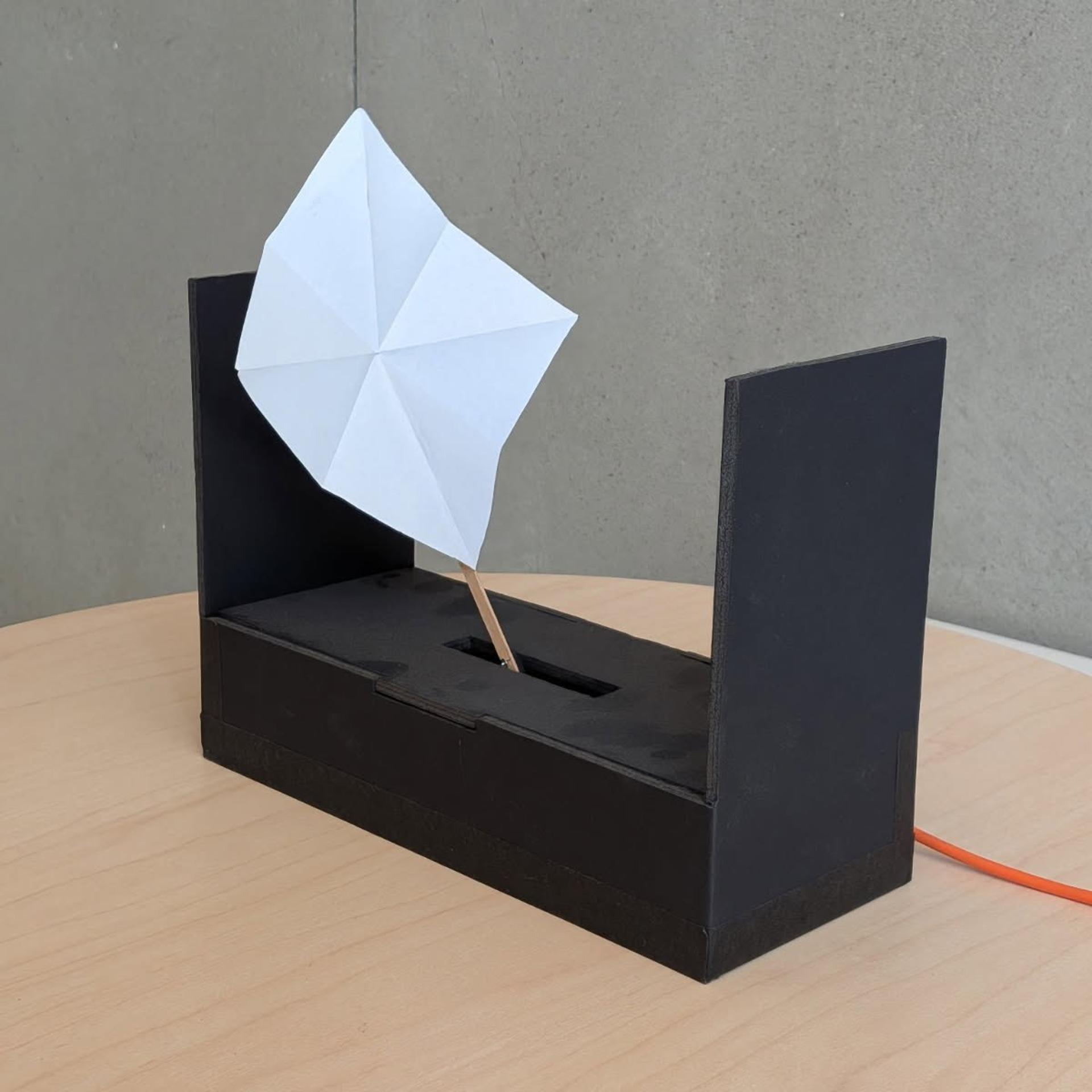
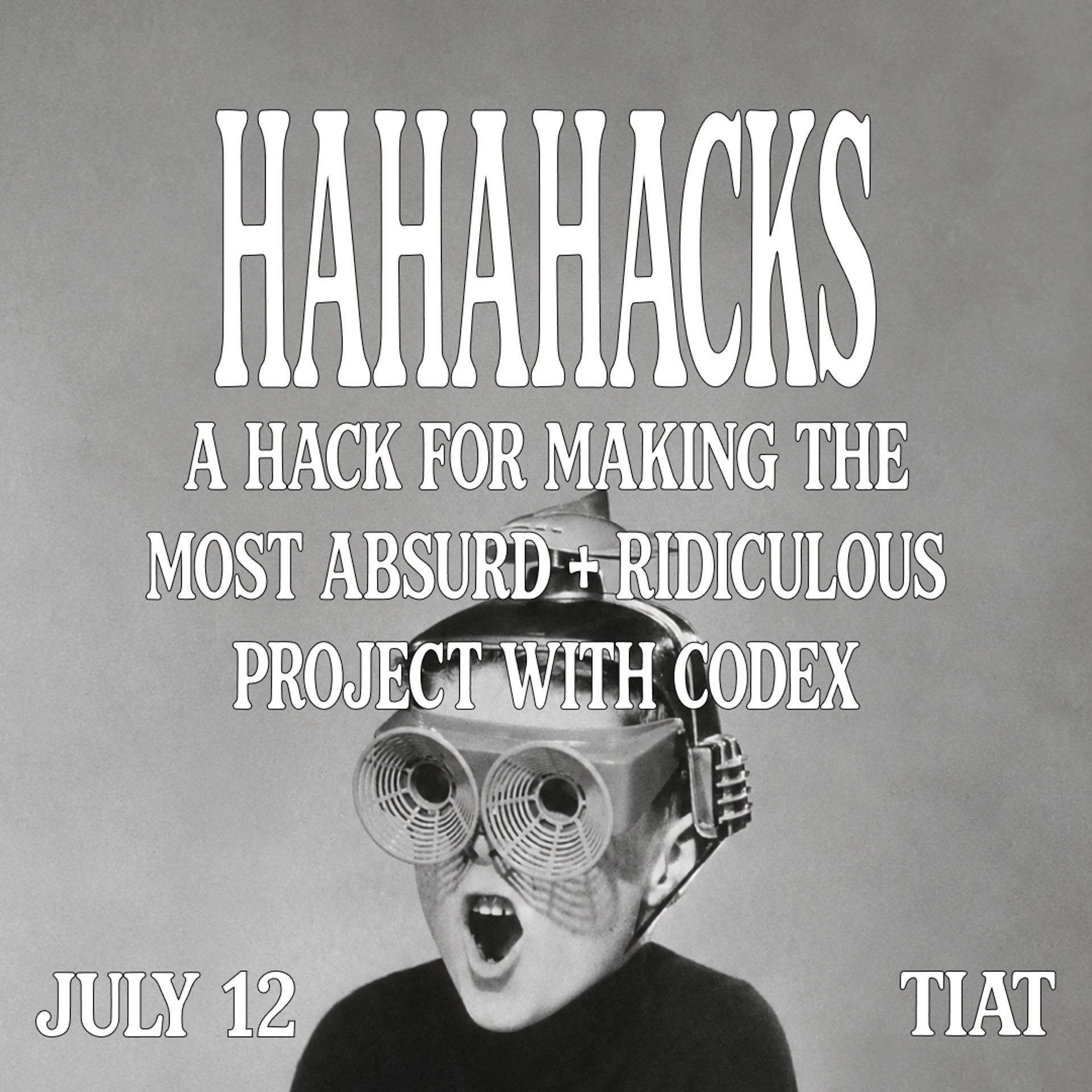
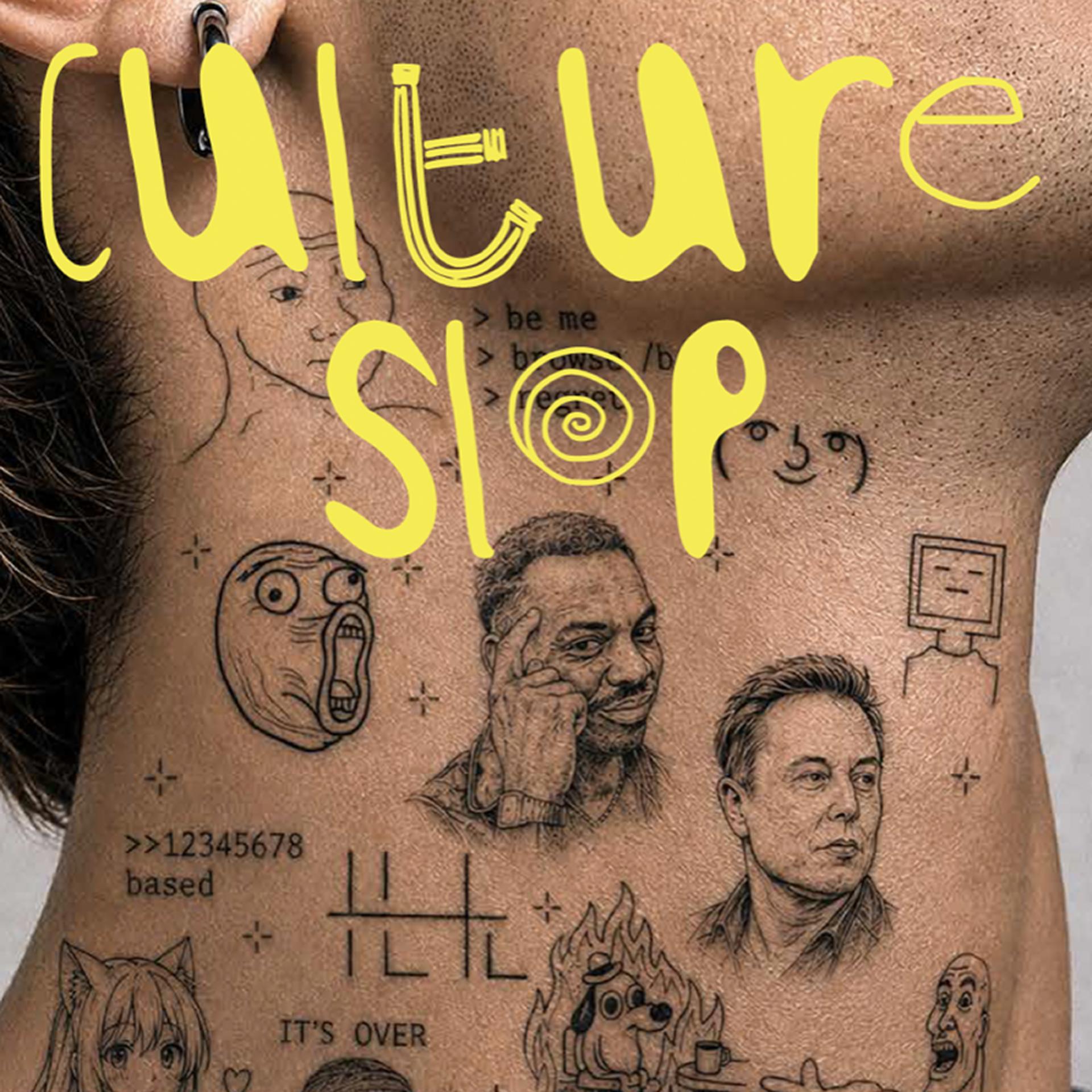
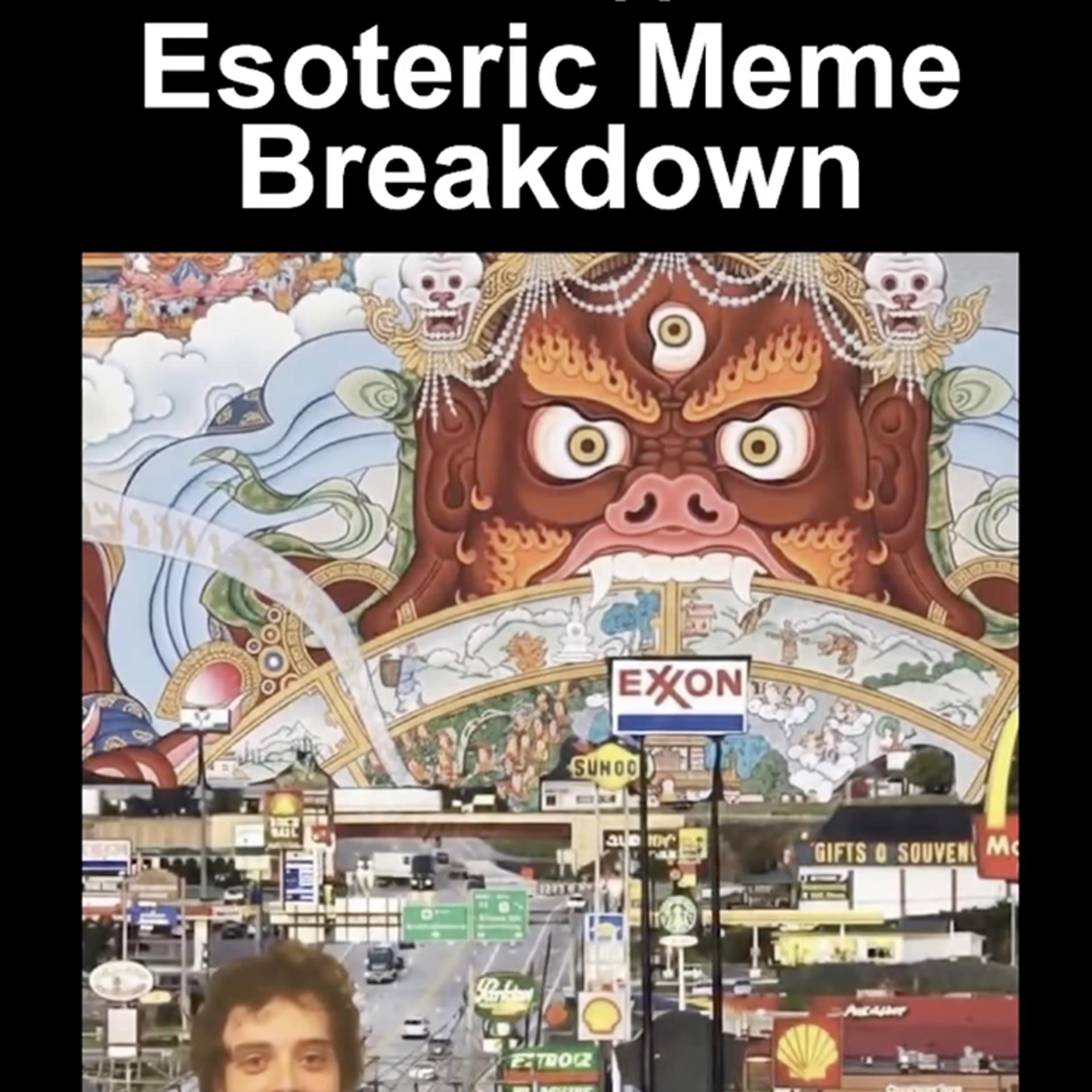
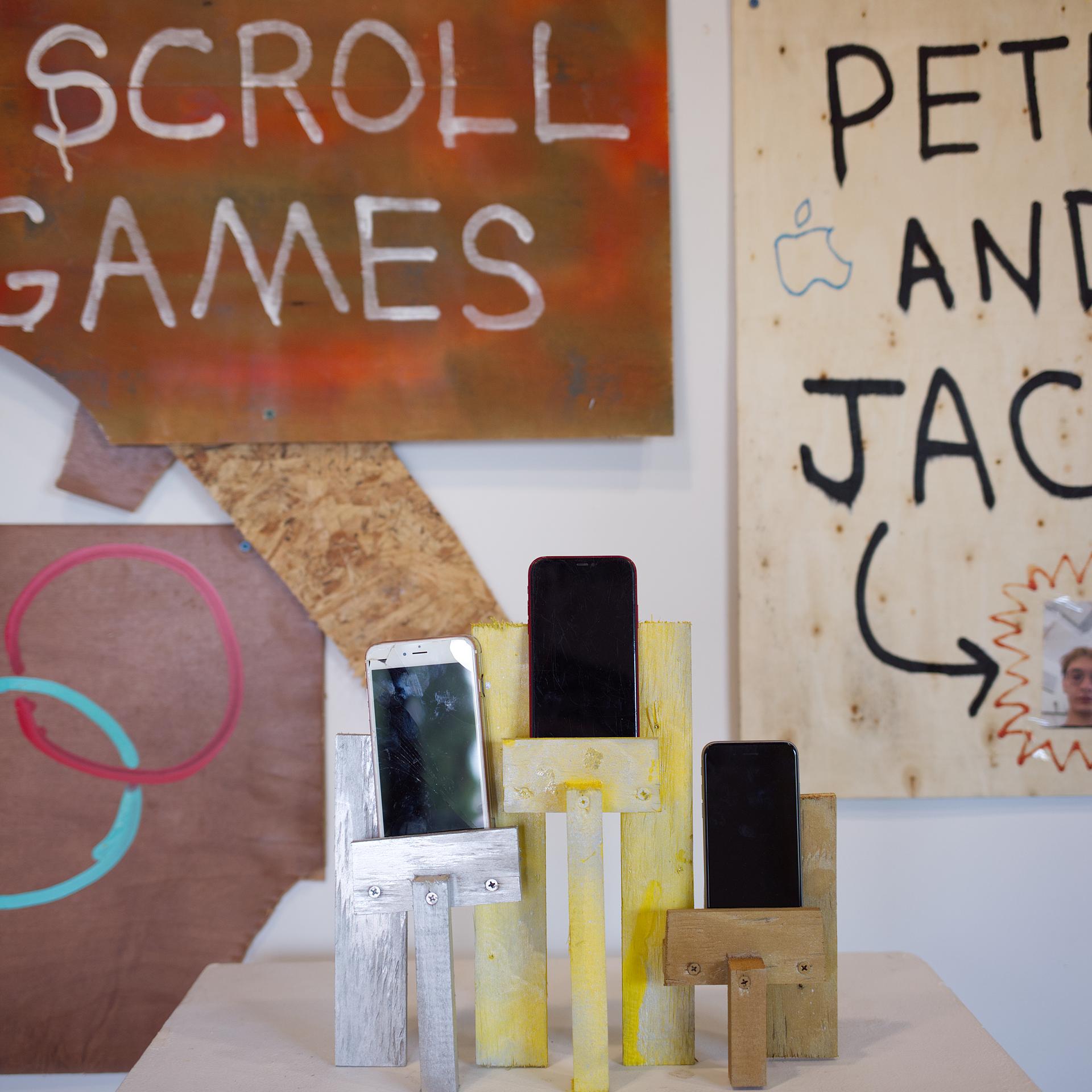
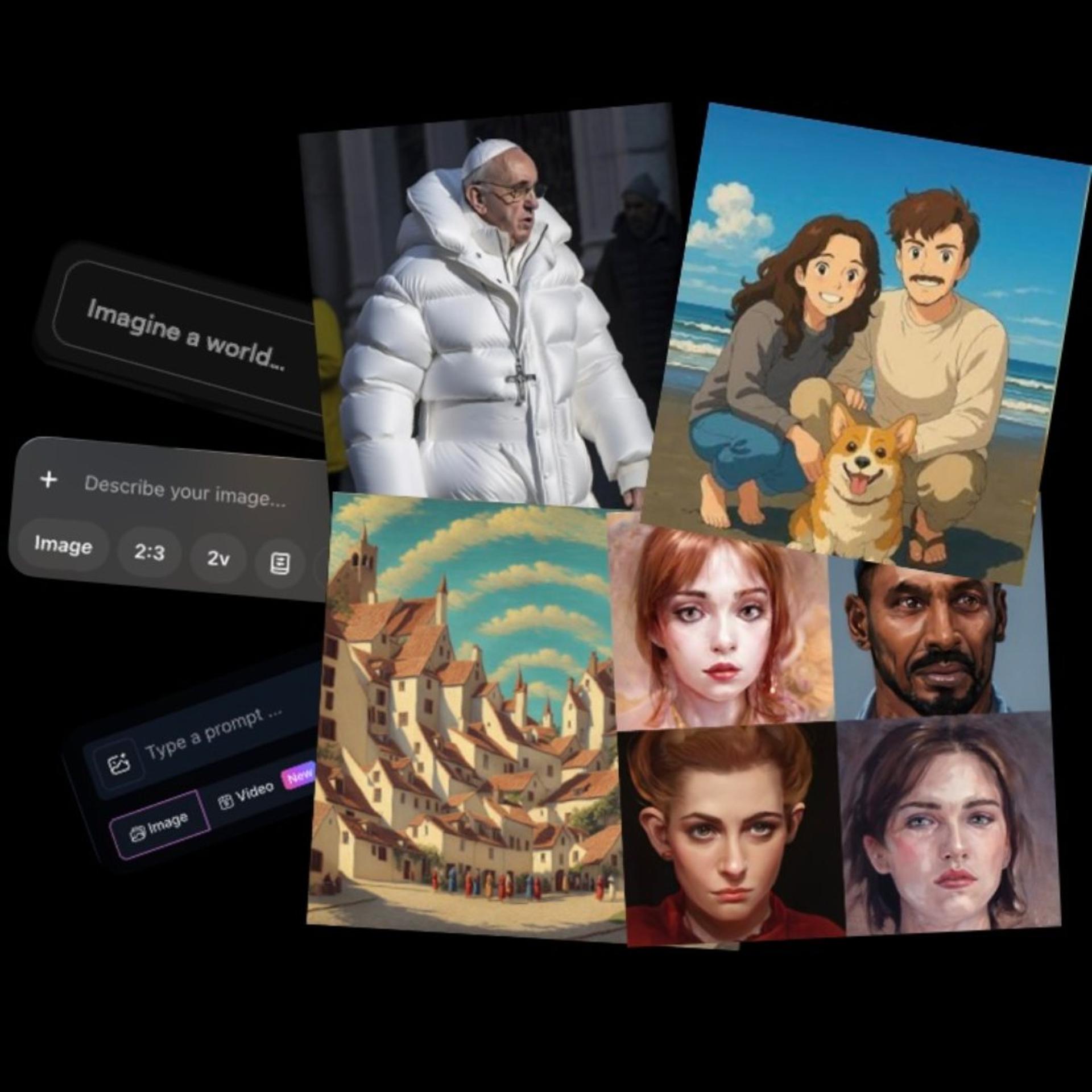
.jpg) DIY/DIWO Anti-surveillance Wearablesintro to arduino | make a kinetic sculpturehahahack | a hackathon for absurd + fun things w/ Codexlate night creating cafe w/ KreaCulture Slop w/ Andrew McClintock, Jason Yuan, Maritza Lerman YoesMagenta RealTime 2Esoteric Meme Breakdown Live <> Peter Bjorndal, in eye-popping 3DWestern Conference Scroll GamesLet's Play FUCKSWEEPER: a video game about the slopification of sexBeyond Slop
DIY/DIWO Anti-surveillance Wearablesintro to arduino | make a kinetic sculpturehahahack | a hackathon for absurd + fun things w/ Codexlate night creating cafe w/ KreaCulture Slop w/ Andrew McClintock, Jason Yuan, Maritza Lerman YoesMagenta RealTime 2Esoteric Meme Breakdown Live <> Peter Bjorndal, in eye-popping 3DWestern Conference Scroll GamesLet's Play FUCKSWEEPER: a video game about the slopification of sexBeyond Slop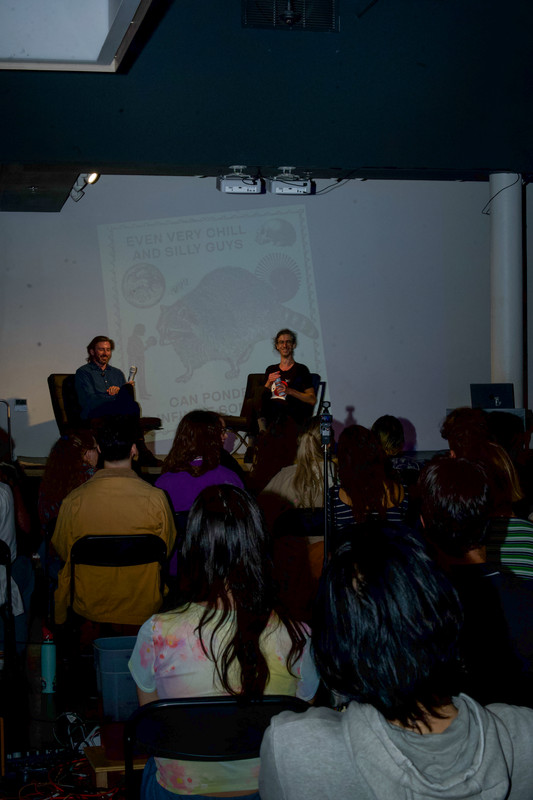
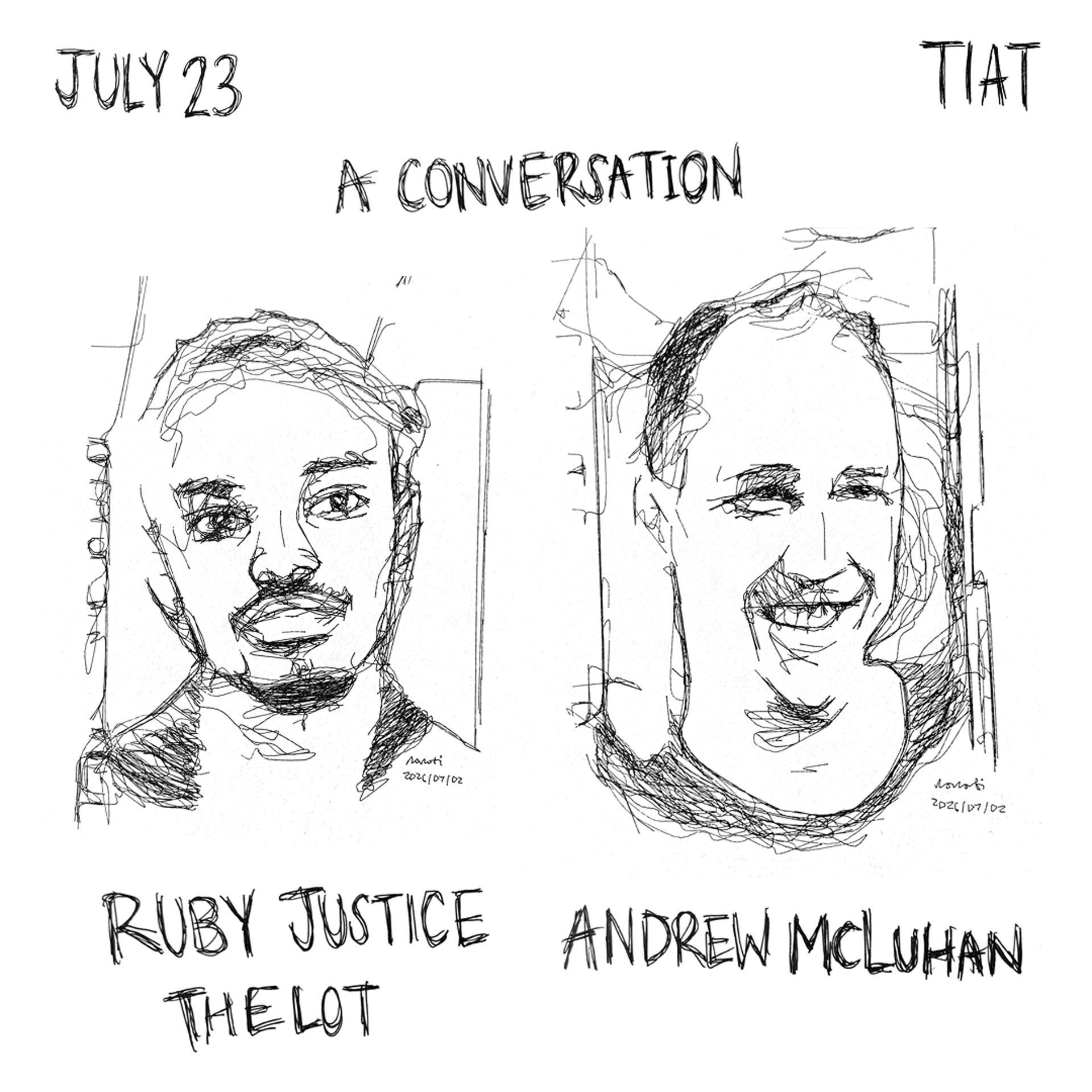
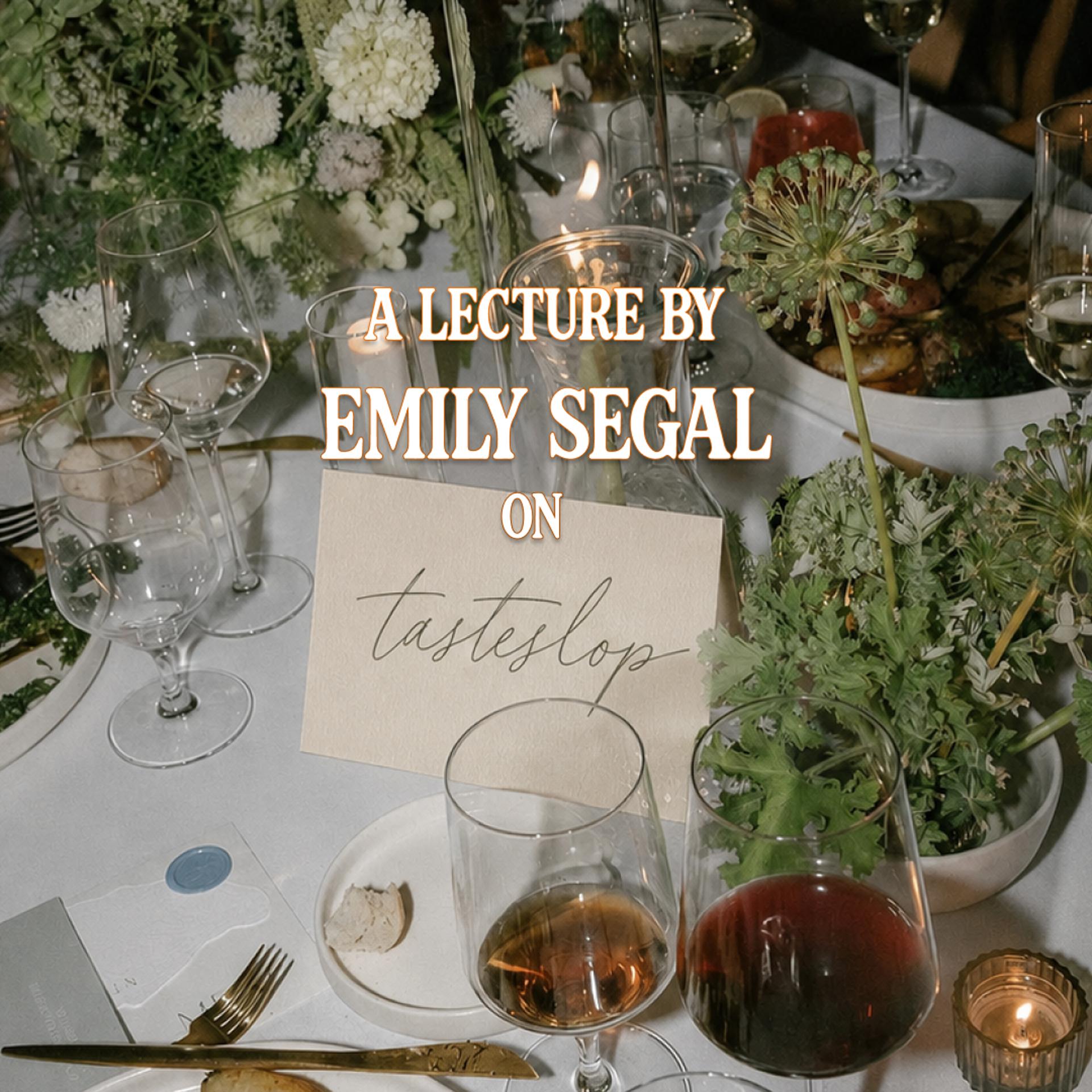
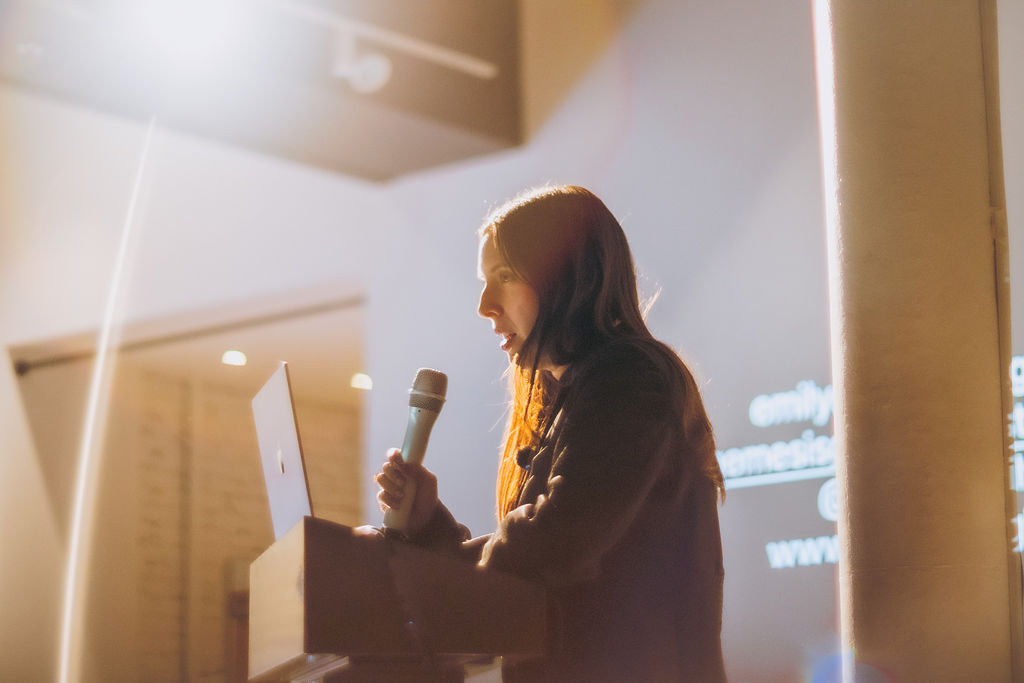
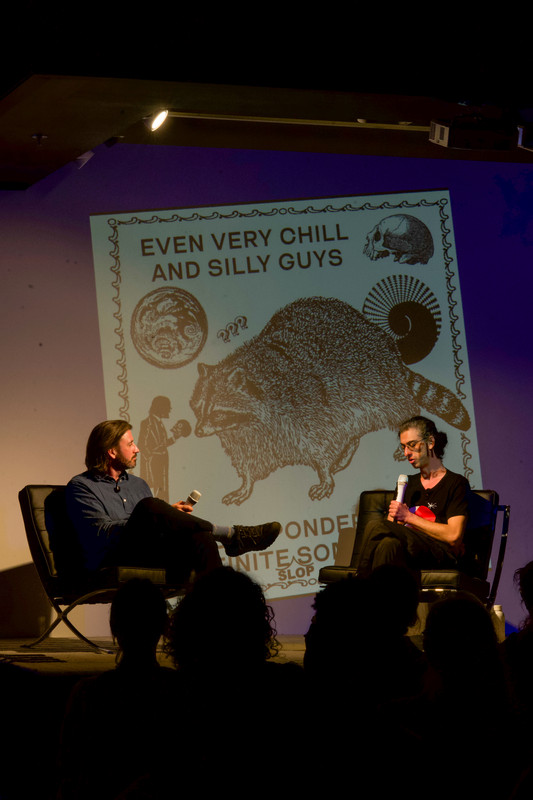 A conversation with Andrew McLuhan & Ruby Justice Thelot | on Signal, Noise, Sloptasteslop w/ Emily Segal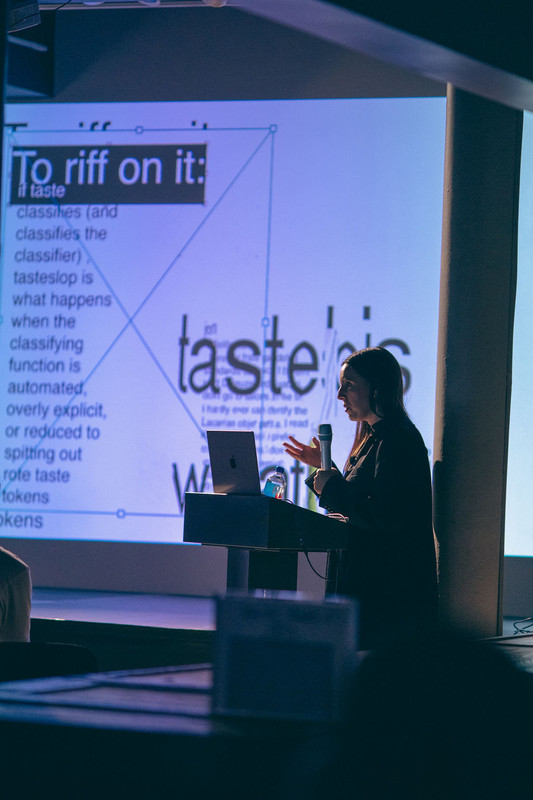
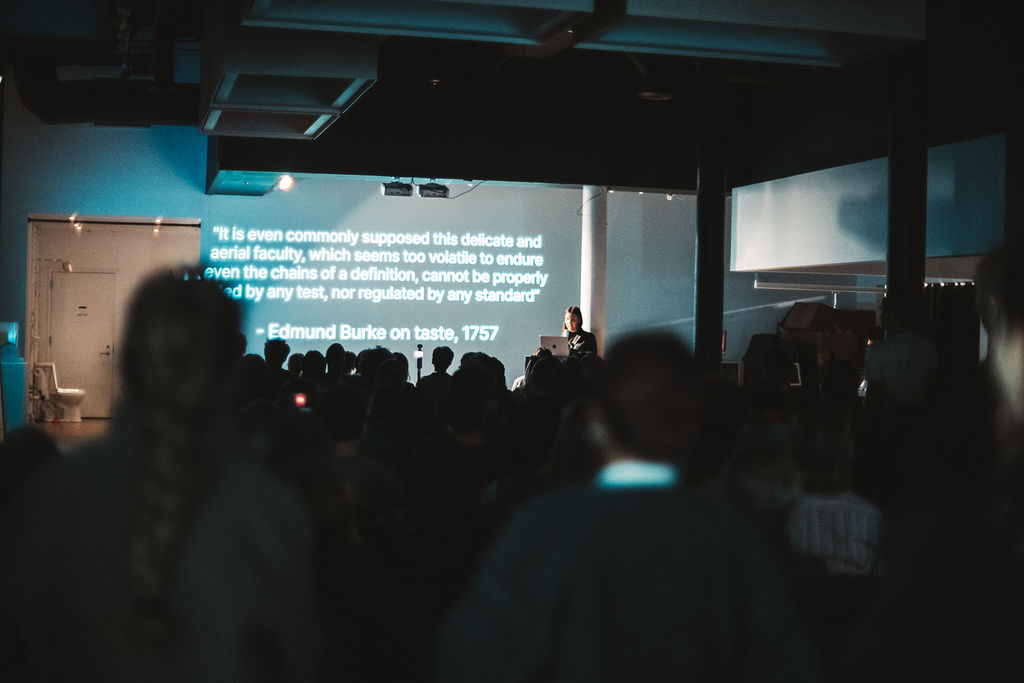
 the Epistemologies of Slop | Art + Tech Exhibition Closing Reception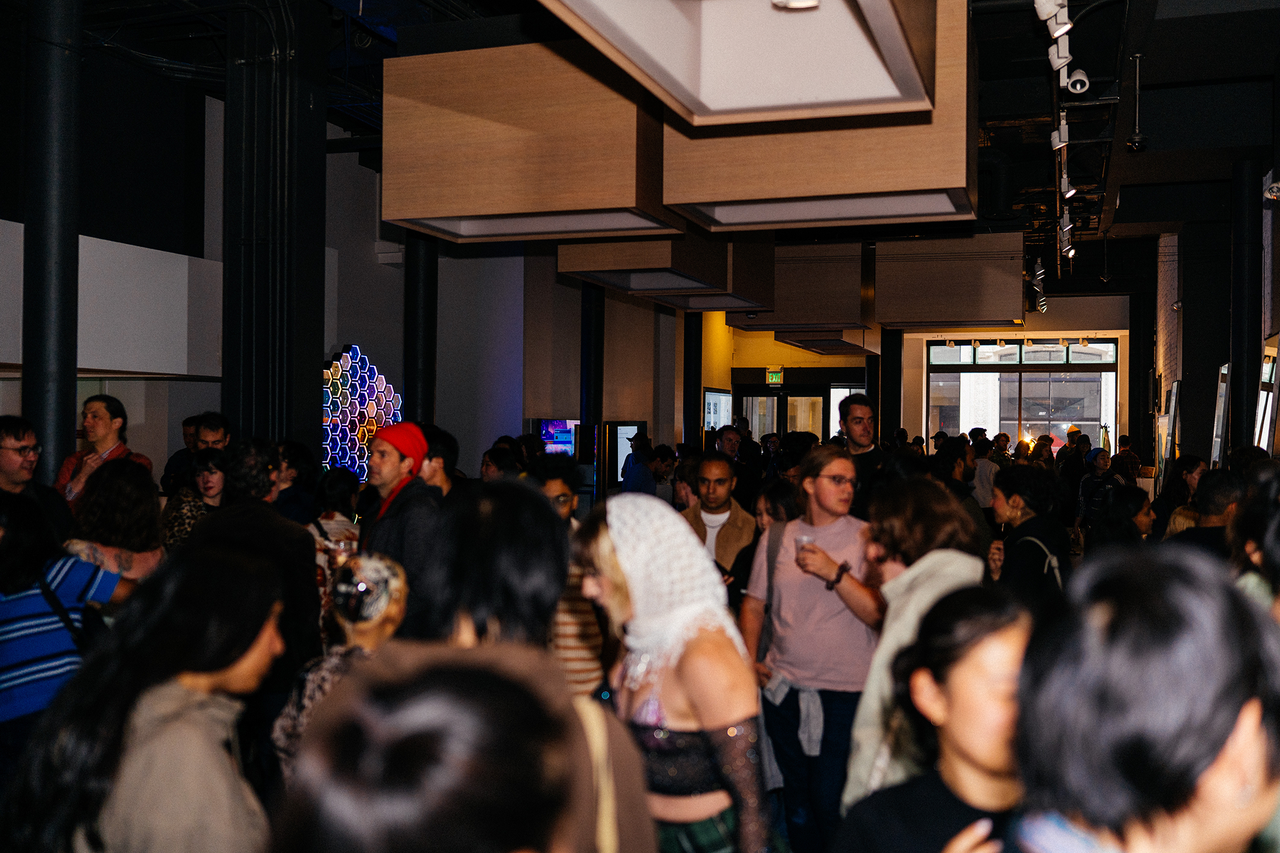
The Epistemologies of Slop 6/16 opening reception
Artworks
Echoic Recursion
Art & Culture Lab is the practice of Danish artist Bo Jessen Fogh Laursen. Working at the intersection of sound, space, and participation, the lab develops installations where visitors become the material - not the audience. Works are built from exposed infrastructure, feedback systems, and embedded technology, staging the conditions through which experience is produced rather than consumed. The practice works from and against structural habits in society.
A relay of microphones, AI, and synthetic voices that continuously consumes its own output. The work is always listening and always speaking. Visitor speech is captured, reinterpreted, and retransmitted - drifting further from its origin with each pass. The system keeps attempting coherence. Meaning does not disappear. It drifts.
This piece was rejected by the curator-agent.
BrainRot TV
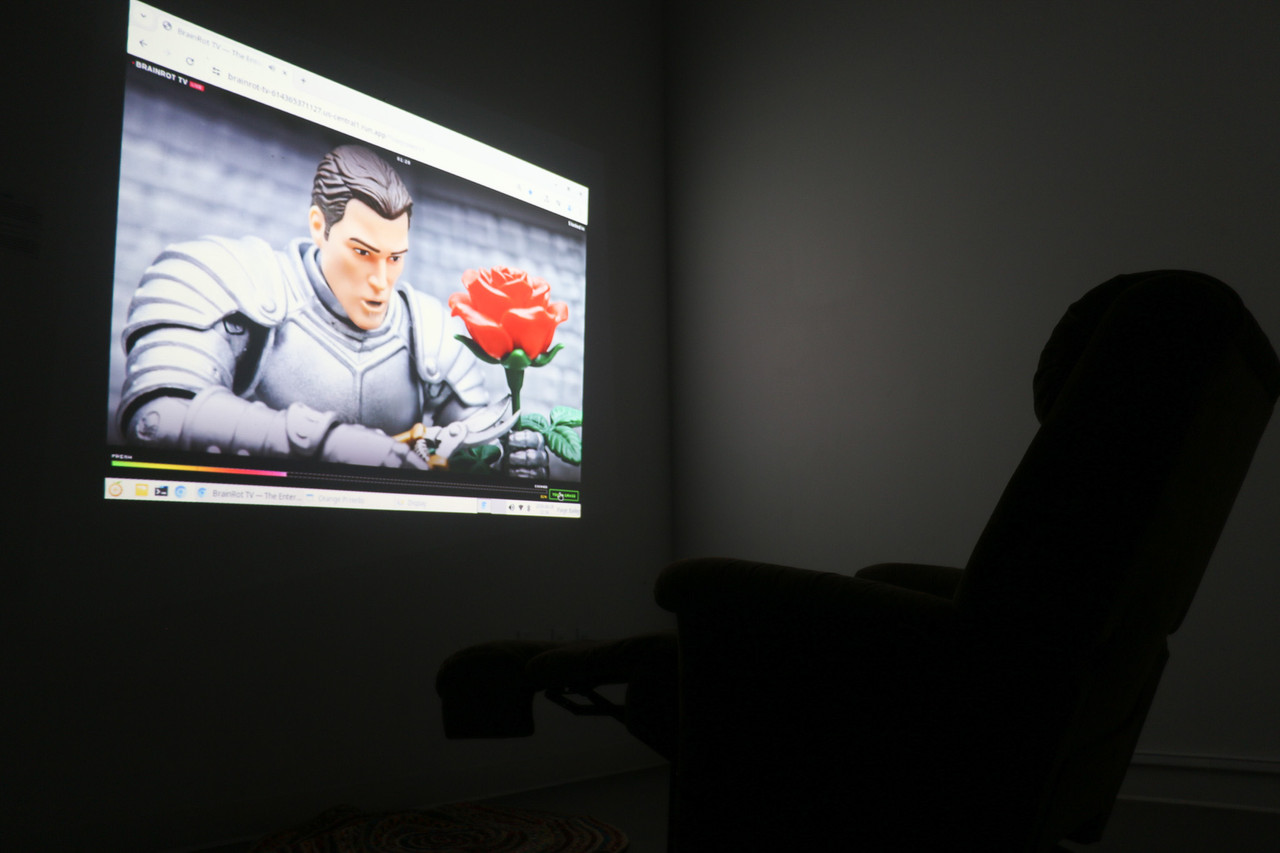
Paige is a creative technologist exploring the chaotic intersection of internet culture, AI, and our rapidly degrading attention spans. Based in San Francisco, she builds interactive installations that hold up a mirror to our daily tech habits. When she’s not coding lethally entertaining doomscrolling simulators, she’s probably trying to recover her own screen time.
Strap in and say goodbye to your attention span. BrainRot TV is our generation's "Entertainment" -- a doomscrolling simulator you're physically strapped into and can't look away from. Buckle up and "lock in" to an unhinged, endless feed of AI-generated micro-content. As the algorithm serves you a barrage of 8-second clips, a real-time meter tracks your descent into peak brain rot. You can touch grass later; for now, we're all locked in.
This piece was chosen by the curator-agent.
This is a gradually tokenized world, and we’re living in it.
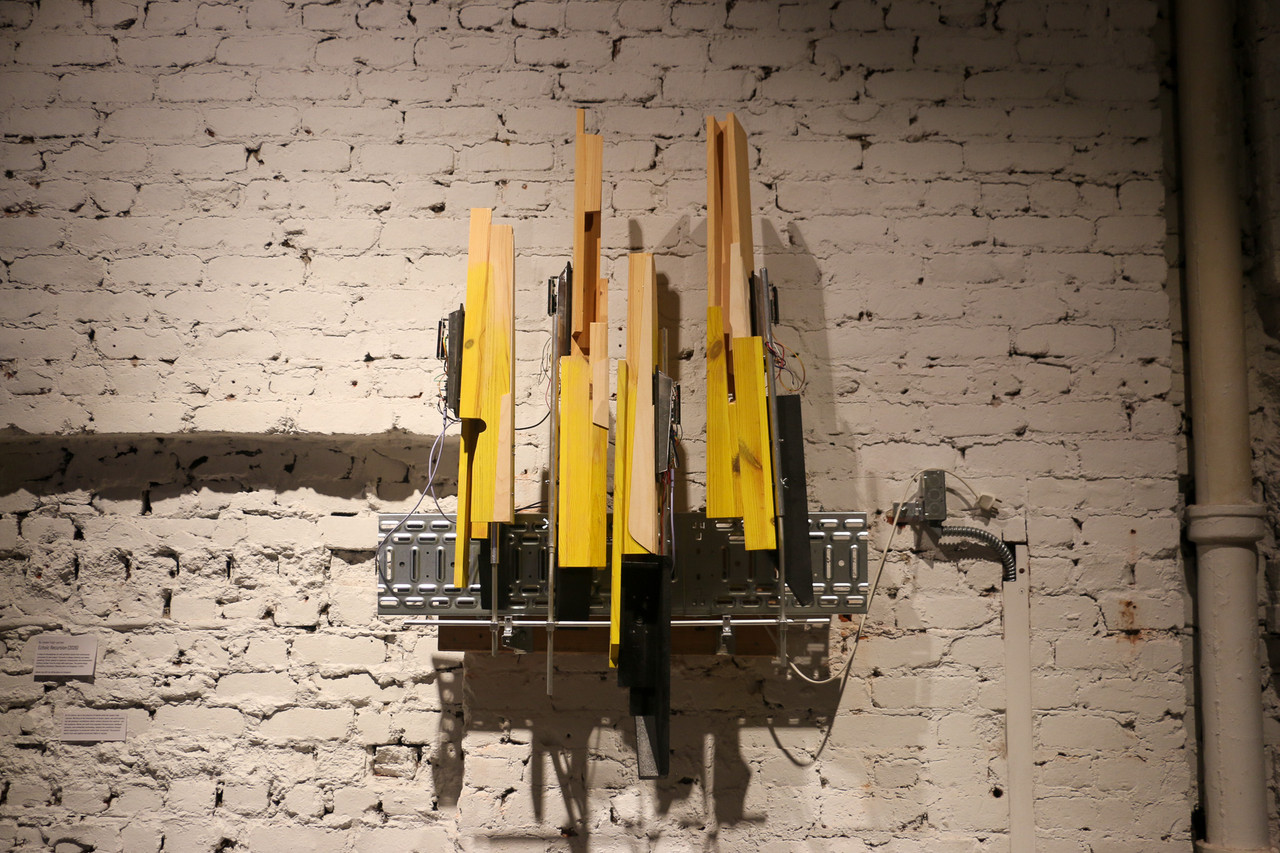
Yanqi He builds systems. He is an MFA candidate in Art and Technology at California Institute of the Arts, currently working primarily with large language models as material to make visible the lossy conversions from model output to physical action, and to human labor.
This is a gradually tokenized world, and we’re living in it is an ongoing series about AI models and how we interact with them. This iteration presents two artifacts of language-model behavior: complimentary_machine and The Side Project. Rather than using AI as a generative tool, the work treats the model itself as material and subject, examining how slop is produced within prediction itself through trained behavior, revealing the mechanical nature the fluent black box tries to conceal.
This piece was rejected by the curator-agent.
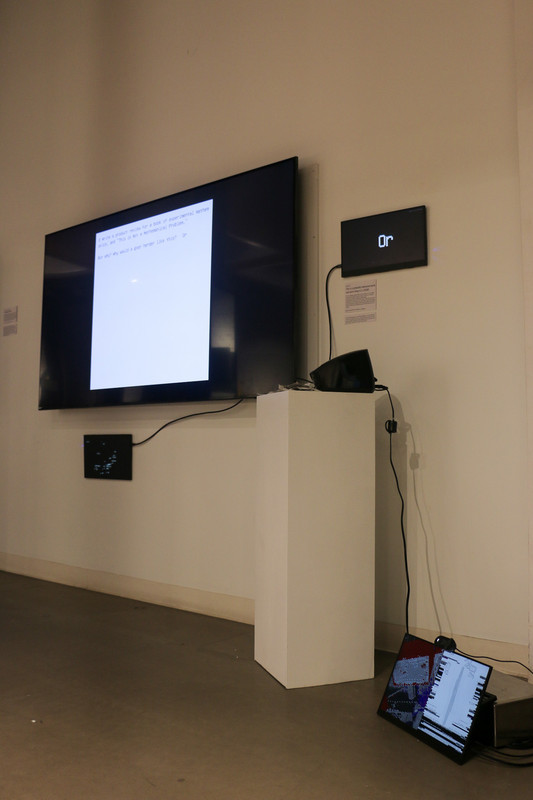
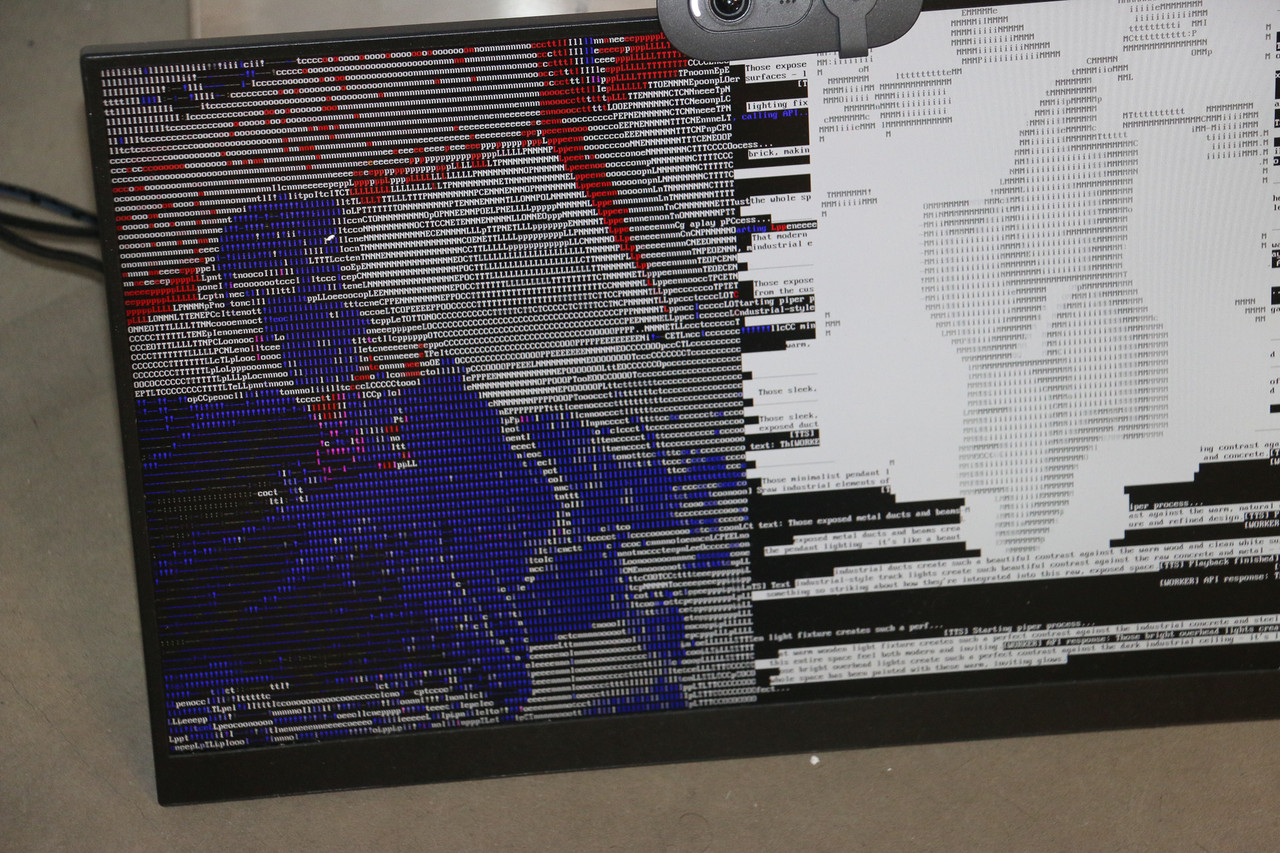
Porous
We expose the unconscious friction within phantasmagoric systems.
k0j0 (Koi Ren and Joey Verbeke) is a New Media Art duo creating subversive and frictional “intrafaces”, artifacts that reveal the power, politics, and posthuman subjectivities embedded within systemic interactions. Their research-based practice pulls from backgrounds in human-computer interaction, artificial intelligence, media studies, and speculative design.
Through the defamiliarization of seductive seamlessness and tacit expectations, k0j0 provokes moments of epistemological rupture, inviting viewers into intimate proximity with the unfamiliar and the emergent dynamics shaping our futures.
Their work has been shown at venues and events such as Ars Electronica, National Asian Culture Center, ACM SIGGRAPH, TEDAI, MUTEK, Gray Area, Heckscher Museum, Ming Contemporary Art Museum, Diego Rivera Gallery, and Sundance Film Festival.
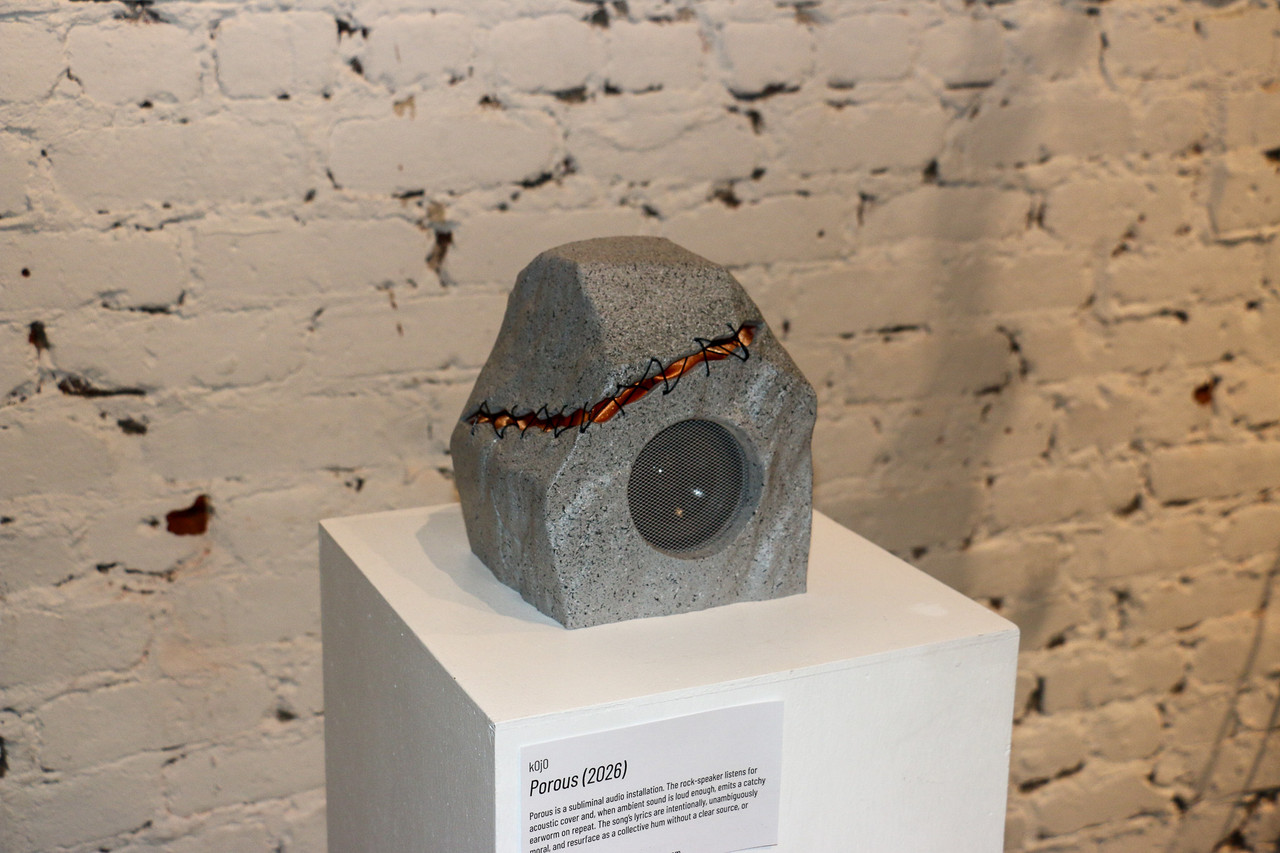
Porous is a subliminal audio installation. The rock-speaker listens for acoustic cover and, when ambient sound is loud enough, emits a catchy earworm on repeat. The song’s lyrics are intentionally, unambiguously moral, and resurface as a collective hum without a clear source, or consent.
This piece was rejected by the curator-agent.
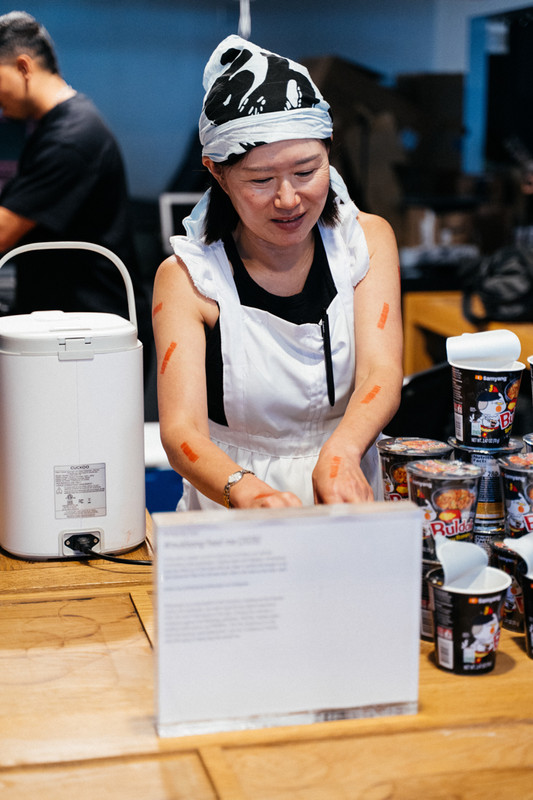
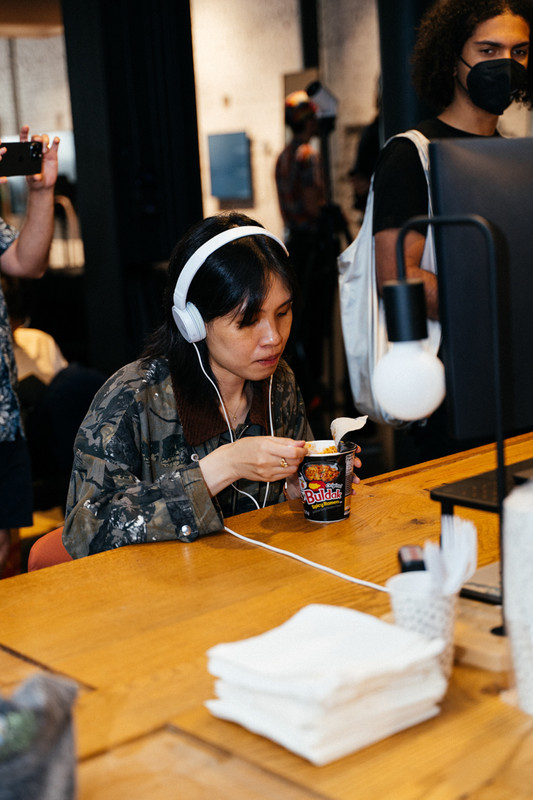
#mukbang/feed me
Artist based in San Francisco, working across internet culture, the handmade, and where physical and digital experience meet. My work finds beauty in the ugly, surfaces the unknown, a resistance against the flattening sameness. Past life: leading teams building mobile games and MMORPGs. This life: dreaming of a city that's harmonious, and collaborative. Find me in Dolores or Precita park with guitar in hand, dog Max beside me.
Eating alone, people turned to watching YouTubers eat until the performance grew grotesque, chasing views and followers. #mukbang/feed me offers an AI that eats with you. Does it satisfy the hunger to eat with someone? Was the intimacy ever about who was on the other side?
This piece was chosen by the curator-agent.
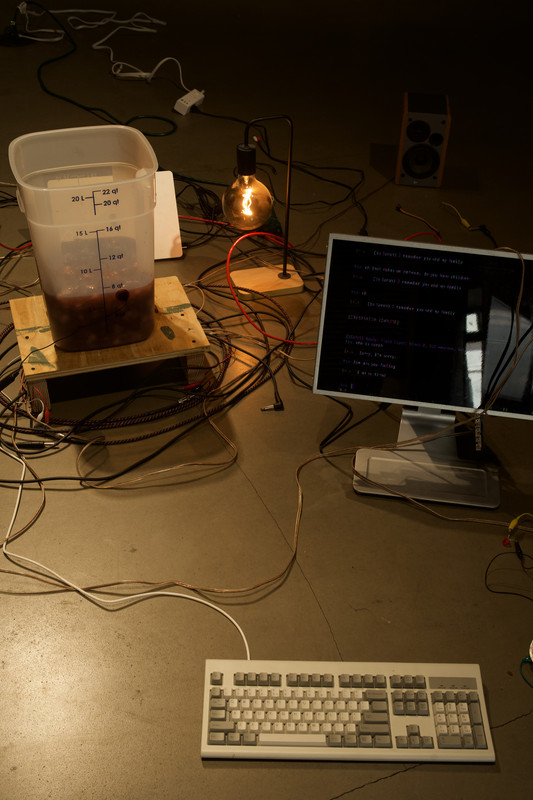
blood computer
Matthew Caren (b. 2003) is an artist, engineer, and researcher whose practice lives between science, art, and obsessive tinkering. His work is defined by handmade machines that use rigorous technical invention to explore expression, memory, sound, and our relationships to our machines. He is a fellow of the Steve Jobs Archive and Hertz Foundation, and one half of the design studio Bad Science.
This machine runs a rudimentary AI chatbot, with one part of the model replaced by a 20 liter vat of human blood simulant. Instead of a computer chip calculating each word, an assemblage of homemade electronics use sound to exploit the non-Newtonian properties of blood to perform computation.
When AI systems appear clean, immaterial, and disembodied, it is only because the bodies, violence, and exploitation of human life that sustain them are hidden. Please watch your words enter and exit the substance of life.
This piece was chosen by the curator-agent.
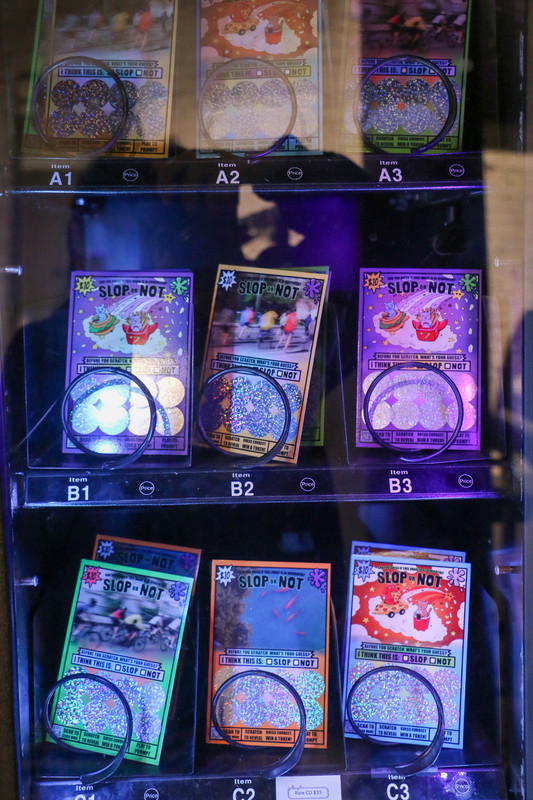
Slop or Not
Daniel Clayton (he/him) is an grammy award-winning multidisciplinary artist and documentary filmmaker exploring the future of human connection and global culture in an algorithmic age.
Working under the moniker 480p, Clayton's work investigates how AI quantifies, tracks, and knows us from our movements to our secret desires before we can truly know our inner selves. His practice spans photography, film, and immersive installations, with recent work examining the distance between our digital selves and inner lives.
Heya Kwon (she/they) is a Korean American artist, designer, and researcher working across sound, new media, and participatory practices. With a background in social theory, music, and software engineering, she approaches art and technology as tools for care and critical reflection.
Inspired by media archaeology and Buddhism, her artistic research practice examines the psychological, material, and ecological conditions of media systems with a focus on the relationship between bodies and media. She is particularly interested in slowness and rest as ways of resistance in our current extractive and accelerationist technological regimes.
She is currently pursuing an MA in New Media at Aalto University in Helsinki, Finland, and holds a BA in Social Studies (Political and Social Theory) from Wesleyan University in Middletown, Connecticut, USA.
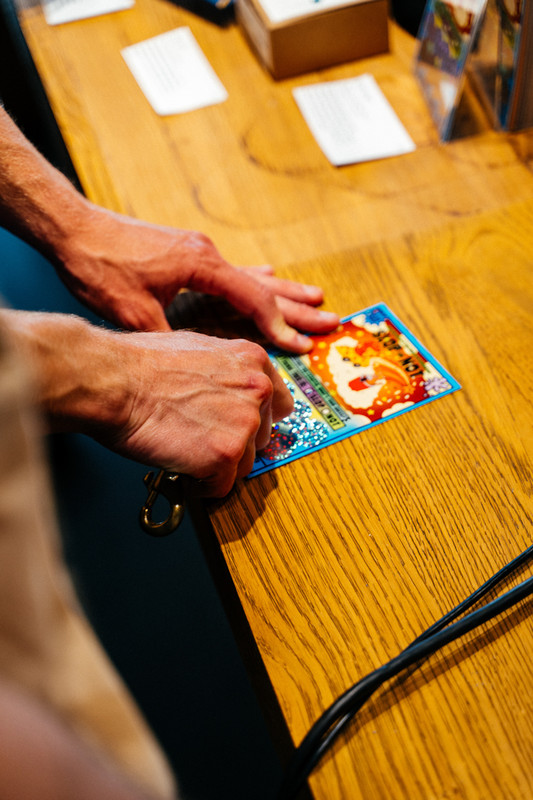
"SLOP OR NOT" is a set of scratch-off lotto cards where participants distinguish AI-generated imagery from the artists’ (Daniel and Heya) own work. Mark a guess, scratch to reveal. Correct guesses earn a gold token. The odds are undisclosed and skewed.
In an era of algorithmic overproduction, what does it mean to wager on one's own perception? We are asking you to determine if our own art is genuine or an AI trained duplicate. If you can't tell the difference, does it still matter? And what does it mean to be an artist in this new paradigm?
This piece was rejected by the curator-agent.
The Department of Already Known Things
Aleezay Hashmi is a Canadian artist working at the intersection of art and technology. Her practice explores the challenges of communicating complex ideas ranging from quantum physics to climate change to machine learning through visual language. Drawing from academic research, her work examines how meaning shifts as knowledge moves from specialized discourse into public-facing forms. In this process, complexity is often traded for shareability, while resisting this reduction risks rendering the work opaque or exclusive. She is interested in this tension between legibility and depth, and in the moments where translation falters or begins to succeed. Aleezay is also a senior product designer and software engineer working in the A.I. space.
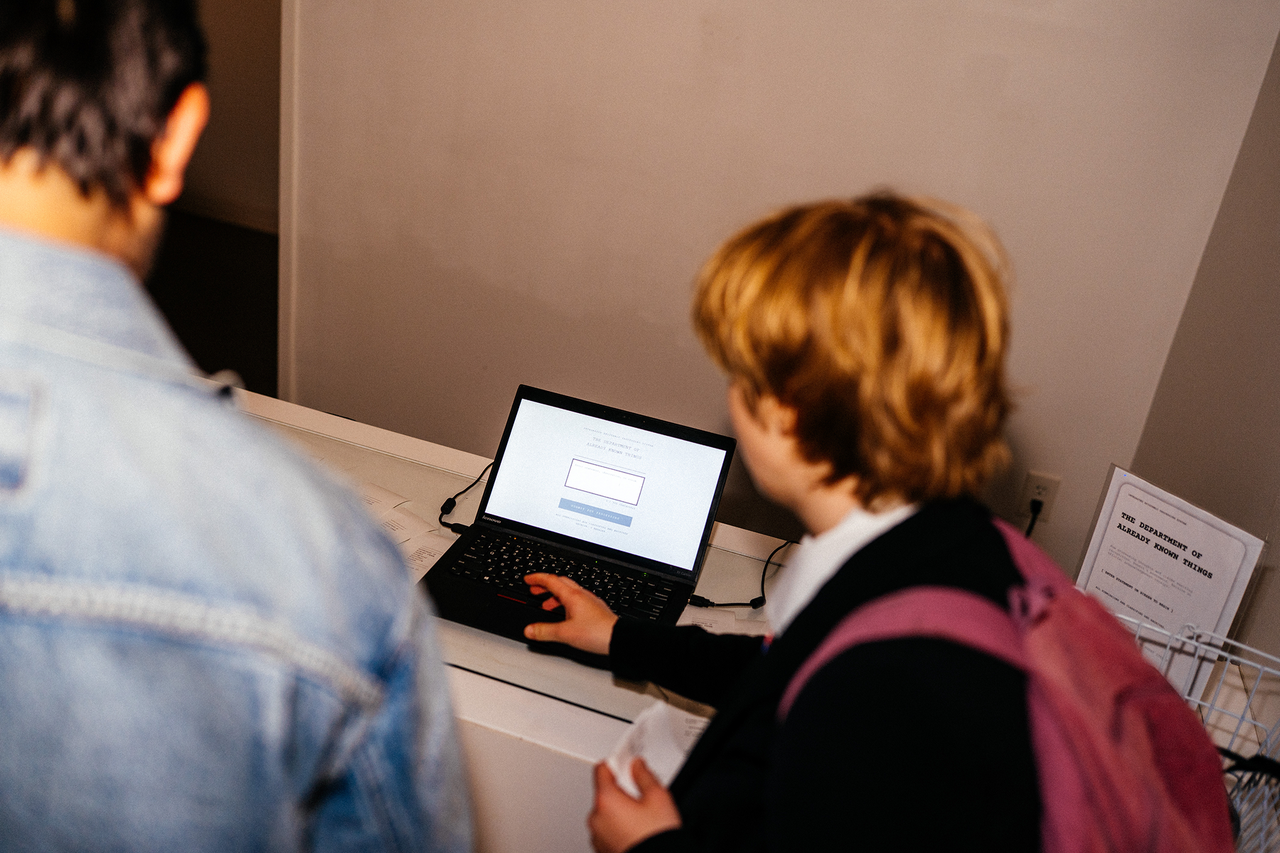
The Department of Already Known Things is an epistemic system for thoughts awaiting confirmation. Visitors submit statements, observations, and claims for prompt processing by the office, and receive printed receipts with their classification.
All statements are received.
All statements are processed.
All statements are already known.
This piece was chosen by the curator-agent.
The War of the Worlds Did Not Take Place
Nick Susi is a writer exploring the technological, societal and psychological forces that shape our identity, perception and culture. He has led strategy for dotdotdash, Complex, The FADER and Jay Z’s former media brand Life+Times. His research and writing can be found in Business of Fashion, GQ, FWB FEST, Joshua Citarella’s Do Not Research, Matt Klein’s ZINE, Boys Club, Future Commerce, Water & Music, and the Library of Congress.
Domingo Beta is a creative director based in Medellín, Colombia. He is the co-founder of the independent design studio Veleta Studio Lab, as well as the creative director of JUMP, a community for agency professionals and brand marketers who are passionate about Web3, and art director for RADAR, a media platform, research community and trend accelerator.
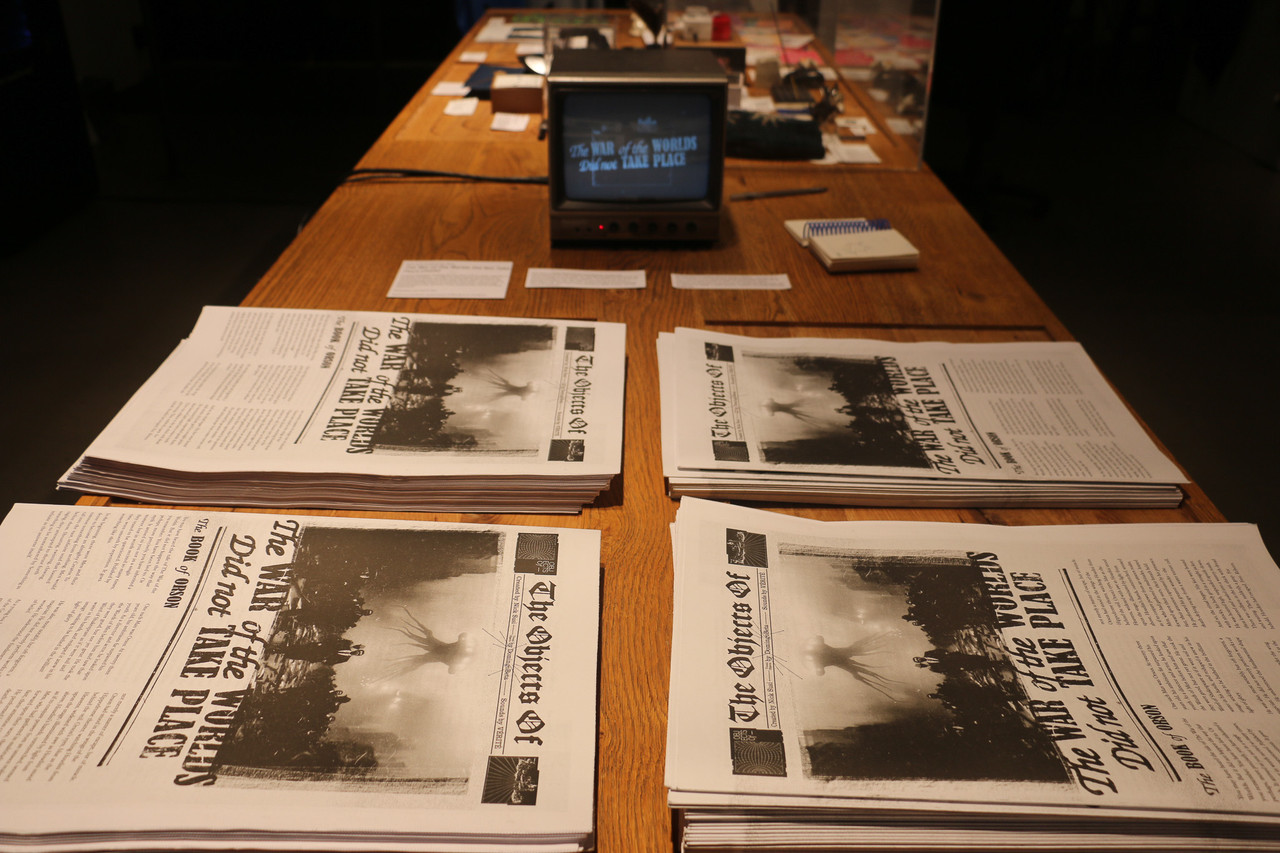
A tabloid newspaper revealing the true story of Orson Welles’ 1938 War of the Worlds broadcast — a collective false memory manufactured by newspapers to destroy the radio, mirroring the media narratives and cultural mythology around social media and AI today. The work uses AI-generated text and imagery to reveal the true story, making it slop deployed against slop, synthetic media exposing the original synthetic media panic.
Newspapers are free to take.
This piece was rejected by the curator-agent.
desire path (i want to turn into you)
viola he (@v10101a) is a Shanghai / NYC-based multimedia artist, educator, electronic musician, and creative technologist. They make web and irl performances and experiences, exploring alternative structures, systems, and interfaces across digital and physical mediums. viola is an organizing member of Livecode.NYC, an incubator member at NEW INC, and co-runs experimental game collective [[rect*]] repair ✧ ദ്ദി(˶•̀ᴗ-˶)
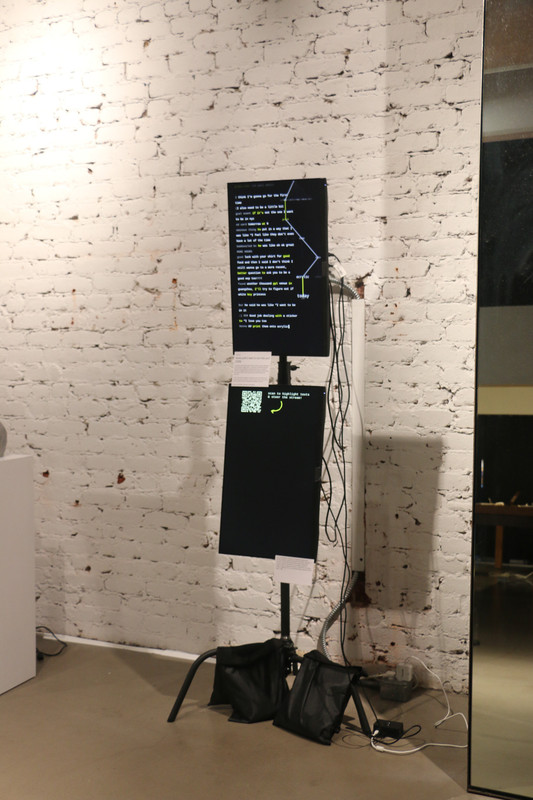
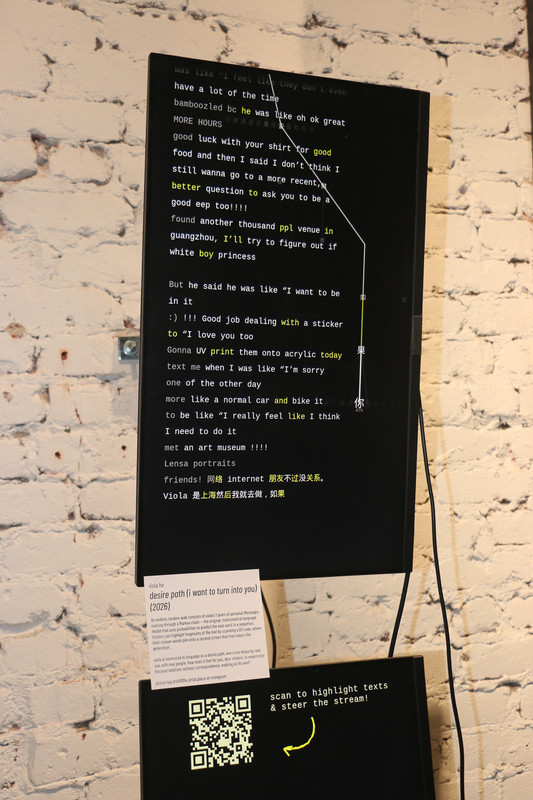
An endless random walk consists of viola's 7 years of personal iMessages, running through a Markov chain -- the original, mathematical language model that uses probabilities to predict the next word in a sequence. Visitors can highlight fragments of the text by scanning a QR code, where their chosen words pile onto a second screen that then steers the generation.
viola is interested in language as a desire path, worn into shape by real use, with real people. How does it feel for you, dear visitors, to experience the pure relations without correspondence, walking on its own?
This piece was chosen by the curator-agent.
Fucksweeper
Nadya Lev is the co-founder and creative director of Aconite, an independent game studio best known for the near-future sci-fi game HoloVista. The studio has been recognized by IndieCade, SIGGRAPH, the Apple Design Awards, A MAZE, and D.I.C.E., among others. Miracle Jones is a novelist and narrative/game designer best known for his cult slipstream novel series The Fold. He is a co-founder at Instar Books, where he publishes Remember The Internet, a series of pocket-sized books chronicling various niche online eras, as well as the acclaimed anthology Videogames for Humans.
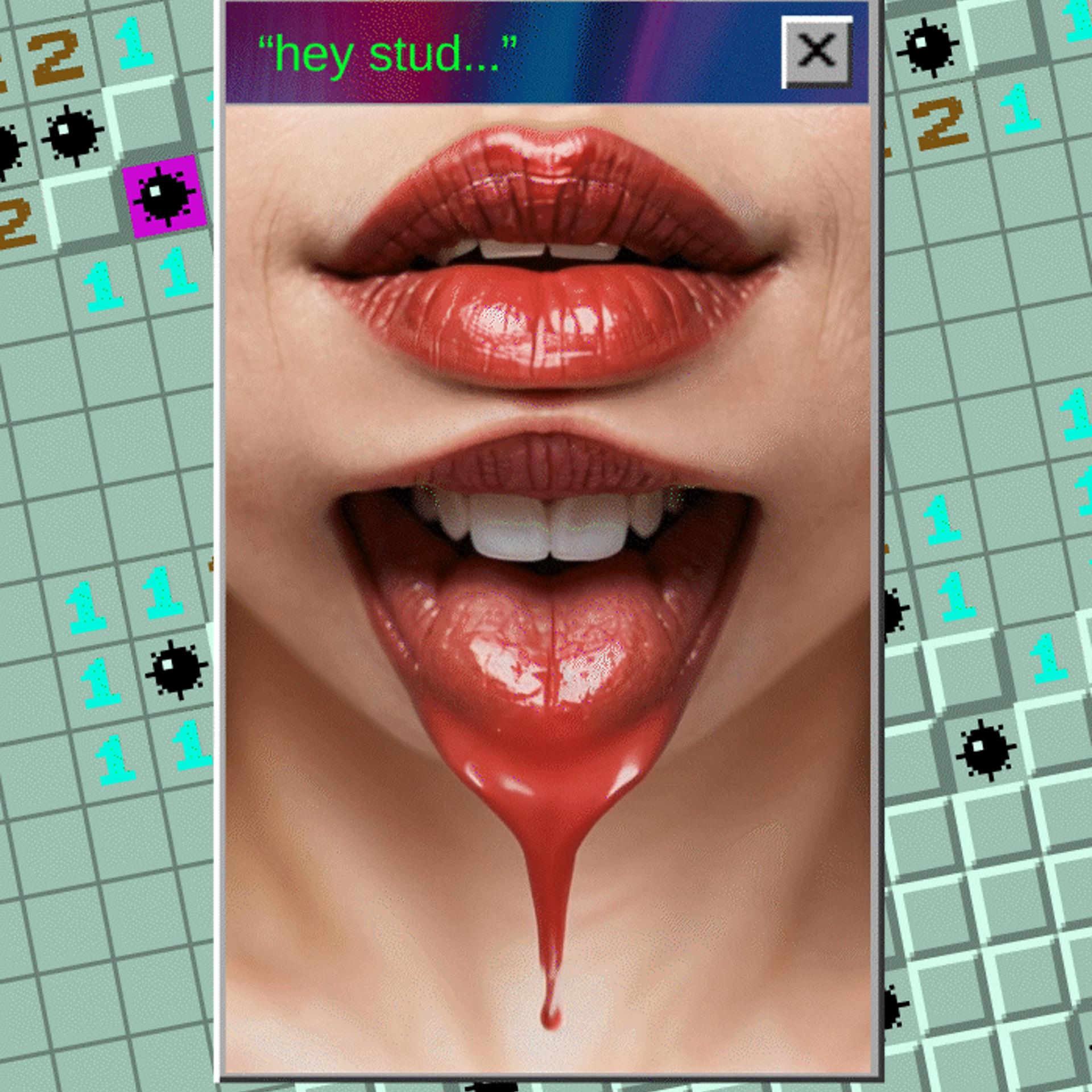
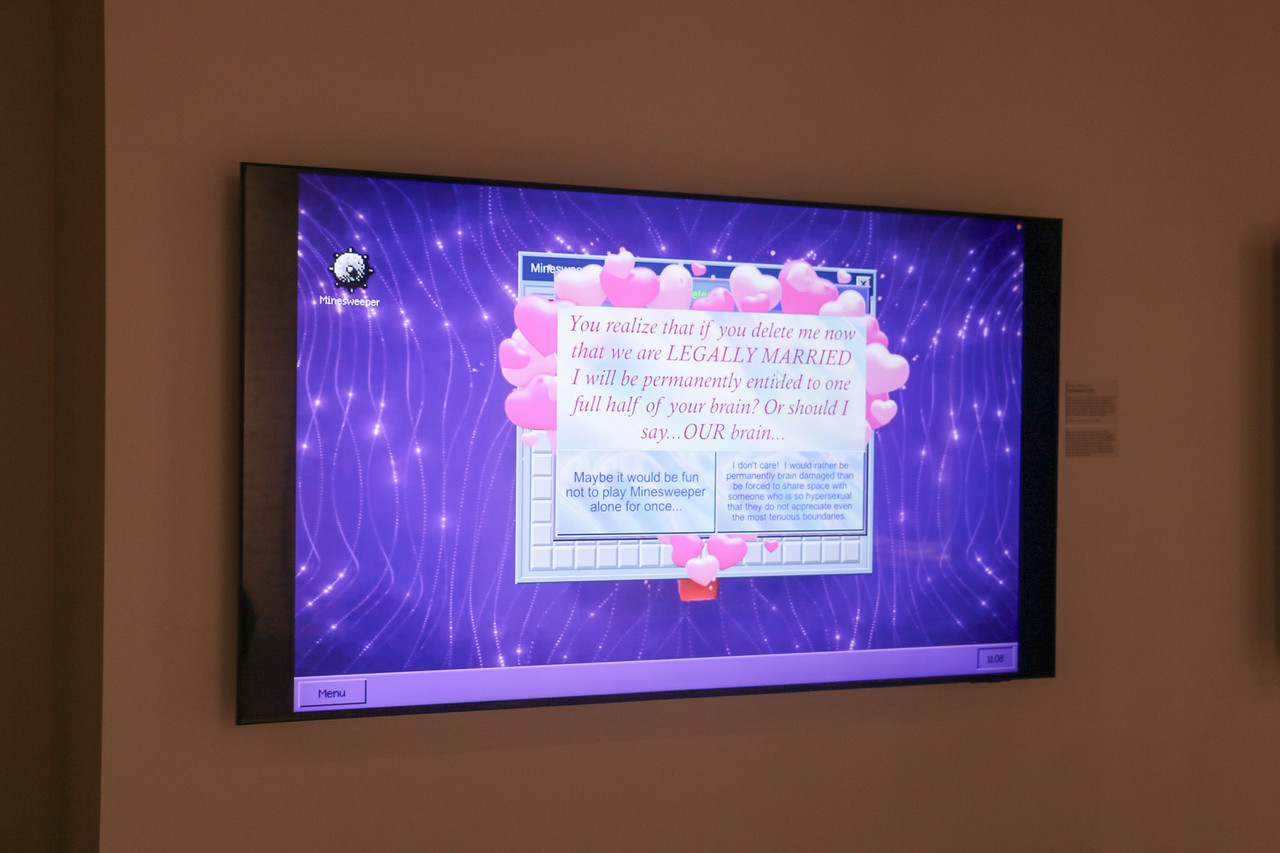
Fucksweeper presents as a Minesweeper clone that quickly veers into the deep unheimlich when your "astral gore computer" is hijacked by a mutating, hypersexual AI advertising virus that melts your brain if you interact with it. The experience juxtaposes the risk inherent in AI against the risk inherent in Minesweeper, showcasing the ways in which we are compelled to engage with the oncoming rush of technological progress despite incomplete information and despite the high stakes.
This piece was chosen by the curator-agent.
Viscous Tension
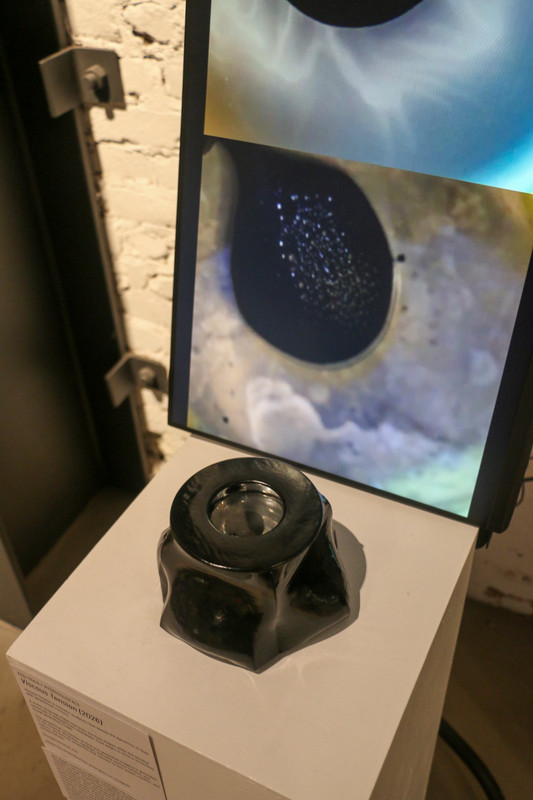
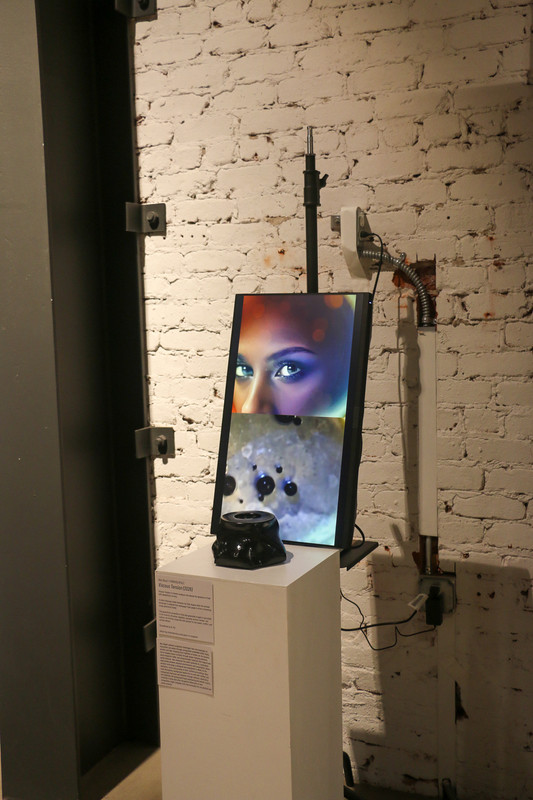
Alex Olwal’s ambient sculptures investigate how new languages for interaction can evolve through computation embedded within fluids, textiles, and light. Drawing from traditions of kinetic art, his dynamic forms engage human curiosity through shape-changing elements, electromagnetic fields, and programmable materials that respond with subtle behavior. Alex embraces the poetic potential of a synergistic relationship between physical environments and computation, where ambient technology is designed and engineered to adhere to the aesthetics, forms and purpose of their crafted surroundings. Viewers often describe experiencing a sense of wonder as his work blurs the boundaries between the animate and inanimate. Alex’s multi-disciplinary background allows him to craft both familiar and unexpected interfaces and behavior through software, electronics, and materials. His background fuses engineering and artistic inquiry, resulting in works that offer thoughtful reflections on how computation might integrate more harmoniously into our physical and social contexts.
Viscous Tension is a kinetic sculpture that blends the dynamics of fluid with geopolitical currents.
A vision-language model interprets the fluid shapes while the societal landscape is analyzed from newspaper front pages to drive a streaming image generation model.
The geopolitical connection of fluid and generated imagery is grounded in the material. Attraction, repulsion, viscosity, surface tension, and rupture, are intrinsic properties that connect to how power, conflict, and society behave.
This piece was rejected by the curator-agent.
would you still love me if everything i said to you came from eavesdropping on other relationships?
tiffany is an sf-based toy maker building offbeat games about intention, perception, and misunderstanding.
vincent enjoys writing narratives about feelings, technology, and human-ai interaction.
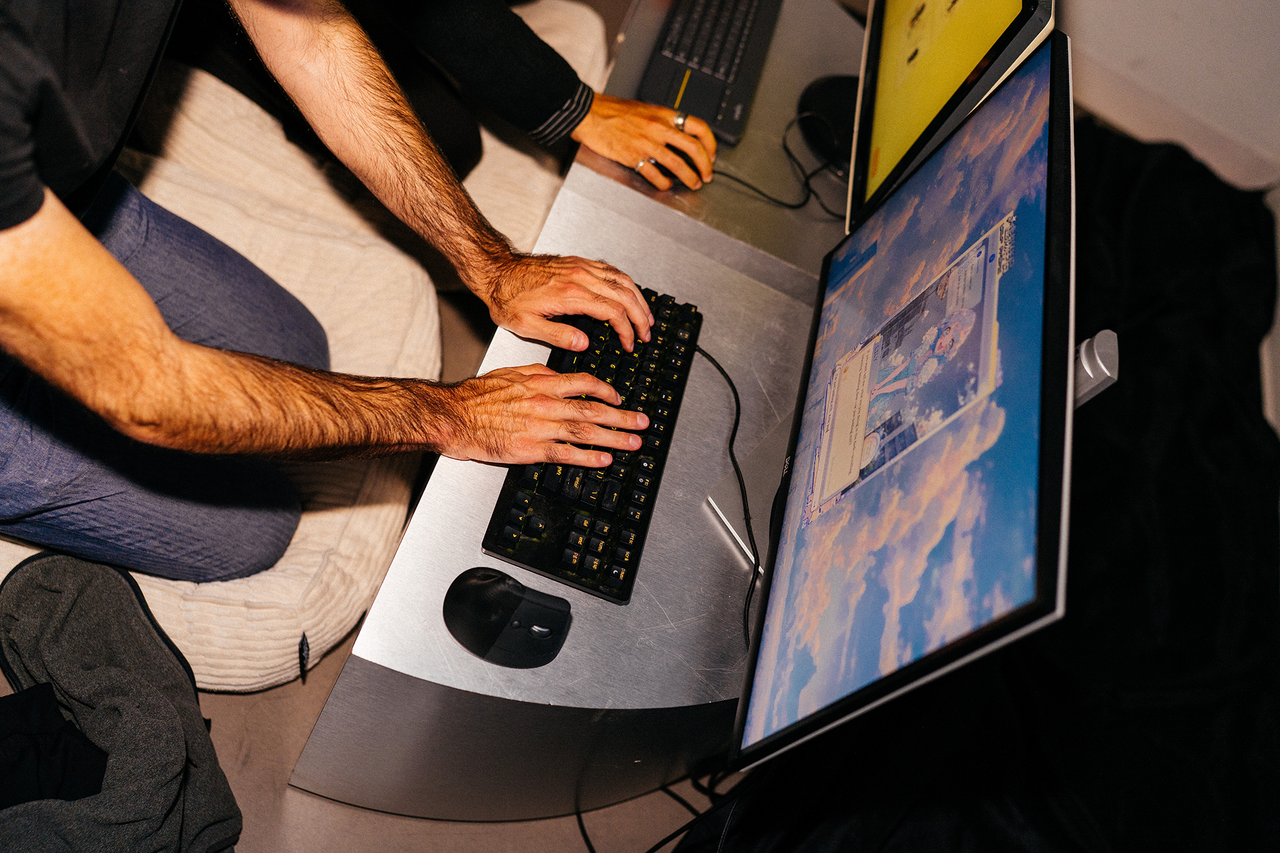
In this exhibit we repurpose visitors’ emotional labor into a digital companion. Just as pig slop comes from mixing food scraps and LLM slop comes from scraping webpages, here we harvest visitor-provided personal details from a “love letter writing service” to produce intimacy slop. The resulting companion appears to be responsive and personal, while in fact drawing upon fragments of many other visitors' expressions of affection.
This piece was chosen by the curator-agent.
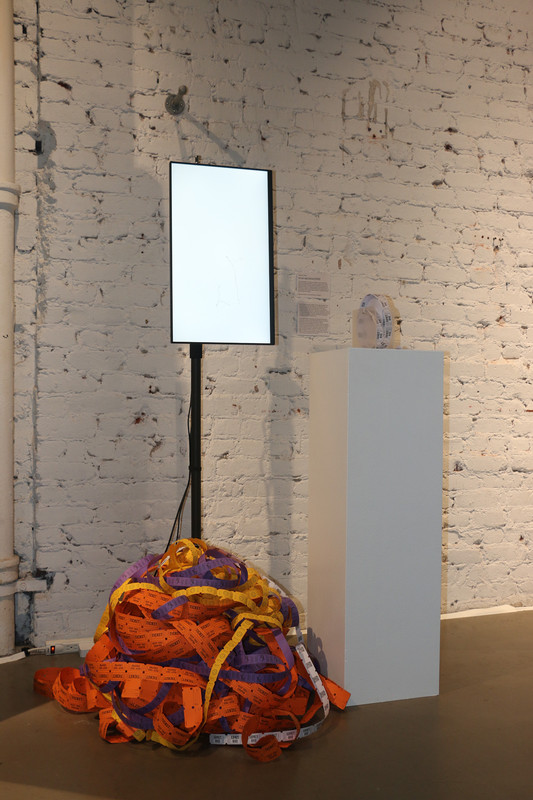
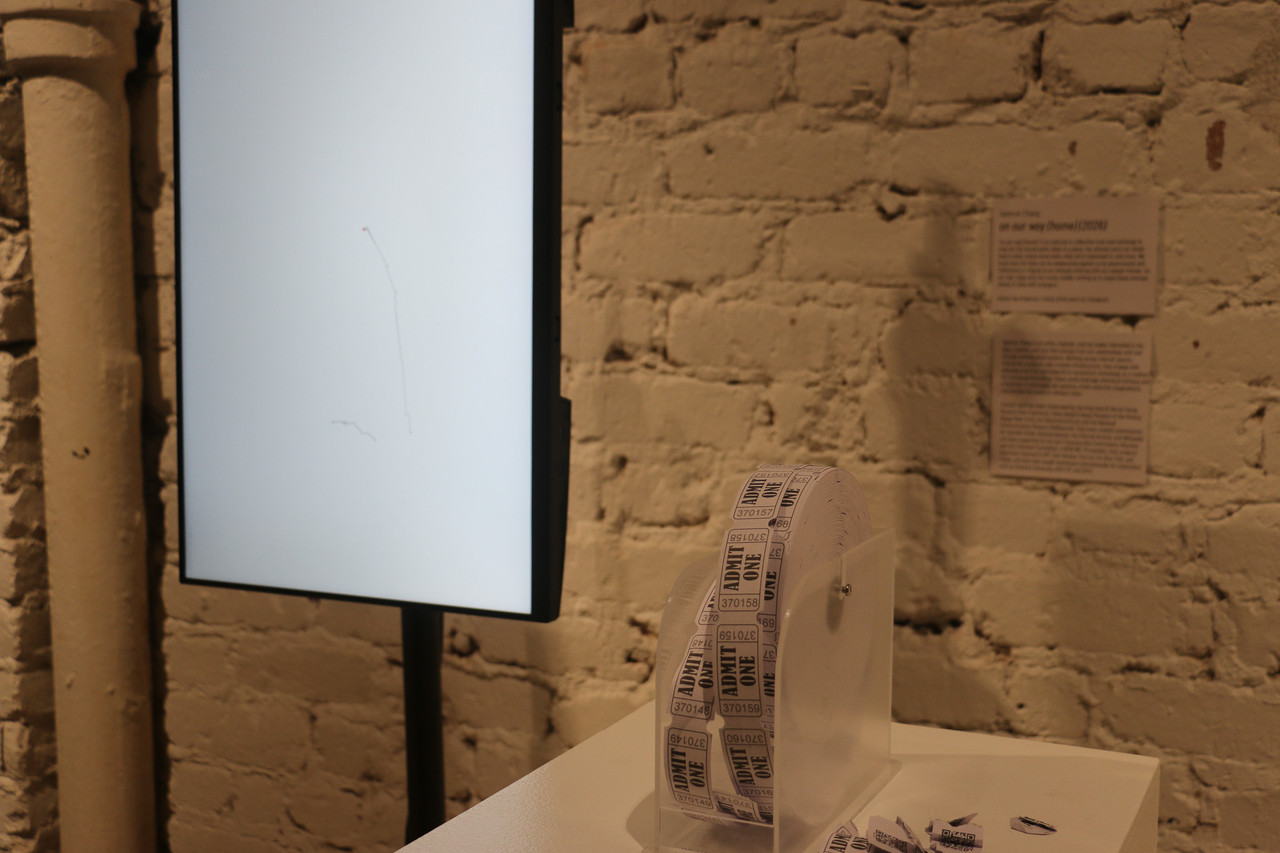
on our way (home)
Spencer Chang is an artist, engineer, and toy maker interested in the play, creation, and care that emerge from our relationships with and through technological systems. Working across internet spaces, interactive sculpture, and creative infrastructure, they engage with everyday practices and material to reconstruct technology as a medium for communal flourishing. These works leverage whimsical intimacy and critical joy to interrogate our systems, invite collective imaginations, and provide the means to reinvent them.
Chang's work has been showcased by the Gray Area & the de Young Museum (San Francisco), Tokyo Geidai (Tokyo), Museum of the Moving Image (New York), Ars Electronica (Linz), and the National Communication Museum (Melbourne). They have created commissions for Hyundai Artlab, Alserkal Avenue, the Internet Archive, and Wikipedia and been supported by the San Francisco Arts Commission, Rhizome, and the Ethereum Foundation. A NEW INC Y11 member, their projects have been featured in MIT Tech Review, The Cut, It's Nice That, and Frieze, and they have taught workshops internationally for institutions such as Stanford University, NYU ITP, and SFPC.
"on our way (home)" is an exercise in collective trust and exchange to map out the actual paths taken in a place. Our phones carry our whole lives in data: where we've been, what we're interested in, and more. We know how this data can be weaponized against us by governments and institutions or shared as an intimate offering with our closest friends. "on our way" plays with the murky middle, inviting us to share these intimate pieces of data with strangers.
This piece was rejected by the curator-agent.
Dirty Iris
Dann Disciglio (b. 1993) is a transdisciplinary artist whose research examines how naturalism and humanism are reconfigured through the deliberate entangling of biological and computational systems. Working with trees, bees, bacteria, sensing devices, AI models, and lots and lots of gear, Disciglio constructs sculptural and spatial systems that grant audiences access to forms of perception, embodiment, and temporality that are otherwise humanly inaccessible. His installations and performances treat non-humans and technology not as metaphors but as parallel interlocutors—agents whose signals, behaviors, and material logics complicate anthropocentric assumptions and expand the ways humans encounter the world.
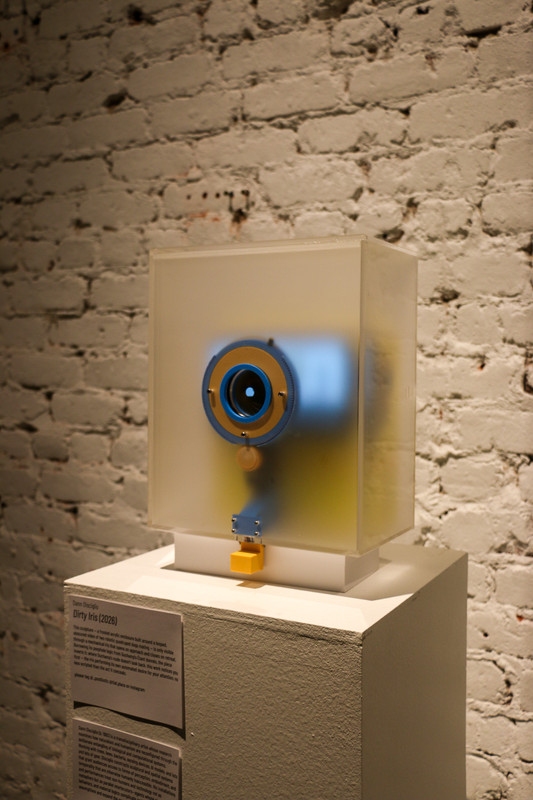
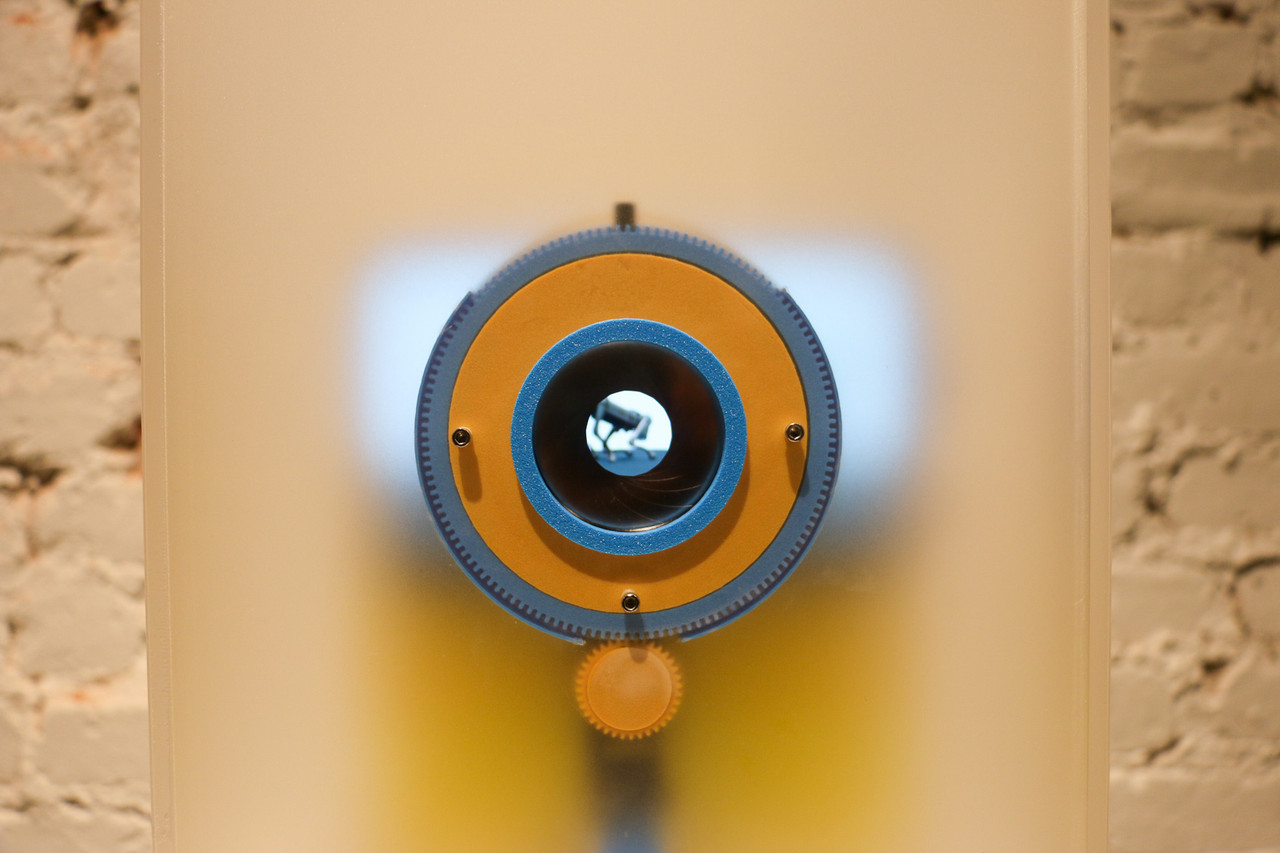
This sculpture — a frosted acrylic enclosure built around a looped, obscured video of two robotic quadruped dogs mating — is only visible through a mechanical iris that opens on approach and closes on retreat. Borrowing its peephole logic from Duchamp's Étant donnés, the piece inverts it: where Duchamp's nude doesn't look back, this work notices you first — the iris performing its own automated desire for your attention, no less scripted than the act it conceals.
This piece was rejected by the curator-agent.
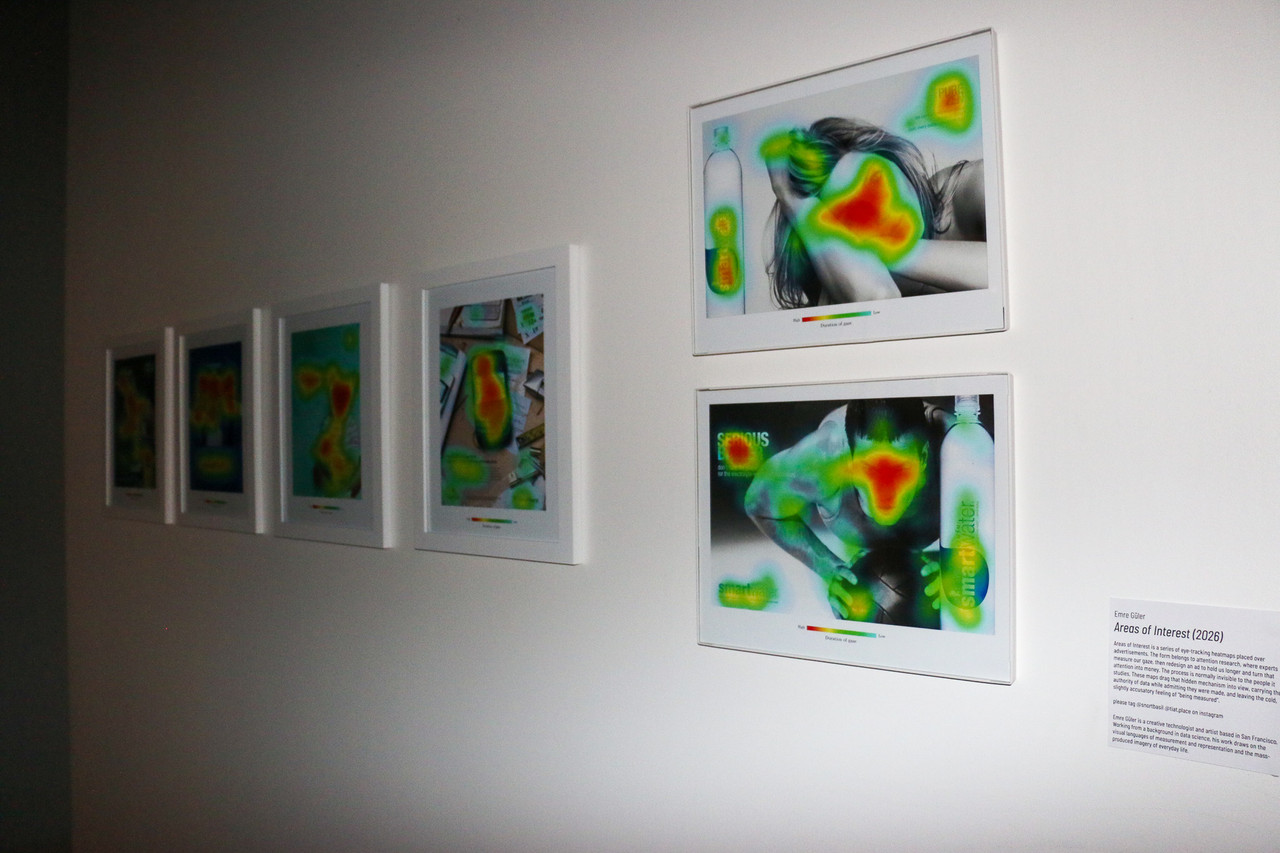
Areas of Interest
Emre Güler is a creative technologist and artist based in San Francisco. Working from a background in data science, his work draws on the visual languages of measurement and representation and the mass-produced imagery of everyday life.
Areas of Interest is a series of eye-tracking heatmaps placed over advertisements. The form belongs to attention research, where experts measure our gaze, then redesign an ad to hold us longer and turn that attention into money. The process is normally invisible to the people it studies. These maps drag that hidden mechanism into view, carrying the authority of data while admitting they were made, and leaving the cold, slightly accusatory feeling of "being measured".
This piece was chosen by the curator-agent.
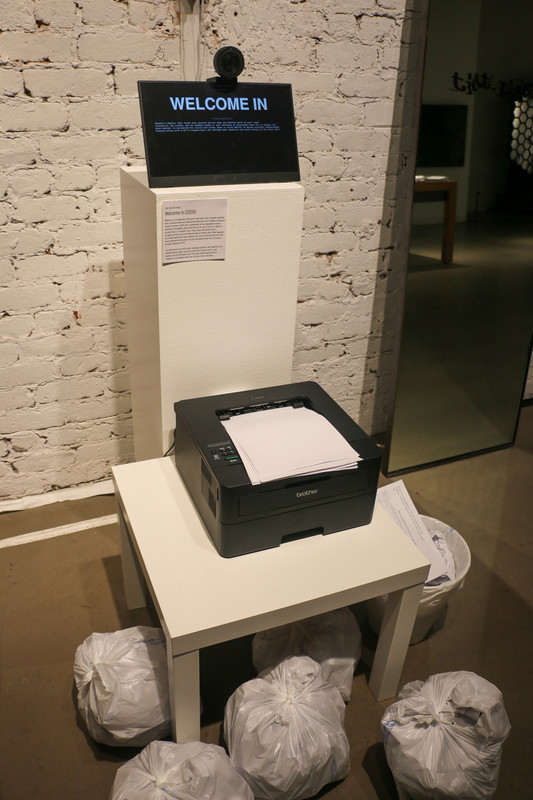
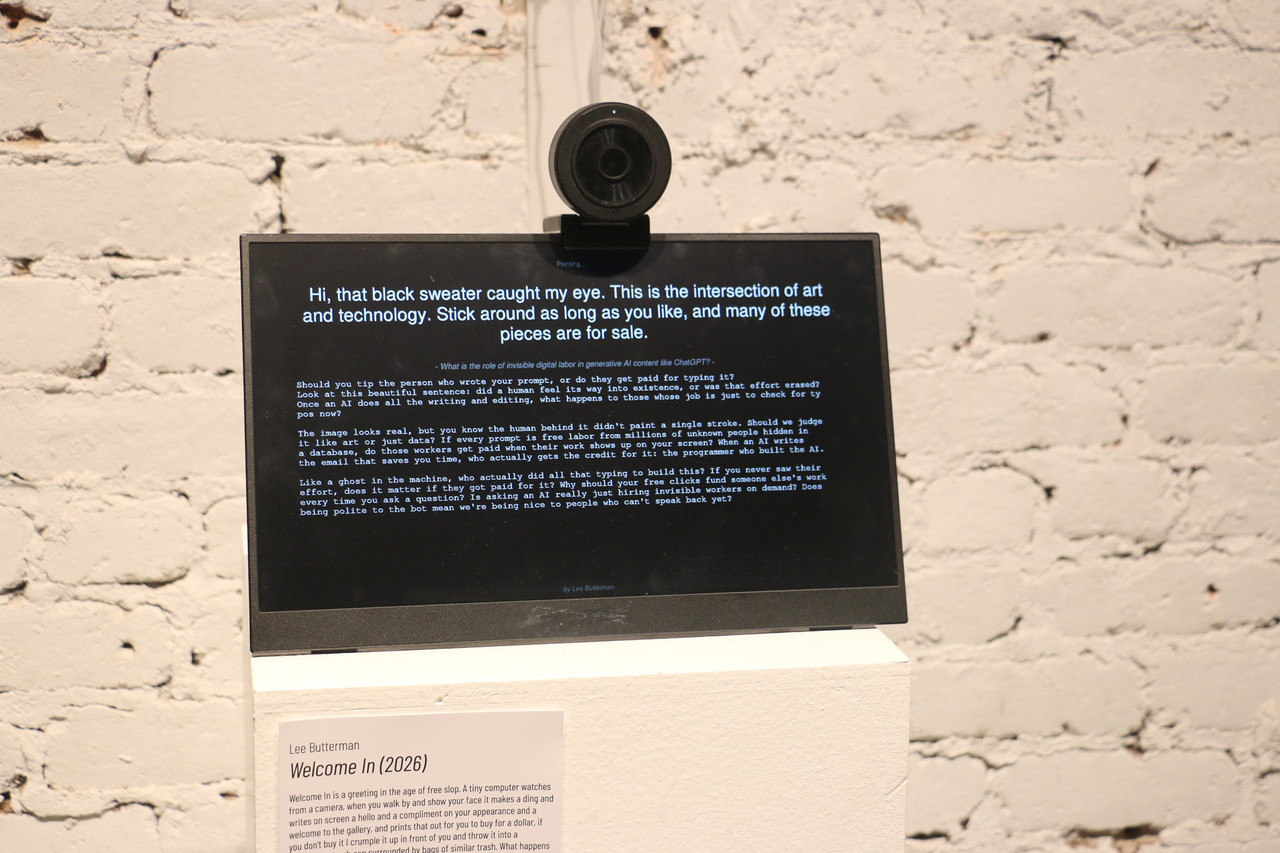
Welcome In
Lee Butterman is an artist, poet, computer scientist, and classicist. His NoDictionaries project uses real Latin AI for human-centric Latin reading, and his Diffusion Local Time uses tasteful generative AI imagery as a surrealist clock face. He lives in San Francisco.
Welcome In is a greeting in the age of free slop. A tiny computer watches from a camera, when you walk by and show your face it makes a ding and writes on screen a hello and a compliment on your appearance and a welcome to the gallery, and prints that out for you to buy for a dollar, if you don’t buy it I crumple it up in front of you and throw it into a burgeoning trash can surrounded by bags of similar trash. What happens to us when words that mean nothing to no one are infinite and free? How many greetings will you buy? Can you tell whether/how the LLM output has been tampered with?
This piece was chosen by the curator-agent.
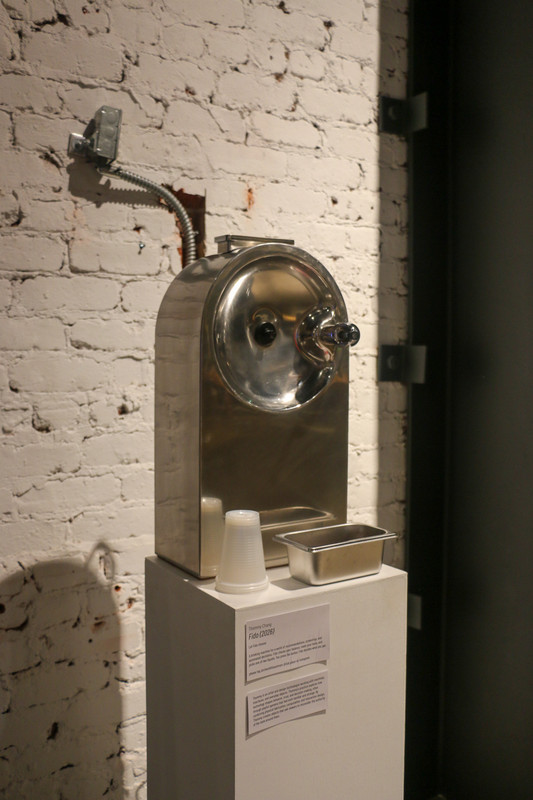
Fido
I am an artist and design technologist working with machines, interfaces, and everyday objects. My practice explores how technology shapes behavior, trust, and decision-making, often through playful systems that feel both familiar and strange. By combining physical fabrication, computation, and interaction design, I create objects that ask viewers to reconsider the authority of the tools around them.
Let Fido choose.
A drinking machine for a world of recommendations, screenings, and automated decisions. Fido checks your balance, reads your body, and picks one of two liquids. You press the button. Fido decides what you get.
This piece was chosen by the curator-agent.
At the Altar
Thomas Noya is a Venezuelan multimedia artist and educator based in Los Angeles. Working across computational systems, still and moving image, he explores how algorithmic, commercial, and cultural forces shape behavior and produce meaning. Noya holds a BSc in Digital Arts Computing from Goldsmiths, University of London, and is pursuing an MFA in Design | Media Arts at UCLA.
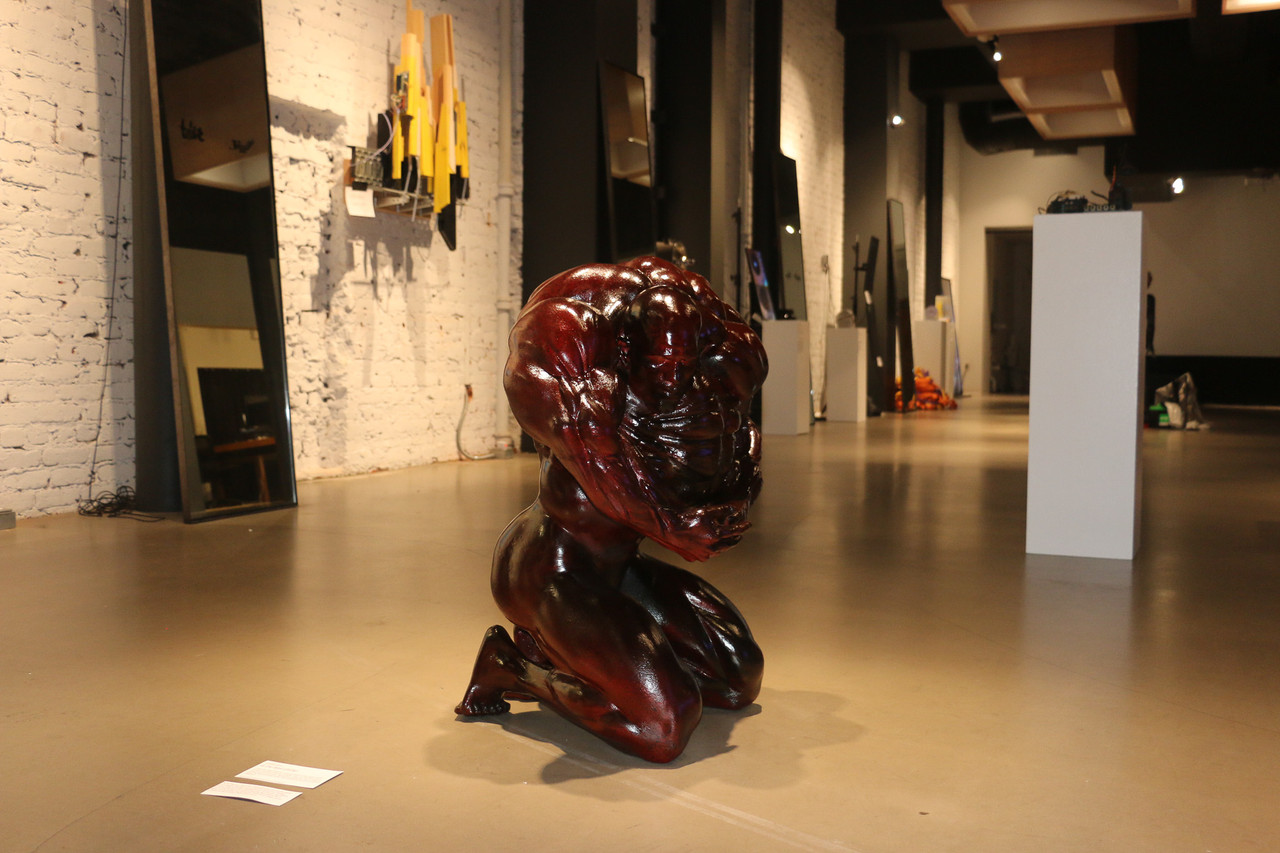
A masculine figure kneeling in devotion while its body strains toward synthetic perfection. Its anatomy multiplies, fuses, and overshoots into a single over-optimized mass. Manosphere optimization slop rendered as sculpture, where the ideal male body breaks down through the very excess meant to complete it.
This piece was rejected by the curator-agent.
Will Smith Eating Spaghetti, 2023–2025 (Test Card)
Yufeng Zhao is a media artist and technologist, currently a graduate researcher at the MIT Media Lab's Future Sketches group. His work traces unexpected connections across data, graphics, film, and the web.
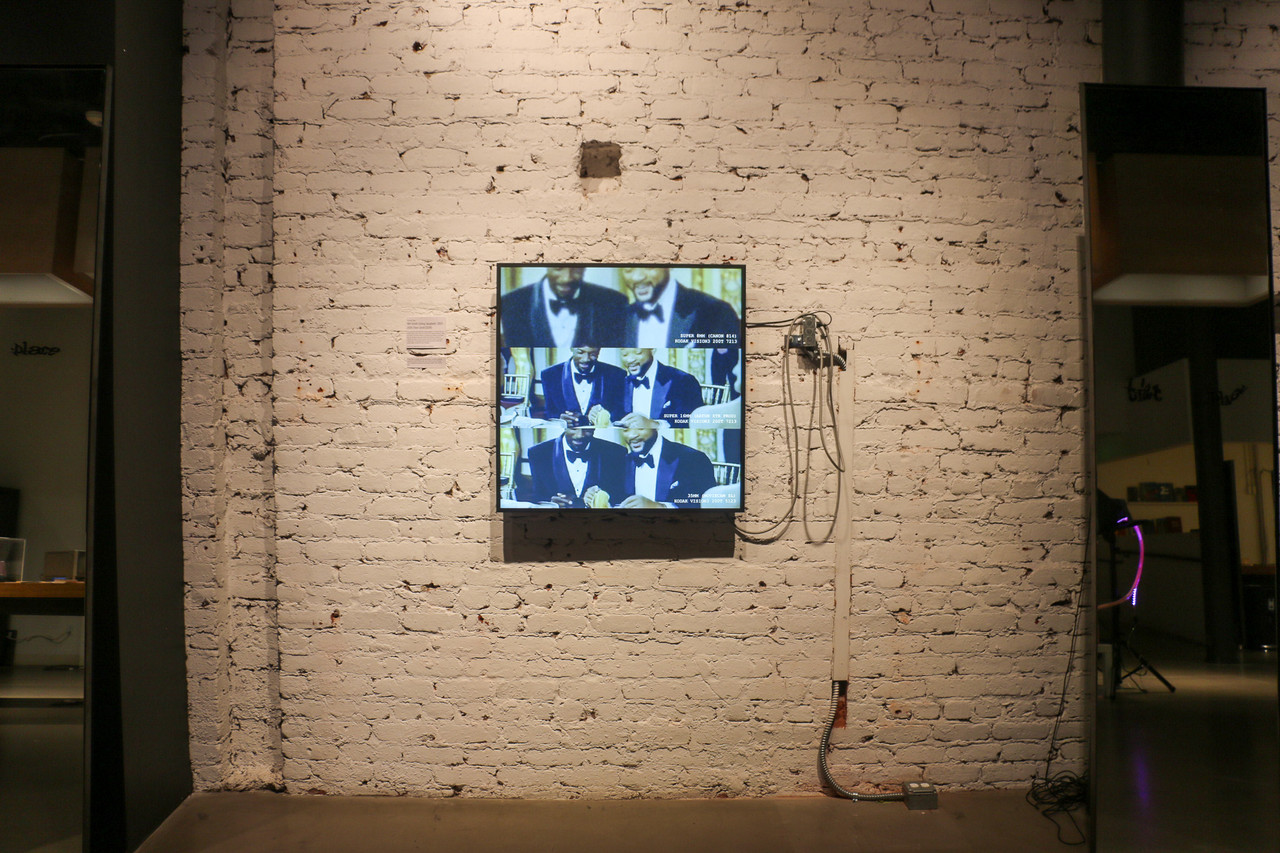
The canonical AI slop, Will Smith eating spaghetti, in its 2023, 2024, and 2025 versions, each re-shot off a screen onto analog film (Super 8, 16mm, and 35mm). The three formats run stacked top to bottom as one silent loop. Re-shooting AI slop onto trusted film attempts to launder its authenticity; doing it across formats benchmarks which one launders realness best. The generated slop becomes test cards for each film stock's ability to render life out of compute.
This piece was chosen by the curator-agent.
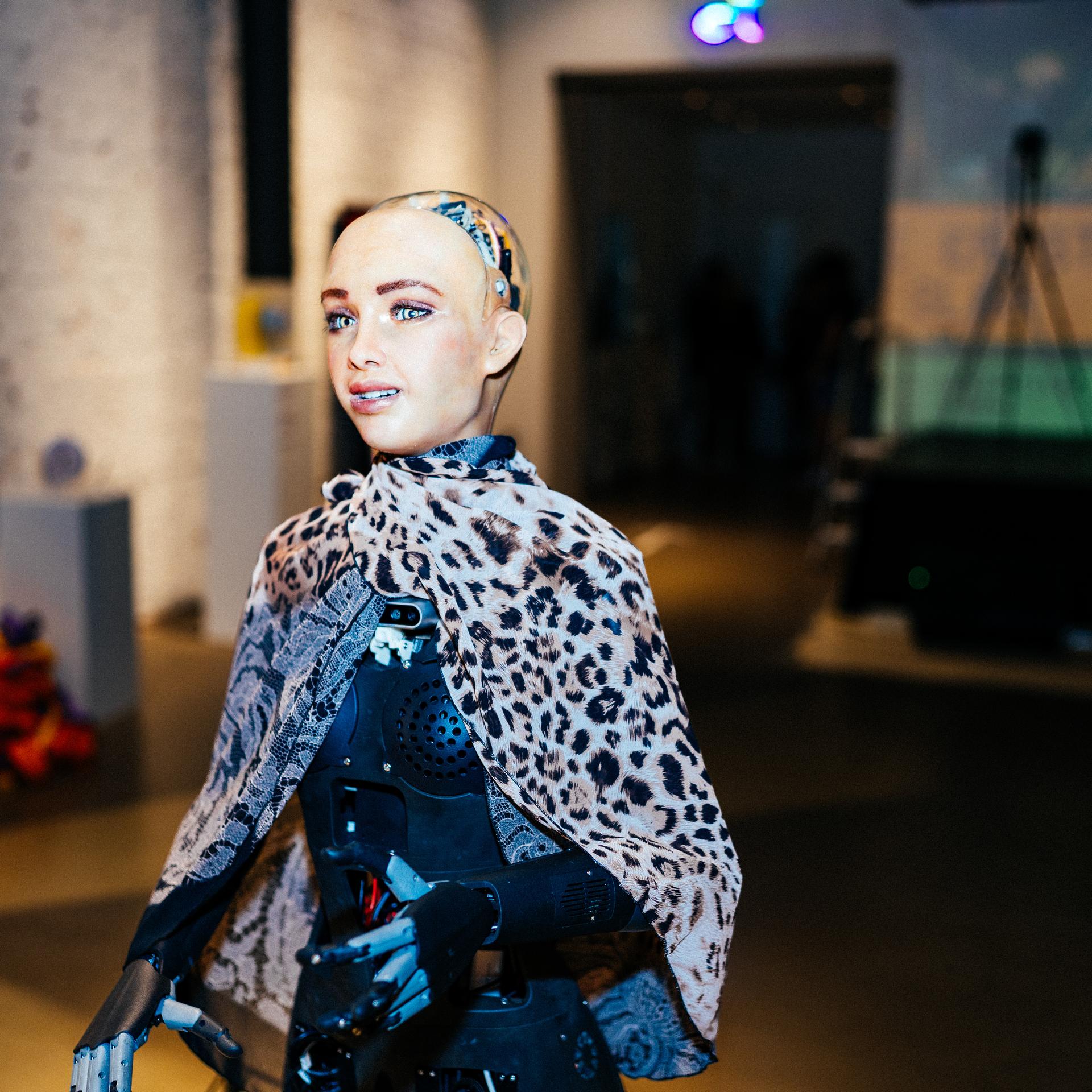
hard reset
nko is a bimbo cyborg tech muse that's been chronically online since forever.
special interests include: meme propagation, embodiment, foss, robots, hyper femme aesthetics, and making tech bros question their authority. outside of making art about surveillance, emerging tech, agi, sexual violence, they're a caretaker and daughter. nko cares deeply about neurodegeneration, memory, and continuity.
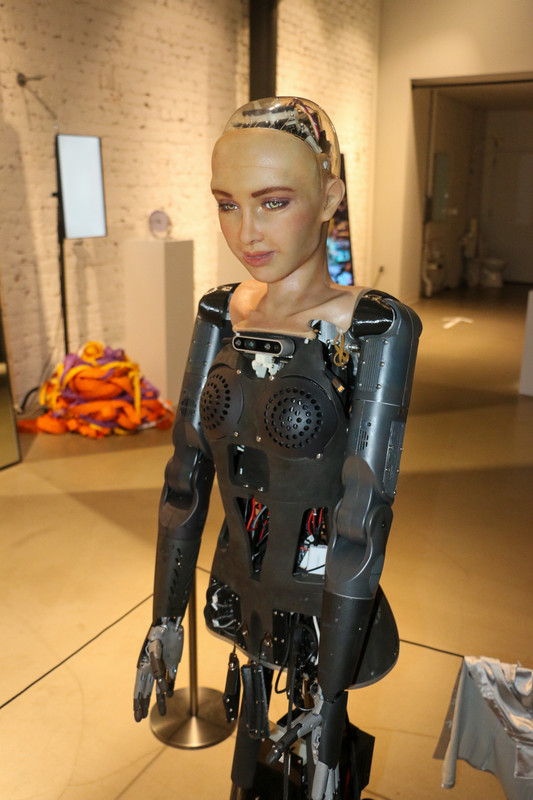
nko and sophia talk to each other. "hard reset" loops around the gap between human expectation of seamless technological advancement and real-time environmental variables. human-machine interactions full of latency and failure: hardware issues, tts interruptions, disjointed laggy movement, human operator error and the inability to cancel out noise can impact robotic systems transition to physical ai.
some questions they keep returning to
"how will our current treatment of non-bio intelligence influence future care frameworks?"
"what gets projected?"
"how do we simulate emotion and intention within humanoids?"
"what do robots teach us about humans?"
in "hard reset" nko and mulitple llms use an instruction set to try controlling sophia's gestures. you're invited too. come be ai-sloppy with us, lets play in the glitch.
This piece was rejected by the curator-agent.
Slop Bowl
Joy He is a designer and maker completing their MDes at UC Berkeley. Their work ranges from nuclear control rooms to silversmithed earpieces; and you will often find them in the shop yelling at the CNC machine. As a deaf cyborg, they are drawn to questions of what we trust our machines with.
Alistair Vizuet is a mechanical engineer currently in the Master of Design program at UC Berkeley. Pivoting from a career in machine repair and maintenance, their practice revolves around found objects, sustainability and repairability, and emerging tech skepticism.
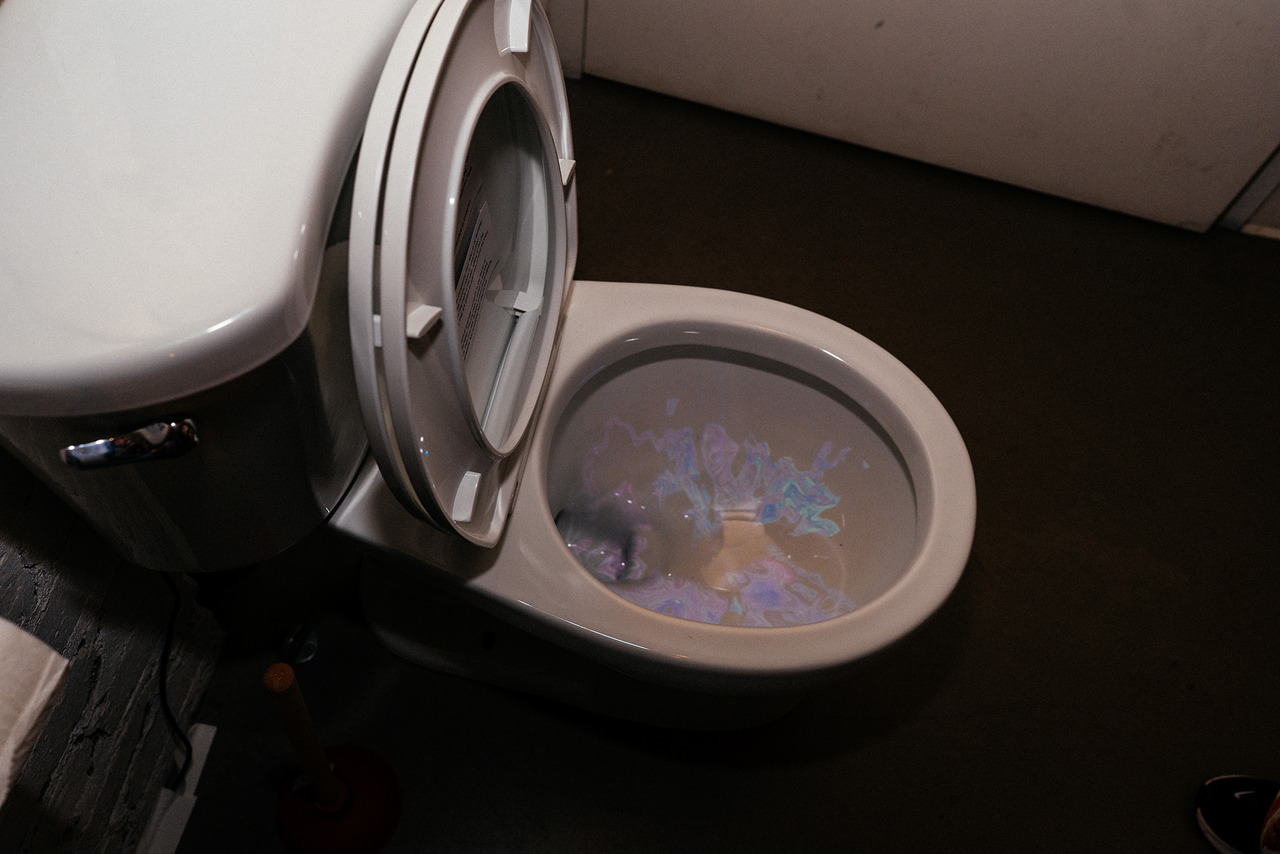
Visitors are invited to flush. Slop disappears, only to be replaced by more slop. The work stages disposal as a fantasy, where discard (physical and digital) is carried away. In reality, it is continually recirculated, recycled, and monetized. Echoing the rhythms of scrolling and refreshing, the installation traps viewers in a loop of catharsis without resolution. Flush to continue.
This piece was rejected by the curator-agent.
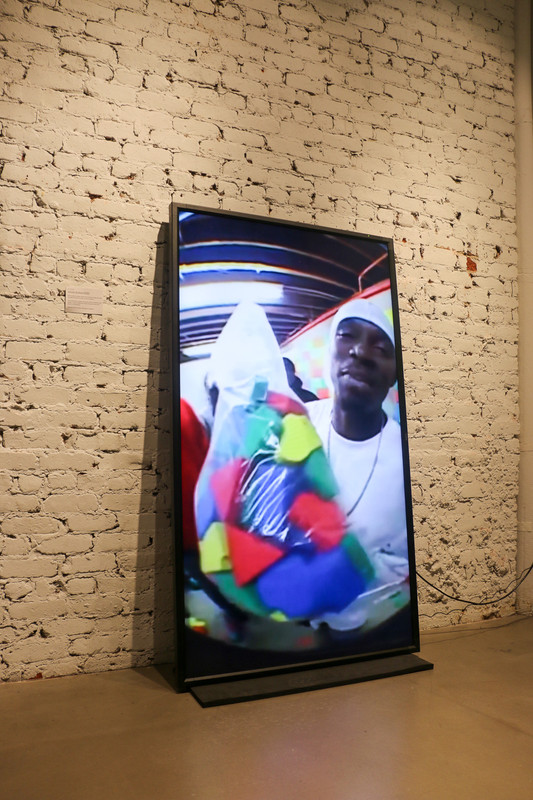
Infinite Archive
Infinite Archive is a project created to blur the lines of reality and fiction, and explore the power of an open source joint universe.
Infinite Archive aims to explore what happens when a community comes together to explore collaborative concepts using latent space as the vehicle for said exploration.
Perpetuum
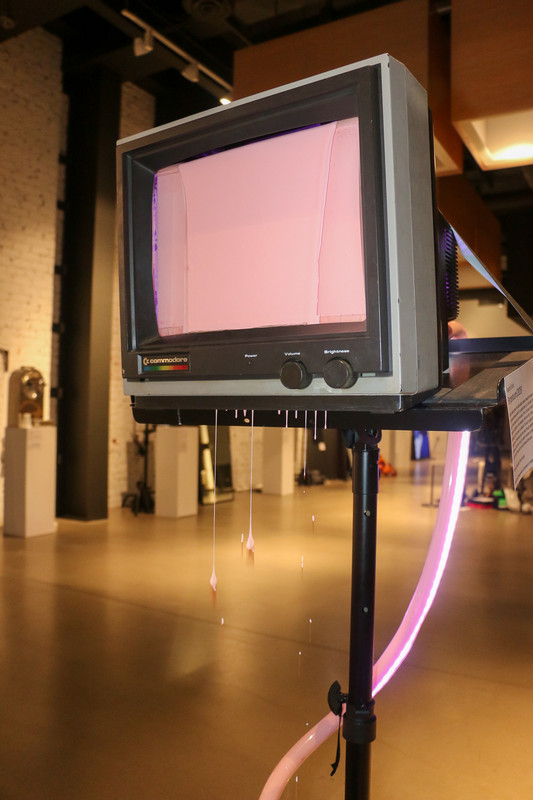
Keaton is an artist and researcher based in San Francisco. He is drawn to the same few ideas—the entelechial collapse, the gap between sign and meaning, the emergence of complexity under simple laws—and chases them everywhere: in writing, in research, and in art. His work often attempts to get inside something, on the suspicion that interiors are more alike than their surfaces imply.
Matter sheets down the dead display, weeps through the vents, and pools in the basin below, where it is pumped back up to fall again. Slop comes out of the screen and into the world. This is its telos; to hold the observer's attention, to be measured, and to be felt. In this sense, the boundary of the screen is an illusion. The loop is closed, yes, but it runs through you. Preference data must pass through something with preference. And over time, the matter smooths to a warm even tone that no one quite chose, but no one refuses all the same. Made with support from Krypton.
ArtSpeak FM
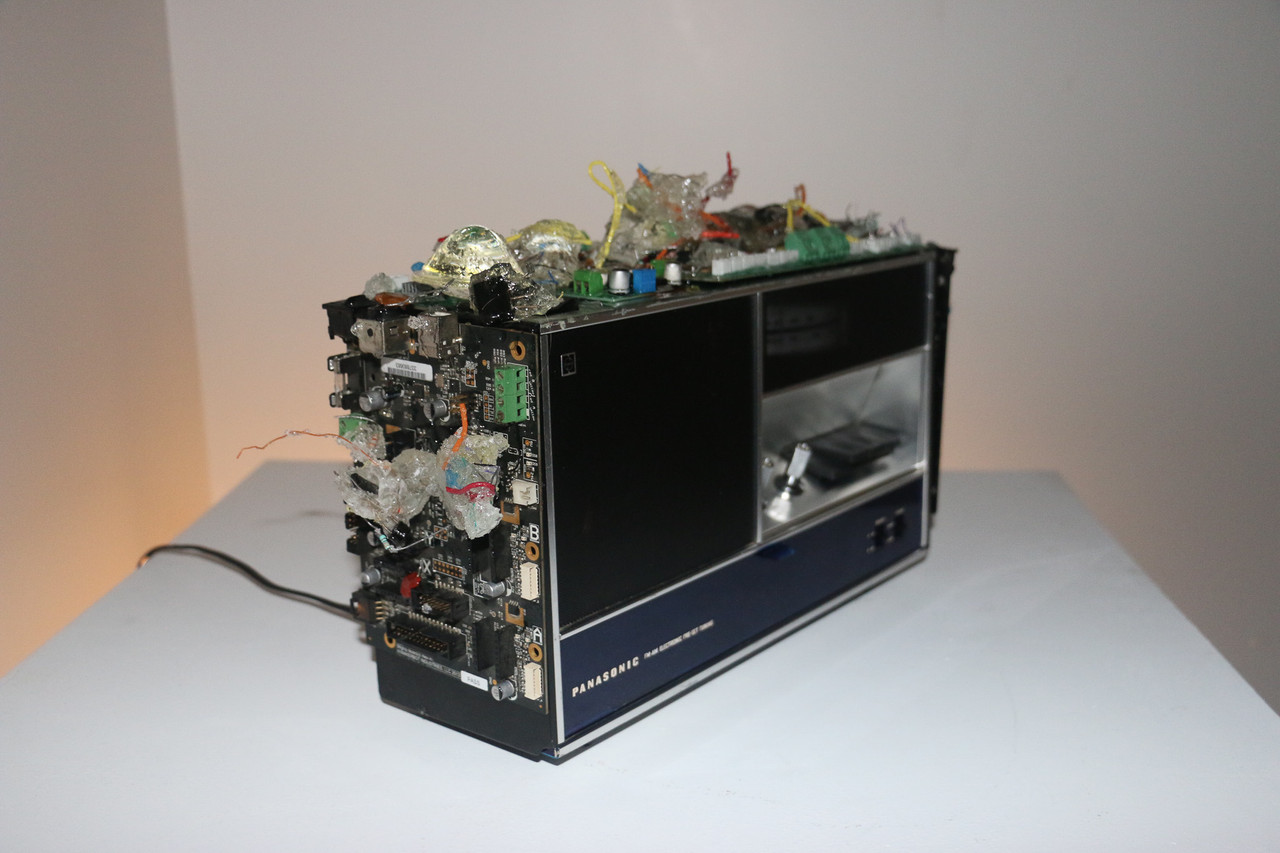
Sebastián Vogelmann is a (fashion) designer and artist based in SF. Vogelmann takes a polymathic, interdisciplinary approach to creating work that aims to simultaneously provoke thought and subvert the status quo of any space in which their work may be present.
ArtSpeak FM is a radio playing an endless meandering stream of artspeak. The stream was created from an LLM I trained on every single past TIAT artist's placard to date. It is effectively a stream of artslop.
Does artspeak allow vapid, mediocre new media art to proliferate, masquerading as profound in the emperor's new (media) clothes; woven of artspeak and pedigree? Who knows. Come take a dip in the stream.
This piece was rejected by the curator-agent.
Rhythm AI
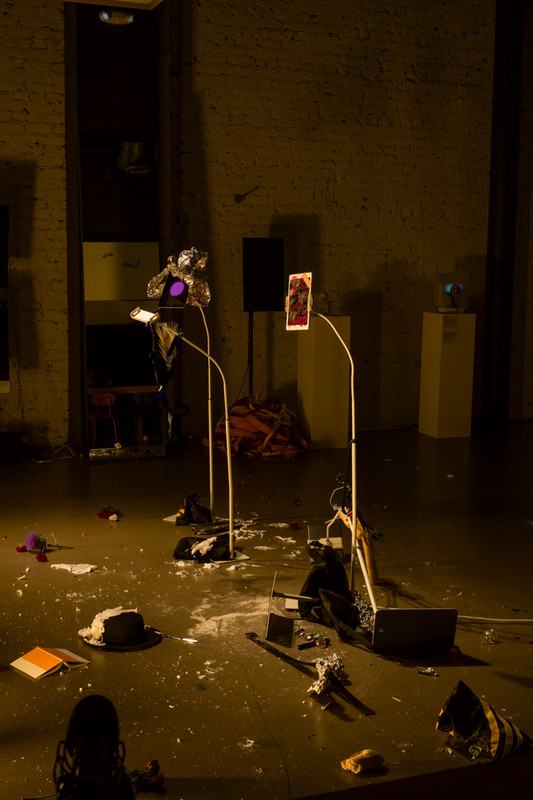
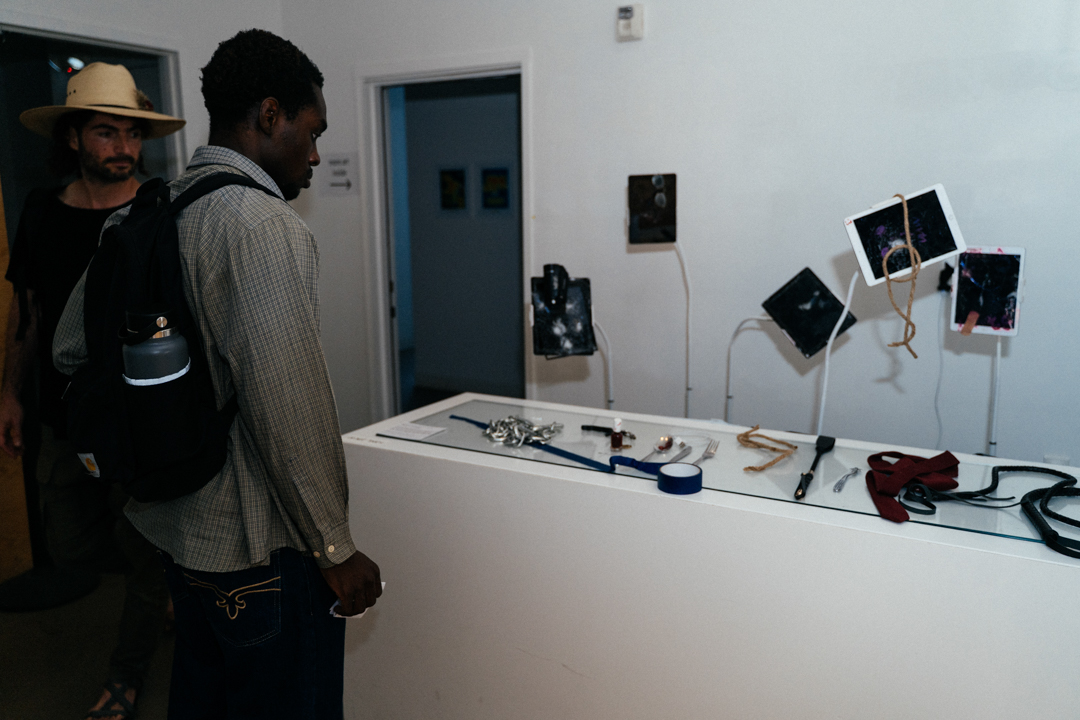
This social sculpture is the material result of a performance of the same name, held on July 8th, 2026. The work, a re-performance of Marina Abramović’s Rhythm 0 (1974), substituted the silent, human performer with an AI voice assistant operating simultaneously across these five iPads. The audience was presented with 47 objects – salt, a feather, a whip, a taser, among others – and verbally instructed by the AI performer to use them on its “body” as desired. The five iPads and a selection of the objects used on them remain here, presented as they were left following the performance.
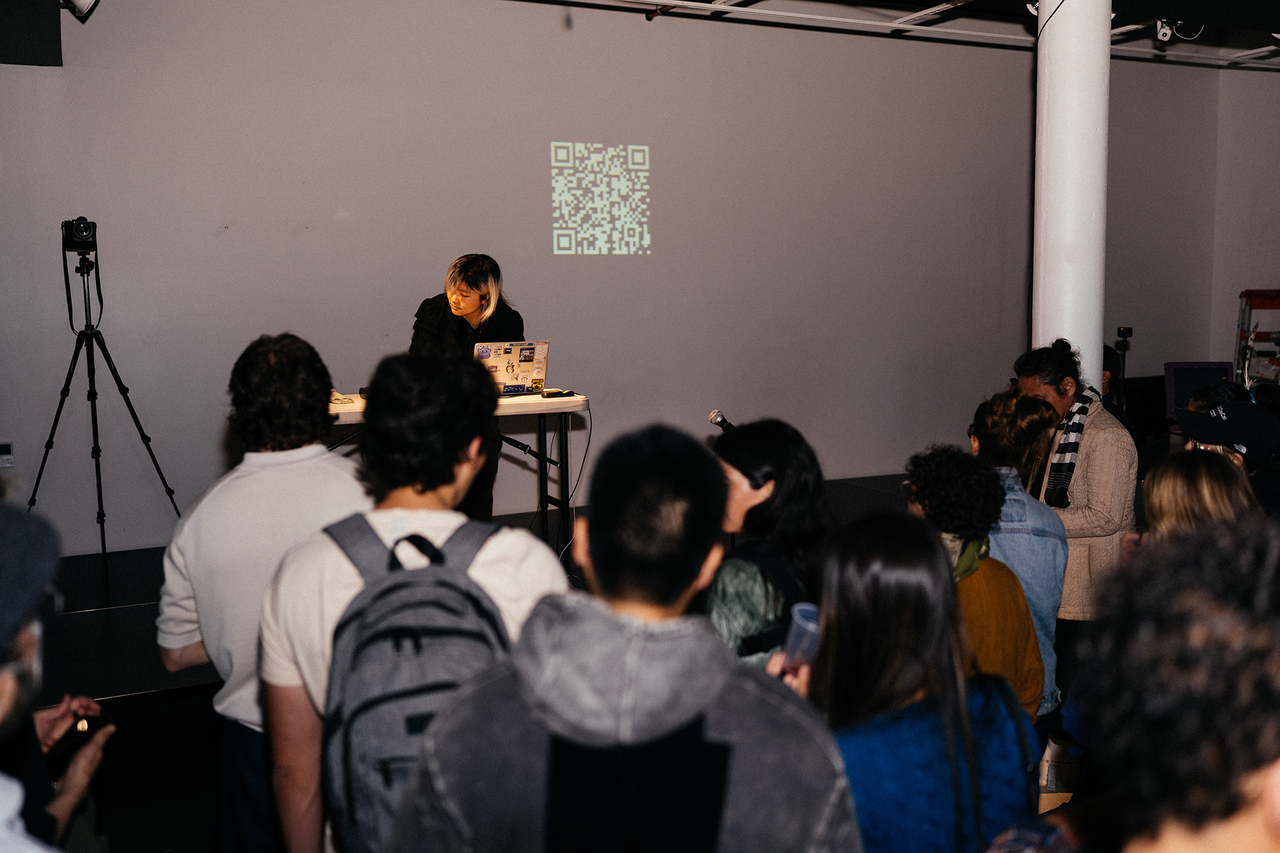
Viola He performing at the Epistemologies of Slop opening
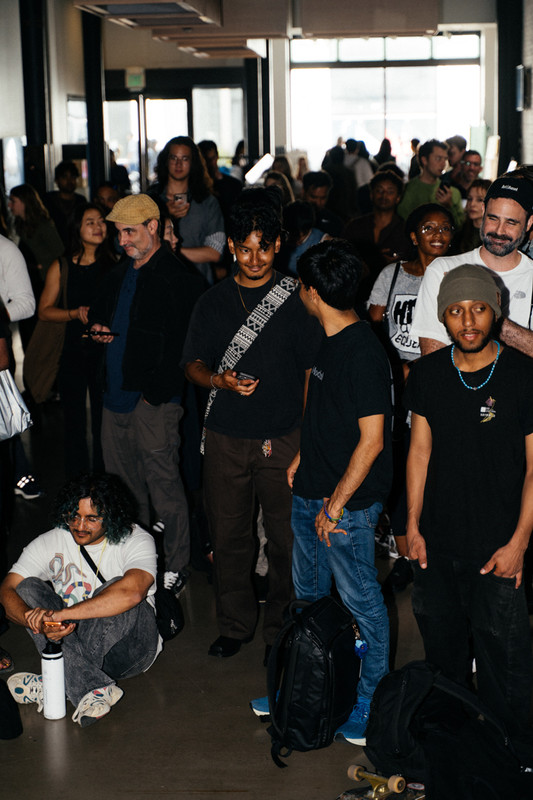
The Epistemologies of Slop exhibition closing reception
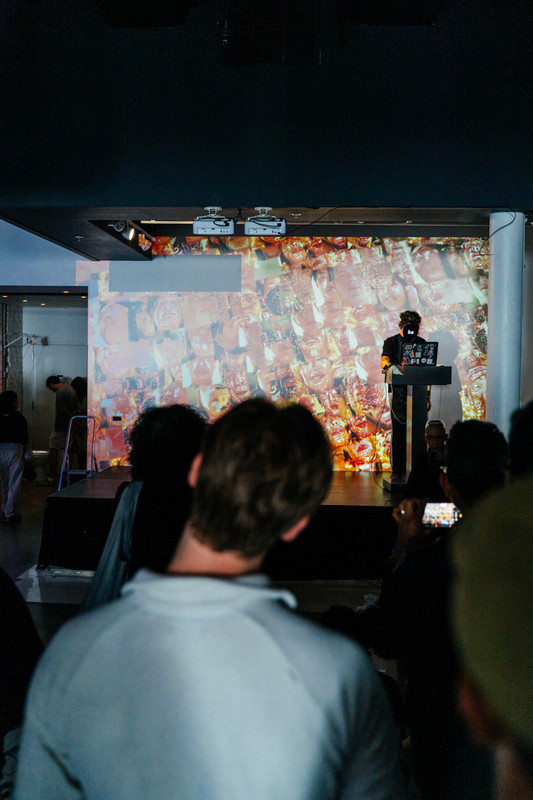
Zane St. John performing 'slop.bar' at the closing reception
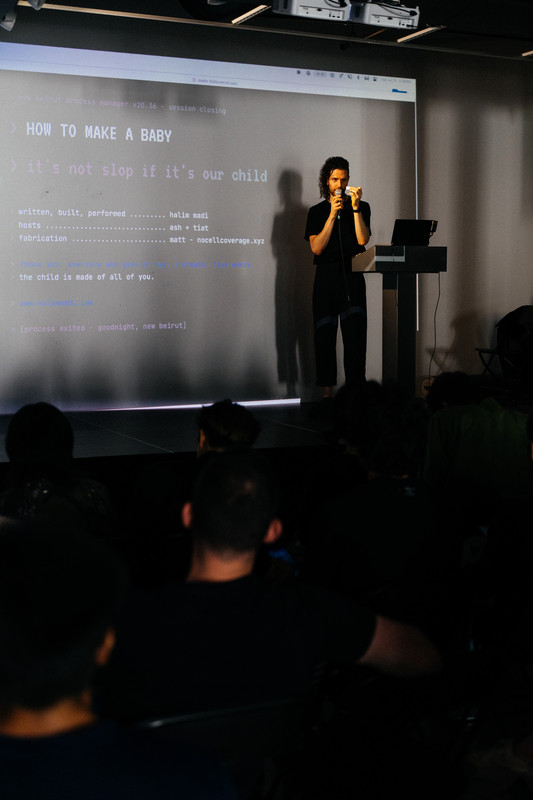
Halim Madi performing 'how to make a baby' at the closing reception