Nature of Code - Art Exhibition
A showcase of art projects by creative technologists who participated in the weekly Nature of Code meetup at tiat from December through March.
About the Exhibition
The exhibition grew from tiat's weekly exploration of The Nature of Code, Daniel Shiffman's guide to teaching computers how to simulate phenomena in the natural world. The weekly series was facilitated by Rainbow.
The featured projects explore nature and ecosystems; forces such as gravity, motion, tension, wind, water, fire, growth, and decay; autonomous animal behaviors; and evolution through genetics, mutation, natural selection, birth, and death. The exhibition includes both works for observation and interactive pieces that invite visitors to play with responsive environments.
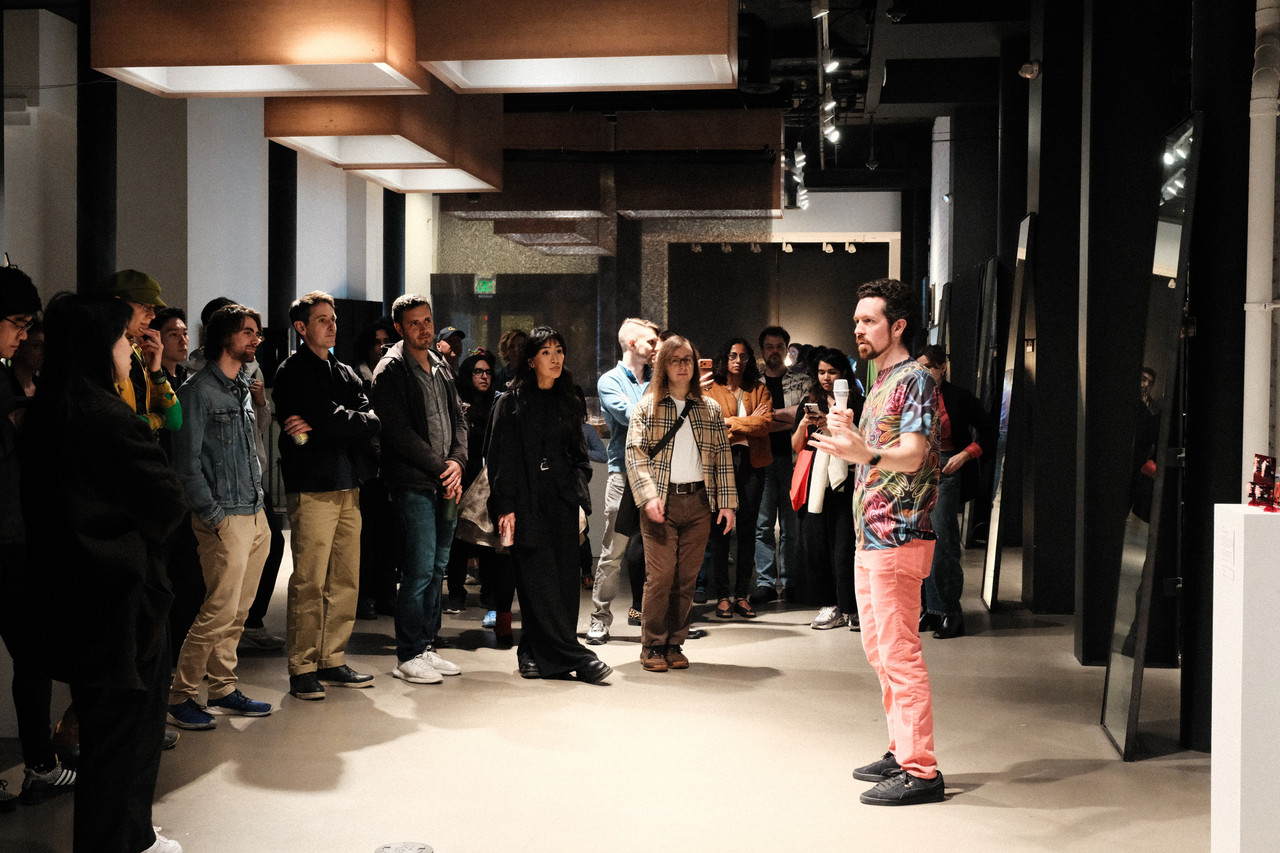
Rainbow speaking at the showcase opening
Artworks
People Trees
After 3 years as a San Francisco tech stereotype, Luca yearns for creativity. The internet is an incredible place, and he has been passionate for a long time about enabling people to build for it. It's about time he shares his soul there as well.
Sometimes life thrives the most in stillness. Stand here for long enough and vines will start crawling up your legs.
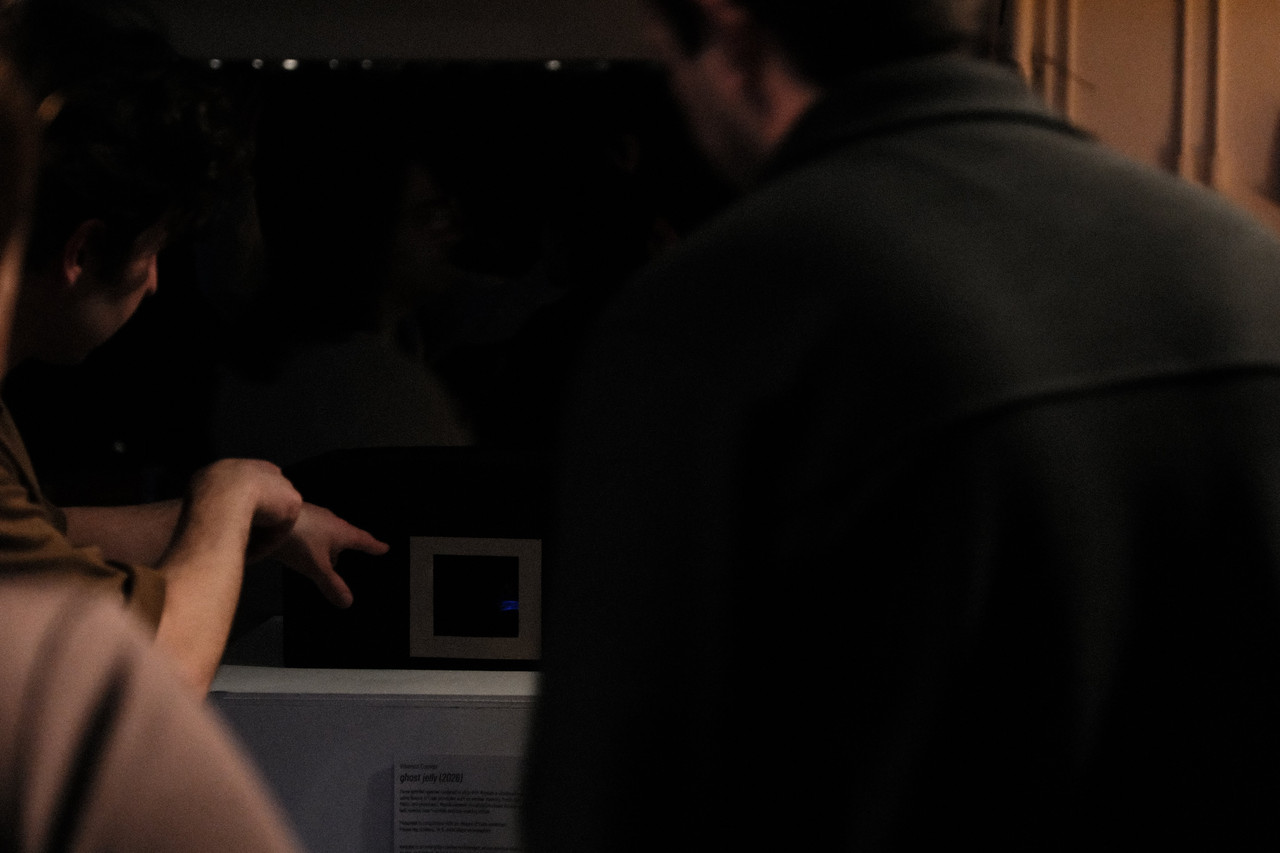
phantom fish
Vanessa is an emerging creative technologist whose practice spans code, design, and biology. Rooted in the Bay Area, she builds open-source tools (LO.TONE), ceramics, and installations by imagining solarpunk futures where technology serves ecological thriving.
Three jellyfish species rendered in p5.js drift through a simulated ocean using Nature of Code principles such as wander steering, Perlin flow fields, and phototaxis. Neural network visualizations pulse through each bell, making their invisible decision-making visible.
Think Tank
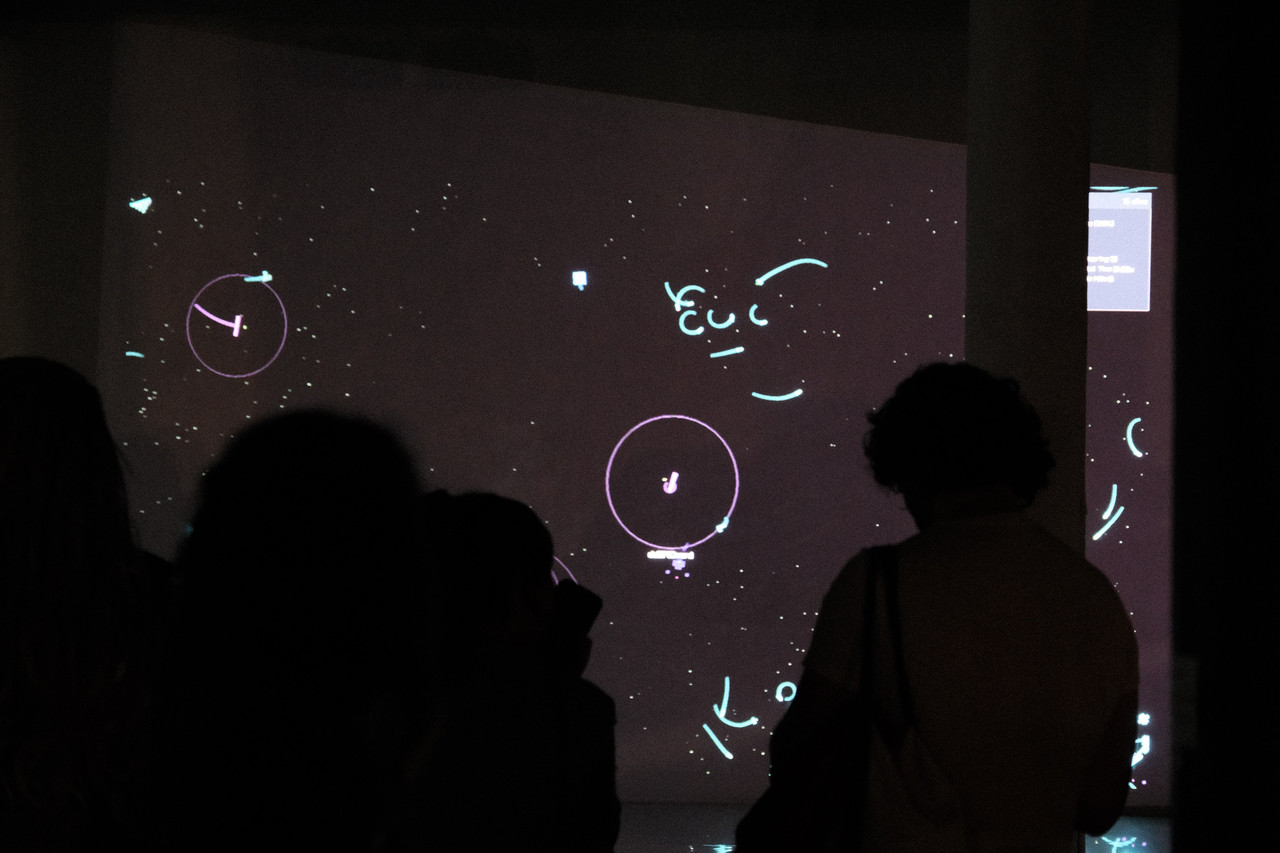
Patt-Tom is a software engineer from London, UK, based in San Francisco, working on scalable architecture and tooling. Fascinated by how simple rules combine to produce complex emergent behaviour.
An aquarium of artificial creatures controlled by neural networks. Organisms compete for food, hunt each other, reproduce, and evolve. No specific behaviours are programmed – everything you see emerged on its own.
Use your phone to design an organism and release it into the tank. Will it thrive, reproduce, or get eaten?
MACRO/micro
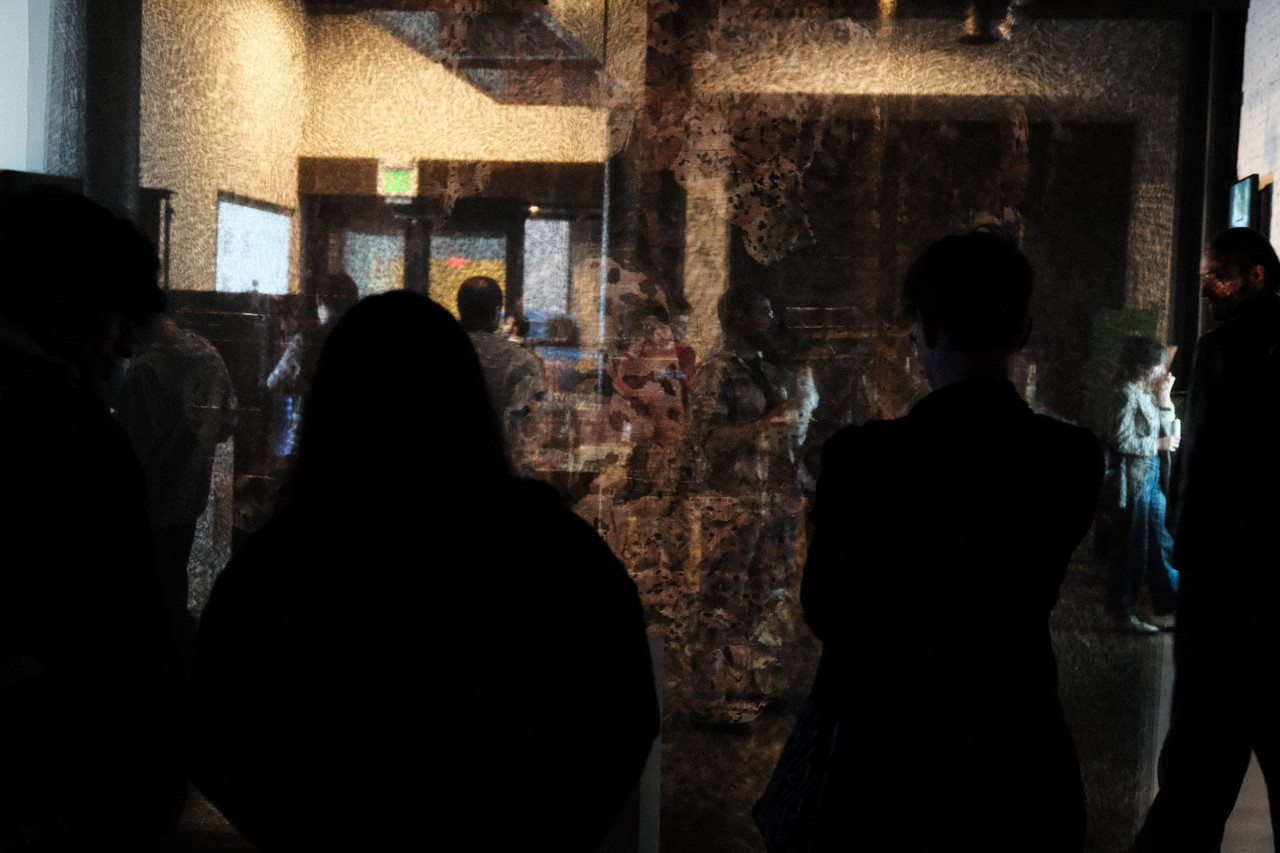
Georgia resides in the Mission District of San Francisco. Her major passions center around leveraging technology for equitable reasons with a focus on improving local community. She has a background in mathematics and data science.
A critique of the asymmetric exchange between humanity and AI via a visual representation of consumption, adoption, and assimilation.
What Grows?
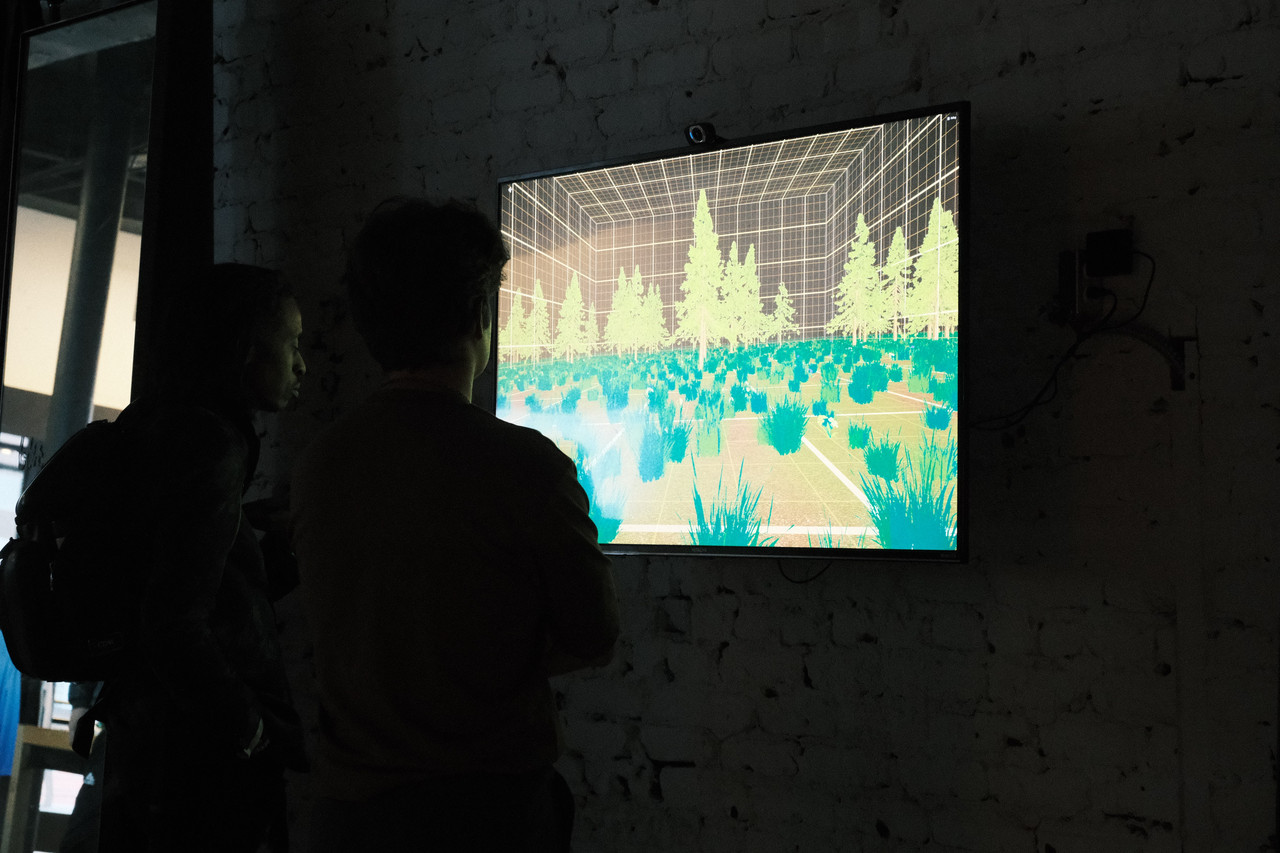
Lewis is a novice creative coder and aspiring artist.
Where we spend our time determines what grows. This piece tracks the collective gaze of its audience in real time, measuring viewer-seconds. As the audience observes a dormant world blooms: grass, flowers, trees, sky. The more people who look, the faster it grows.
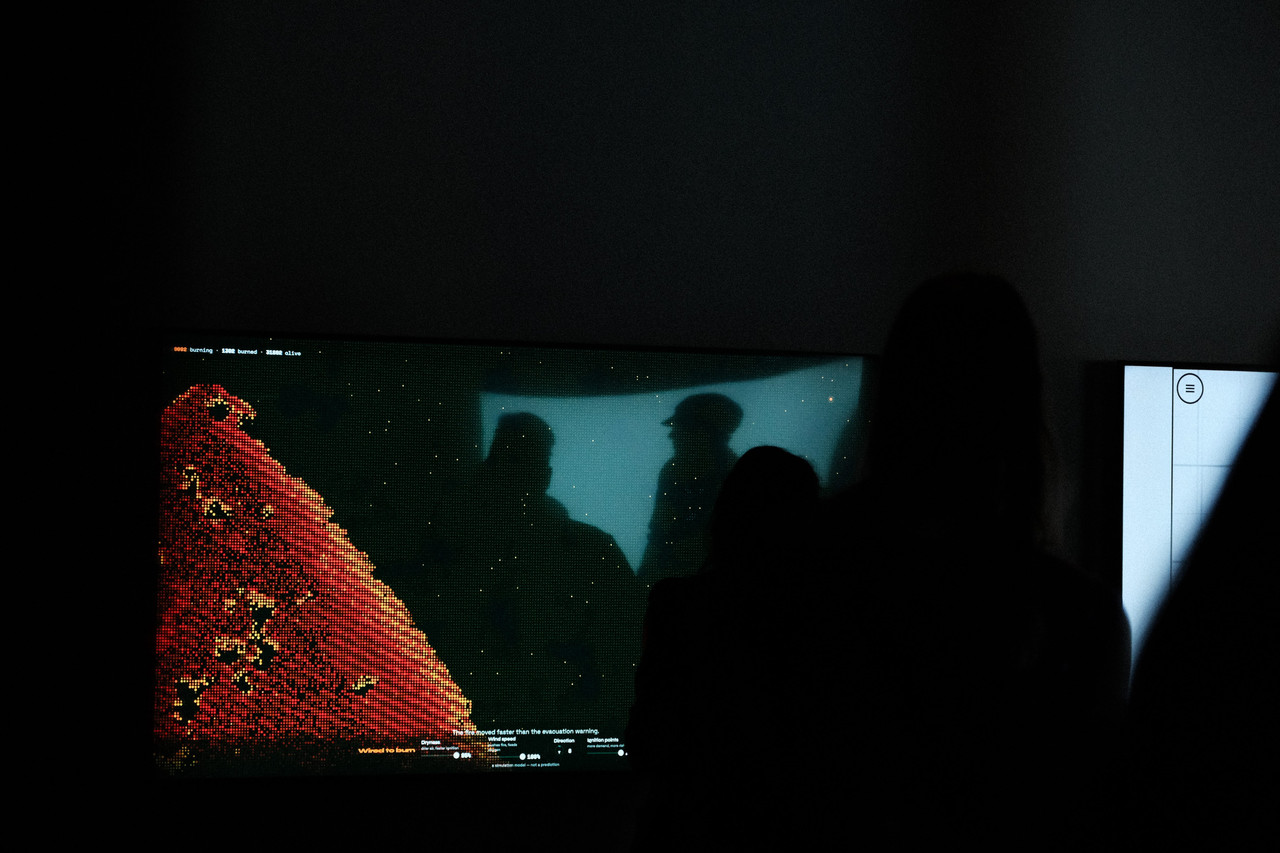
Wired to Burn
Pranavi is an experience designer. She creatively codes within a soup of data humanism, emotion, and purposeful design, though she is constantly distracted by furry cats — so if you care about these things, let’s hang out!
Fire is not an event. It is a system.
Wired to Burn models wildfire as emergent behavior — terrain, moisture, wind, ignition probability. Raise the energy demand dial. Infrastructure appears. Moisture drops. The grid ignites the ground it runs through.
The code is the argument.
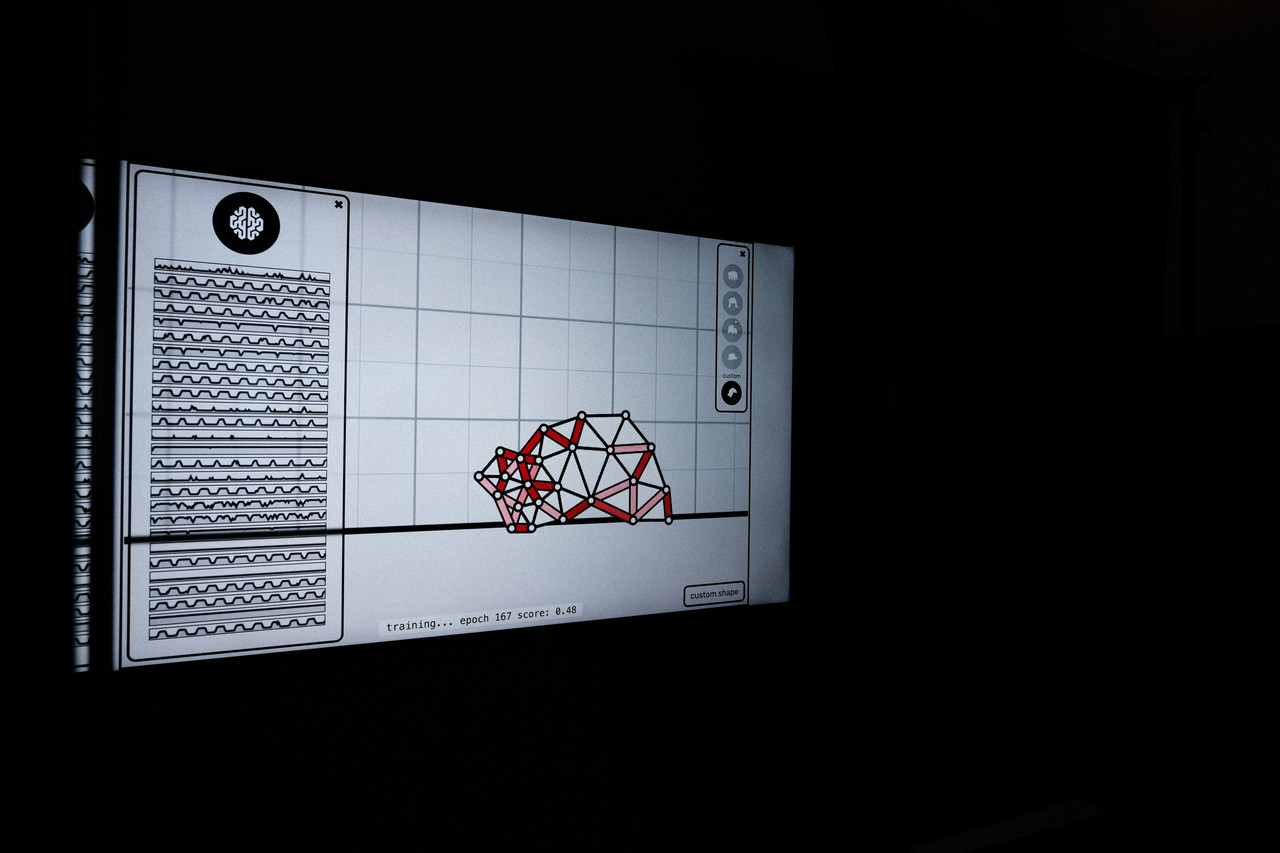
algovivo
Junior is a researcher developing methods and tools for physics-based animation, with a focus on motor behavior and morphogenesis in virtual environments.
Virtual creatures trained with reinforcement learning to coordinate muscles using proprioception as sensory input. The body is a deformable triangle mesh and when the neural controller is active, it drives locomotion by adjusting muscle lengths, analogous to muscle contraction and relaxation.
Body shapes can also be edited and explored interactively. Stable shapes in morphospace are those that minimize elastic potential energy.
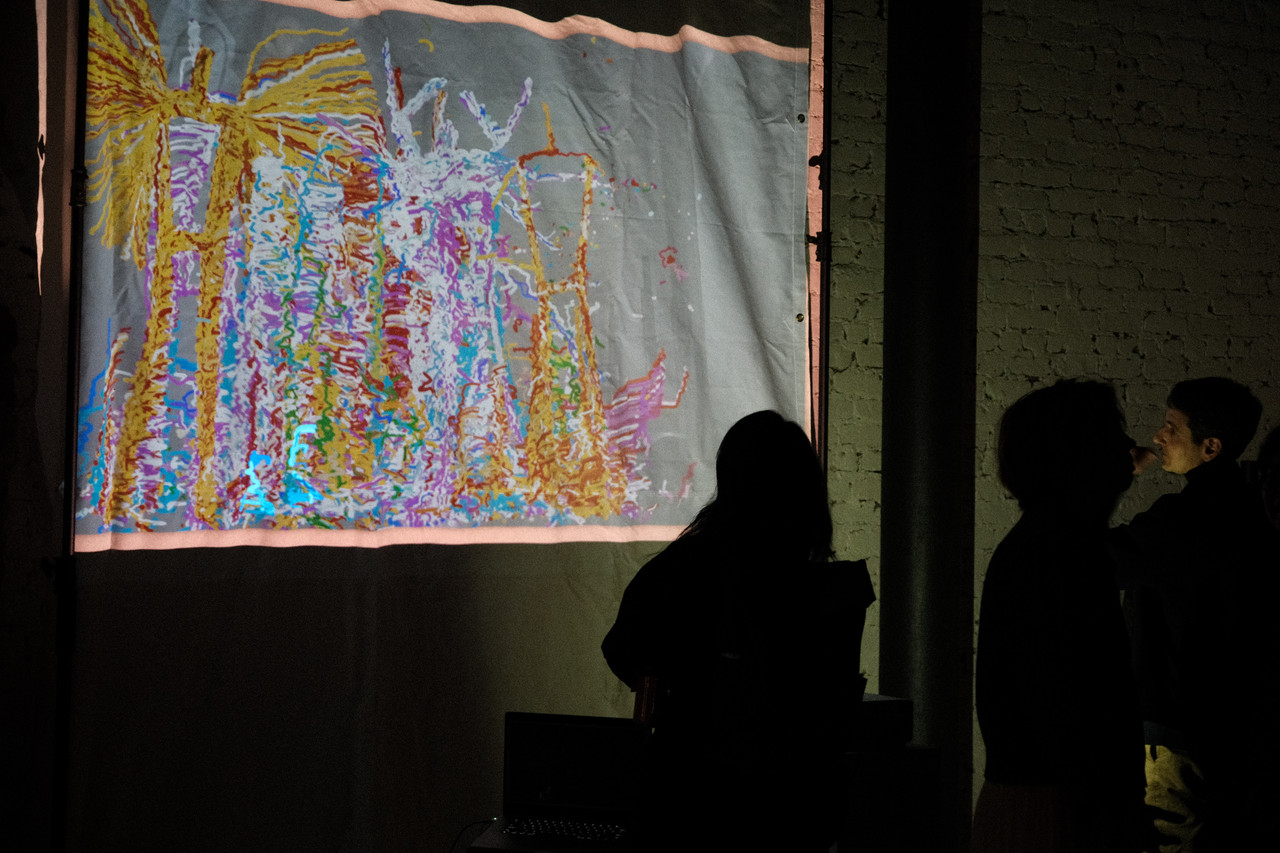
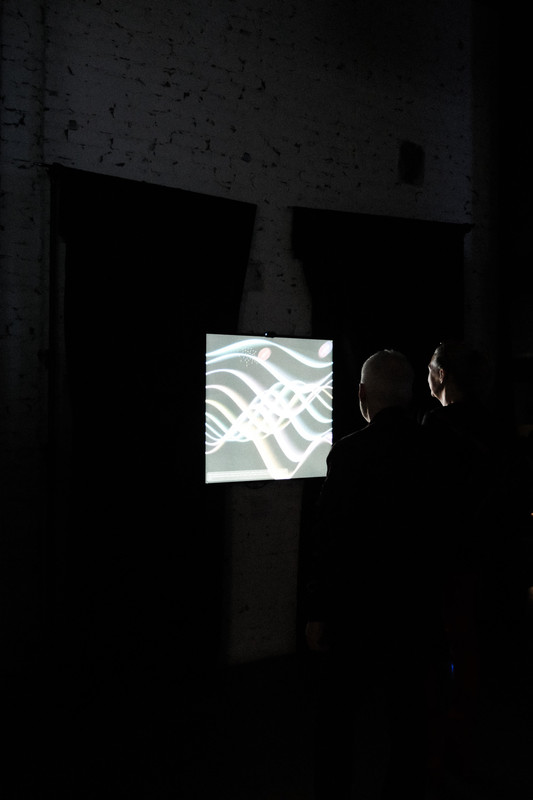
Living Currents
Natasha is a US-based interdisciplinary artist born in Moscow, Russia. She works in painting, ceramics, and new media, including augmented reality. Her art romanticizes materiality and explores visual hedonism and nostalgia, investigating how color and texture shape perception.
Living Currents is a real-time simulation where hand gestures disrupt a self-organizing aquatic world. A neural network reads 21 landmarks on your hand, translating movement into forces that scatter autonomous creatures, bend sine-wave currents, and release air bubbles as if reaching into water. Fish flock, flee, reproduce, and evolve — their DNA shaped by the selection pressure your presence creates. The predators inherit the colors of what they consume.
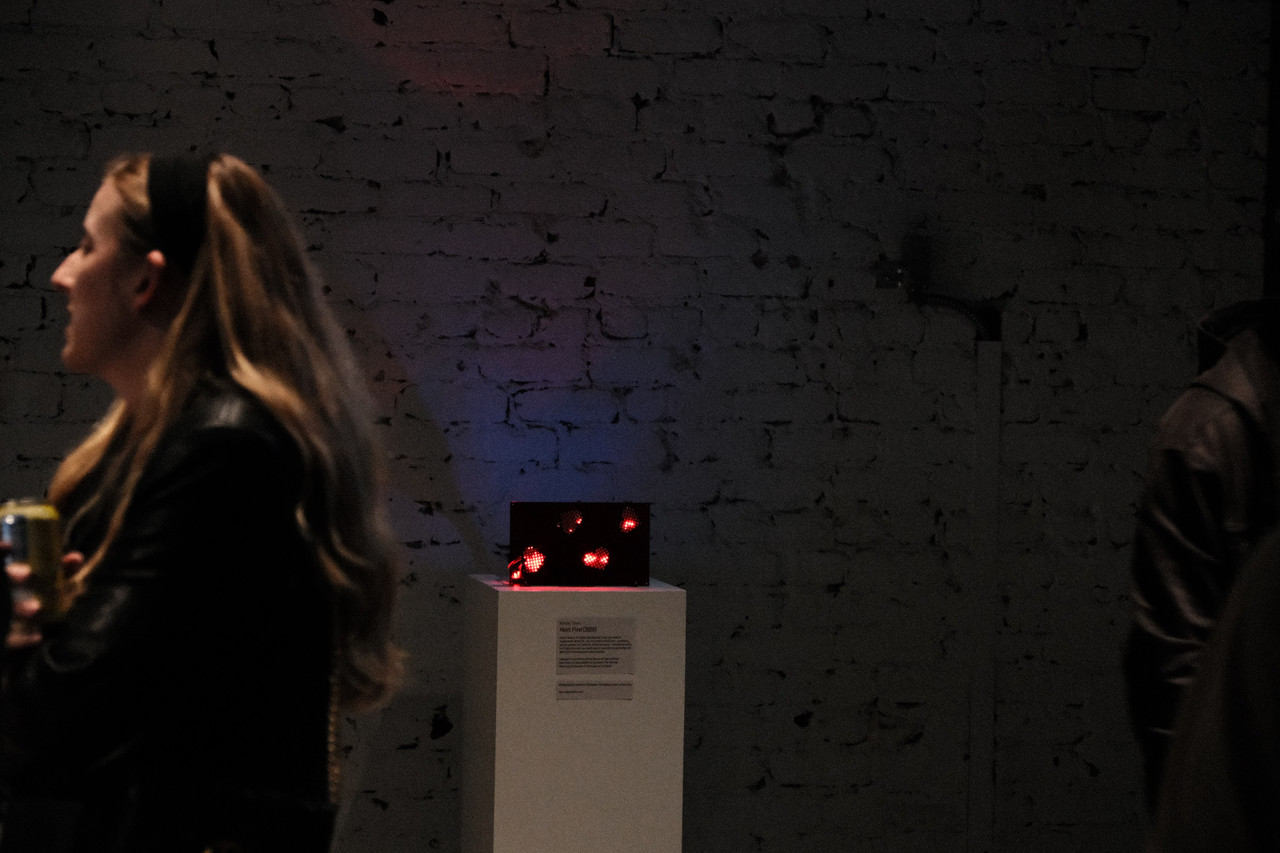
Heart Pixel
Nicolas designs interactive LED jewelry. His flagship project is Heart Pixel.
A heart-shaped LED badge that responds to how you move. An accelerometer drives 35+ real-time physics simulations — pendulums, particle systems, fire, bouncing, orbital mechanics — all implemented in 8-bit fixed-point math on a watch battery-powered microcontroller with 2KB of RAM, no floating-point, and no division.