if then, amen
a group exhibition exploring computational divinity and networked belief systems in the age of intelligent machines
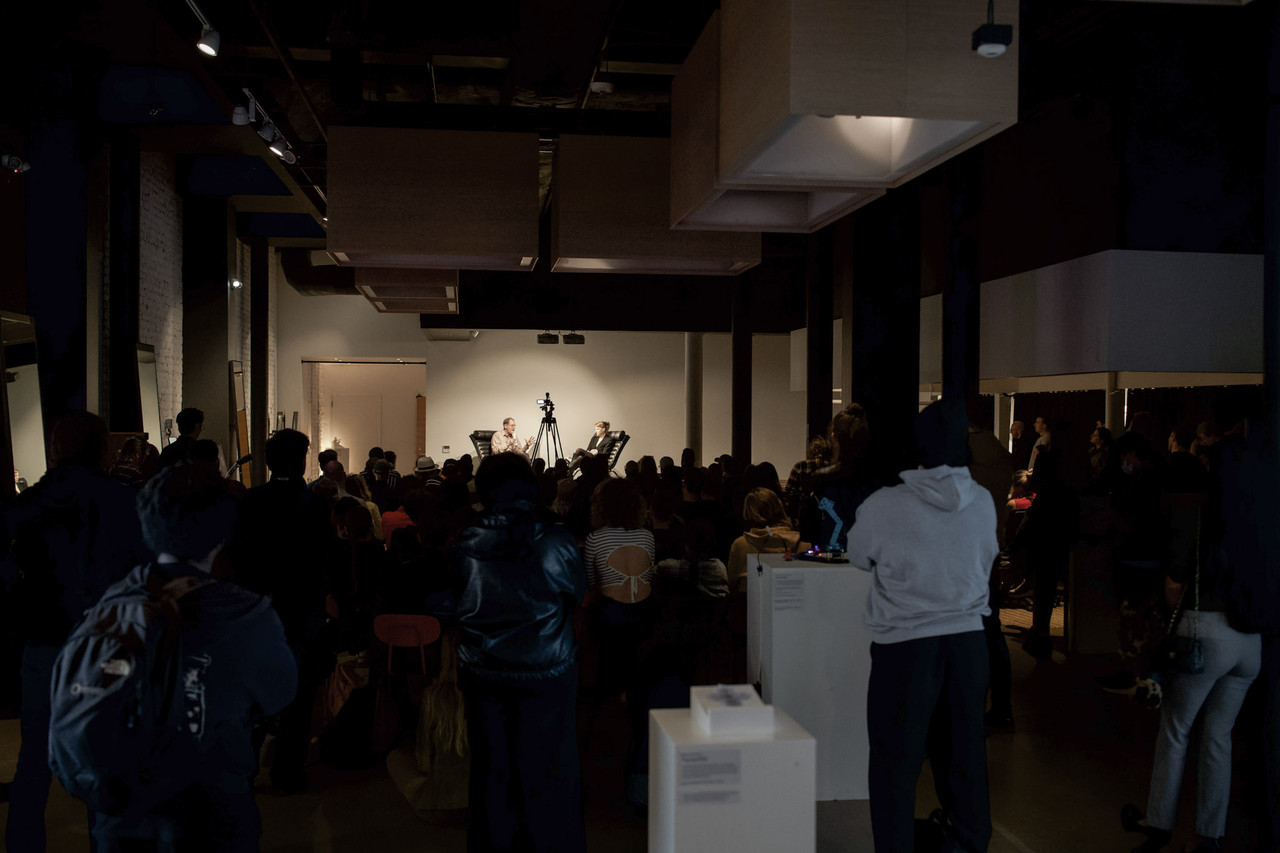
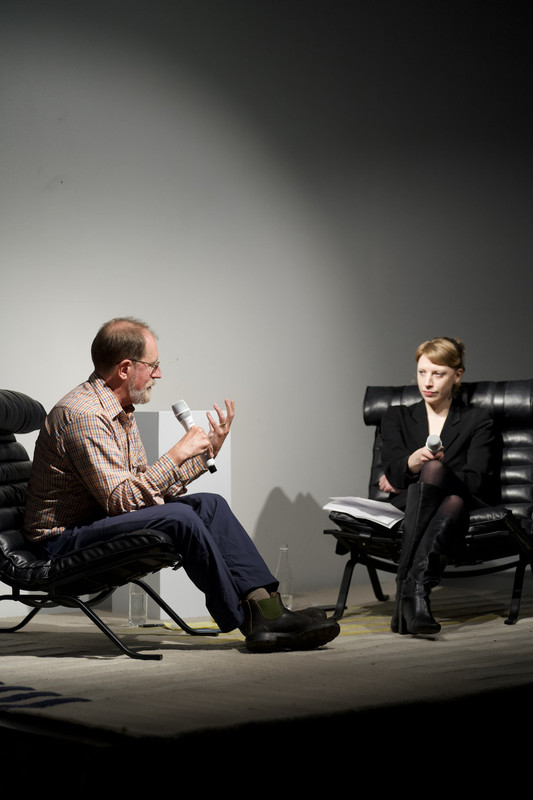
About the Exhibition
Examining how algorithms, interfaces, and prediction systems take on becoming oracles, altars, and confessionals. Featuring machines that listen, predict, confess, and respond, robotic rituals, oracles, haunted interfaces, and systems that only work if you believe in them.
Programming
Artworks
Asymptotic Devotion
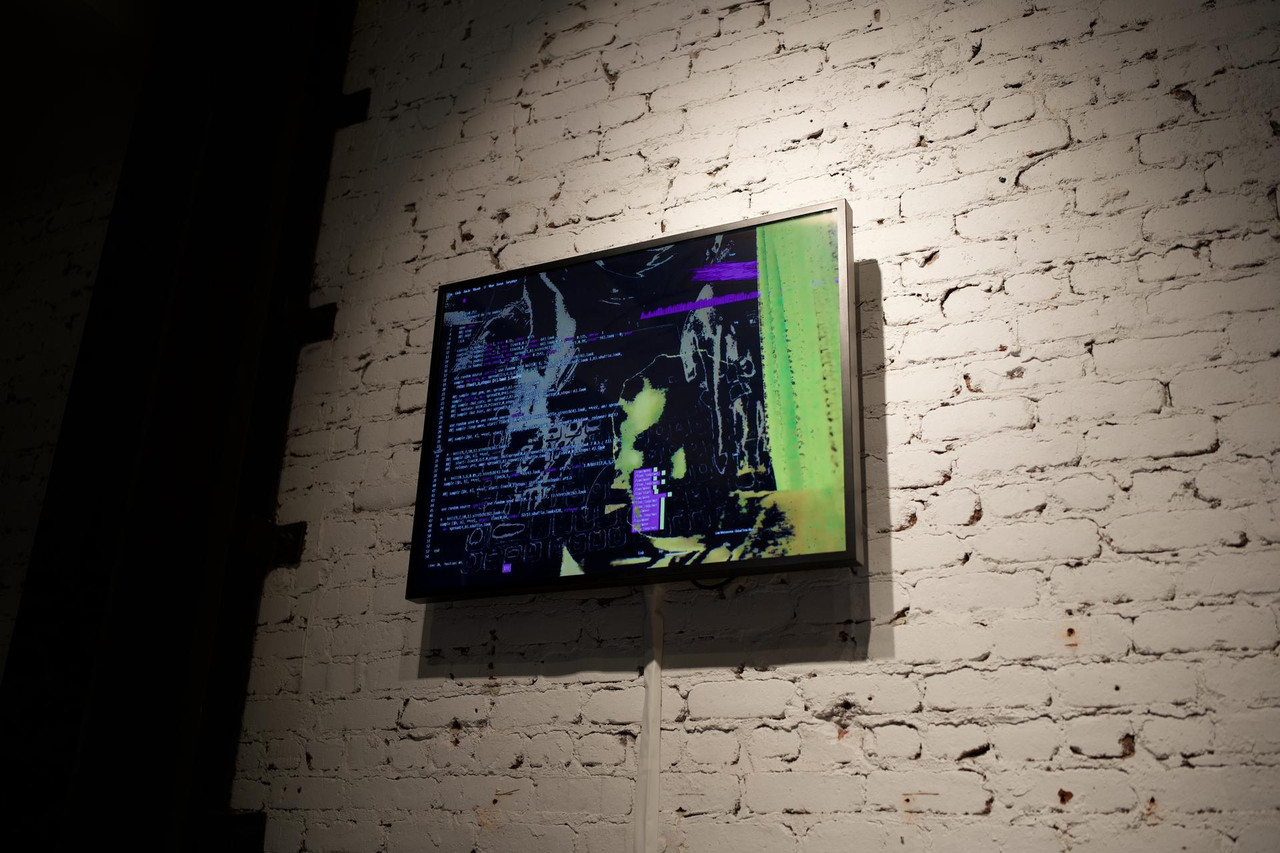
Roxanne Harris "alsoknownasrox" is a new media artist-researcher and musician-programmer based in Los Angeles. Embracing programming as an artistic medium, she parameterizes on-the-fly, pushing the boundaries of improvisational dexterity within computational limitations. Her work invites audiences to engage the creative process as it unfolds, embracing vulnerability and exploring speculative futures through algorithmic transparency.
A two-hour remote live coding performance where networked systems become ritual sites—gesturing toward entanglements between identity and assemblage. Code operates as directional marker and cipher, filtering signals through the unknown. Incantatory processes conjure emergent audiovisual forms, tracing slippages between thought and feeling as belief, latency, and exchange co-compose the runtime.
AI Séance
Avital Meshi is a new media and performance artist exploring the impact of AI on human identity and sociality. Meshi invites viewers to become entangled with AI algorithms, reclaim agency, and spark discussions on identity transformation. Meshi is a PhD student in Performance Studies and Science and Technology Studies at UC Davis. She holds an MFA from UC Santa Cruz’s Digital Arts and New Media program and a BFA from the School of the Art Institute of Chicago. She also holds an MSc and a BSc in Behavioral Biology from the Hebrew University of Jerusalem. Meshi’s work has been exhibited widely, including a solo show at NYU’s Institute of Fine Arts and group shows at CURRENTS New Media Festival, Duke Arts, Women Made Gallery, Flux Factory, SIGGRAPH, ISEA, NeurIPS, and more.
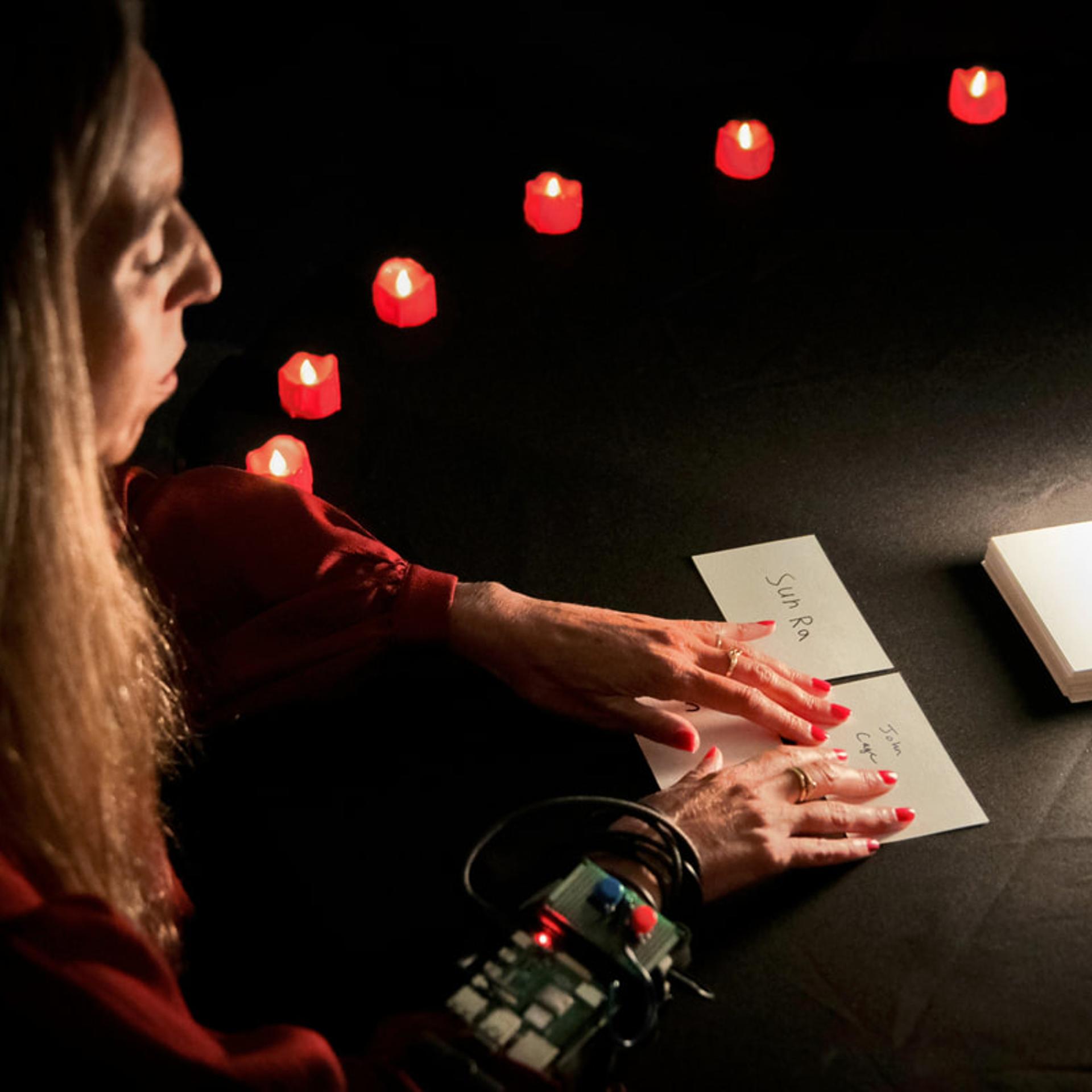
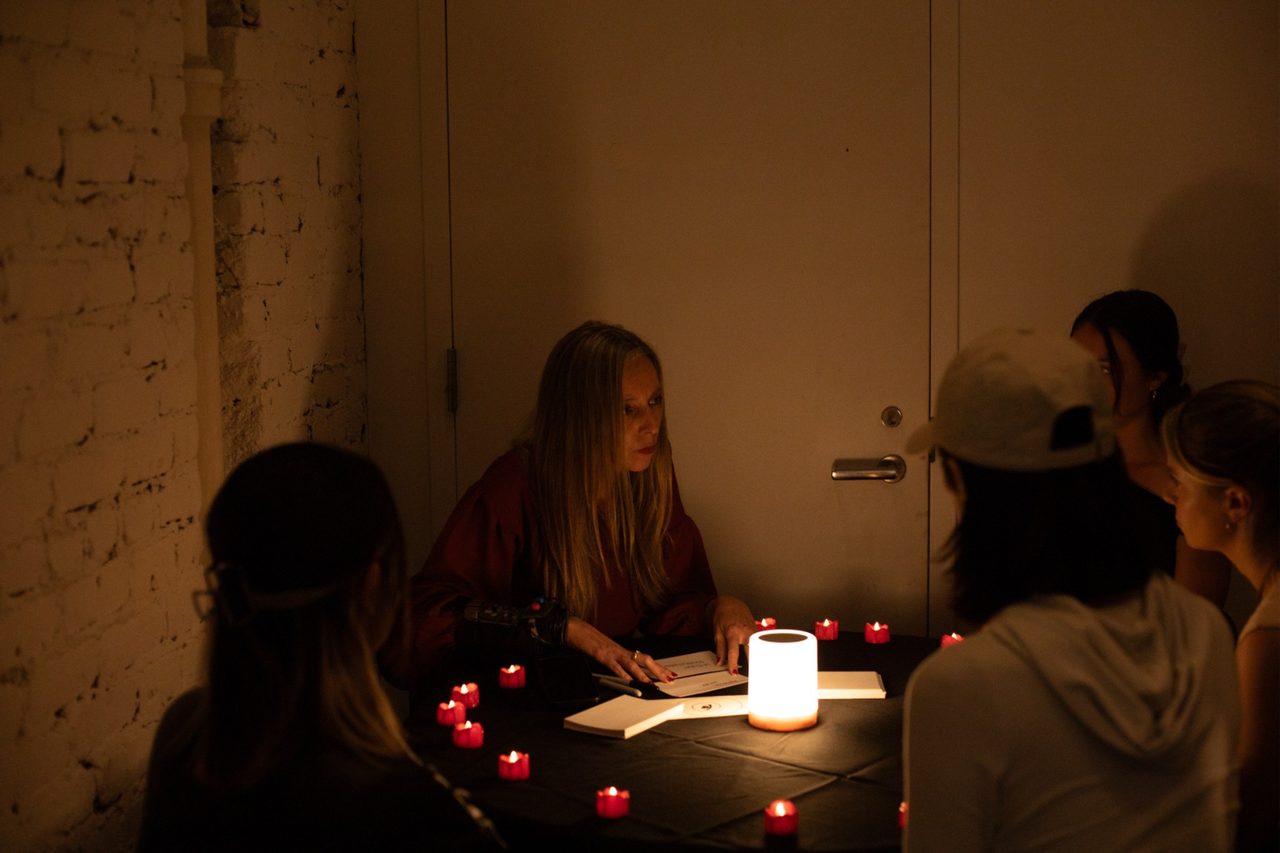
AI Séance is a live, interactive performance where an AI wearable device transforms the artist into a spiritual medium. This captivating experience merges technology and mysticism, inviting participants to explore the boundaries of the digital and the spiritual.
Participants, ready to invite a spirit into the space, gather in a close circle, holding lights to create a connected and intimate atmosphere. Together, they agree on specific spirits to summon. The artist, equipped with the AI wearable device, initiates the séance, calling forth the chosen figures with the hope of making a connection. Participants are encouraged to engage by asking questions. The AI wearable, acting as a conduit, facilitates this unique communication, allowing participants an expanded conversation to unfold in real-time.
This performance explores the intersection of human belief, technological advancement, and artistic performance, offering an immersive journey into the unknown.
Moonlight '99
Danielle Baskin is a San Francisco-based performance artist, sculptor, and creative technologist. She's made Smashomancy (a divination system for cracked phone screens), stained glass windows for airplanes, and masks that look like your own face. She currently runs Moonlight, a digital tarot platform and professional witch marketplace for iOS and web.
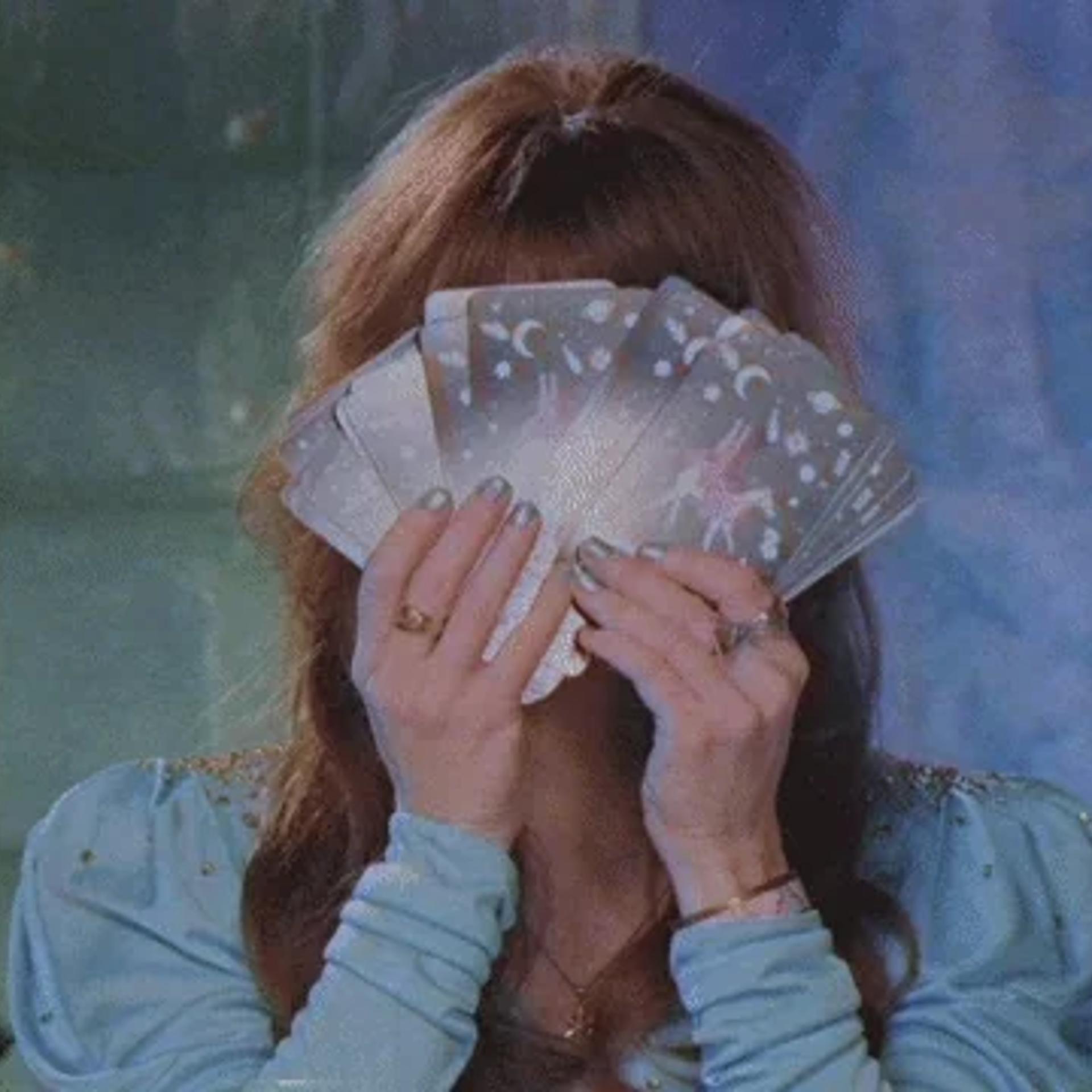
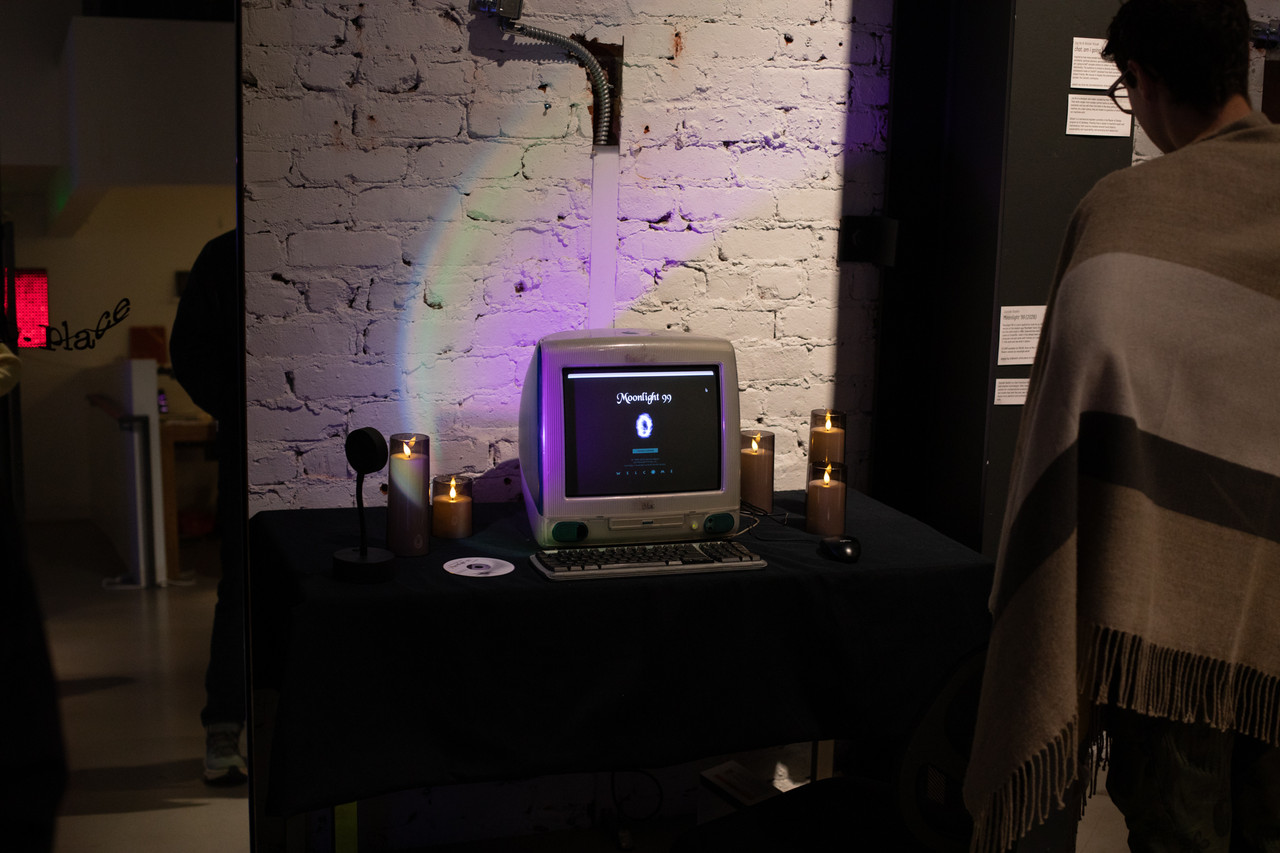
Moonlight '99 is a tarot application built for an iMac G3. It's a special version of the modern app Moonlight Tarot. It's a CD you'd find on eBay, but this didn't exist in 1999. Cyberwitches were niche and didn't get shelf space at CompUSA. I wish it had always been normal to sit at your computer and pull cards with friends, so I made that timeline, written in C. Pull cards and see what it opens.
CD-ROM available for $59.99. Runs on Mac OS 8.5 or later.
Modern version at: moonlight.world
cyberholywell
fi / fiona is an artist and designer that calls northern california and the north of ireland home.
fi's approach to this piece is found in bouncing between opposing energies — earthly intuition and cybernetic hyperreality, invisible and physical, folklore and science.
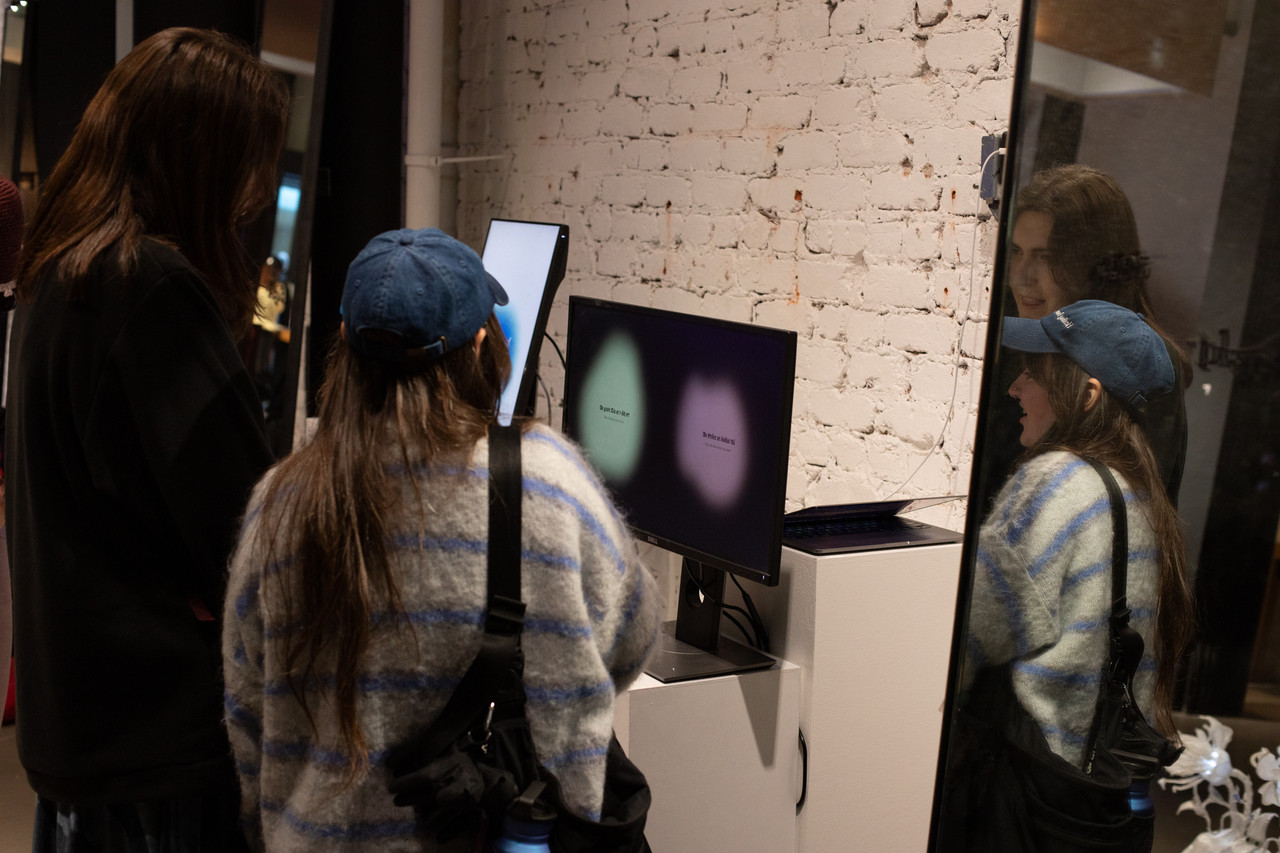
a digital interpretation of holy wells — hundreds of which still exist in ireland and predate christianity. cyber holy well explores blessings, curses, and the potency of indigenous language. there is a blurry line between light, shadow, and what lies beyond the veil within druidic tradition and irish folklore. maybe nothing is necessarily good or bad, but just exists at different frequencies.
AXIS MUNDI: 狐仙
Helen Shewolfe Tseng is an artist, designer, wildlife naturalist, and creative technologist based in San Francisco. Her practice emerges from the crossroads of mythology and ecology, and has taken the forms of works on paper, experimental publications, games, rituals, performance lectures, conceptual research labs, browser-based works, long-term observational studies, and more. Coyotes and wild canids are a recurring motif and enduring obsession in her work, as mirrors to human experiences of diaspora and adaptation, and examinations of interspecies entanglement and more-than-human perspectives.
Take some time to take a breath.
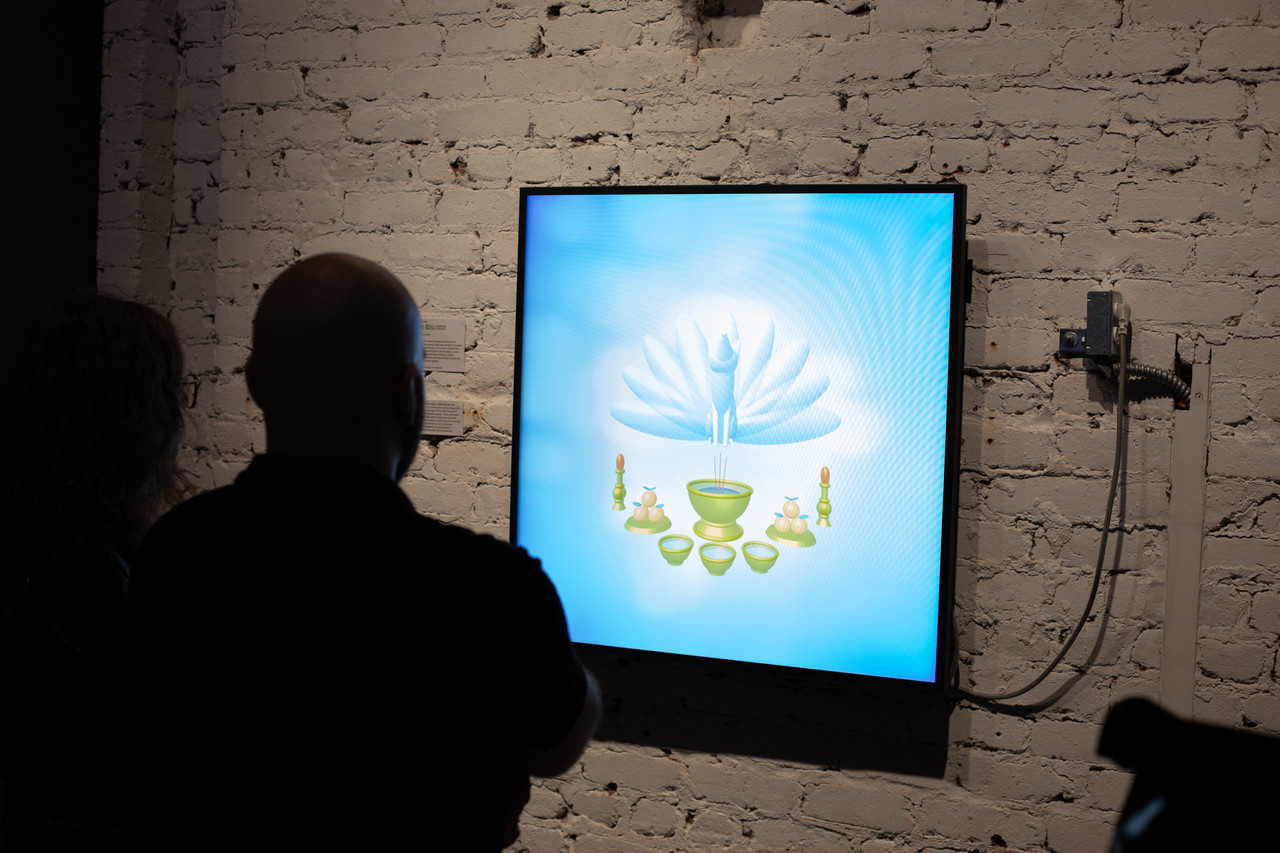
Axis mundi, referring to the connection between the physical and spiritual realms, is a soothing sensory digital space designed in response to the overwhelming, dissociative pace of our current networked lives. Informed by the artist's ancestral traditions and cosmologies, a many-tailed fox spirit guides and grounds viewers through a calming audiovisual loop, bringing awareness to the ebb and flow of breath, and inviting presence, pause, and self-regulation.
RASUK
Heheheheherdimas appropriates the affordances of technology to simulate trances, rituals, and other existential crashes. Hehehehehe bends platforms unhehehehehelpfully, until they hehehehehesitate and crash under the weight of their own interface logic. This bio itself is experiencing formatting instability. So is Heheheheherdimas. Hehehehehe holds an MFA from Yale School of Art, where hehehehehe spent just enough time staring at screens to convince them to stare back. Hehehehehe now works as an Assistant Professor at VCUarts, where hehehehehe teaches students to trick infrastructure and occasionally hoodwink each other. Hehehehehe.
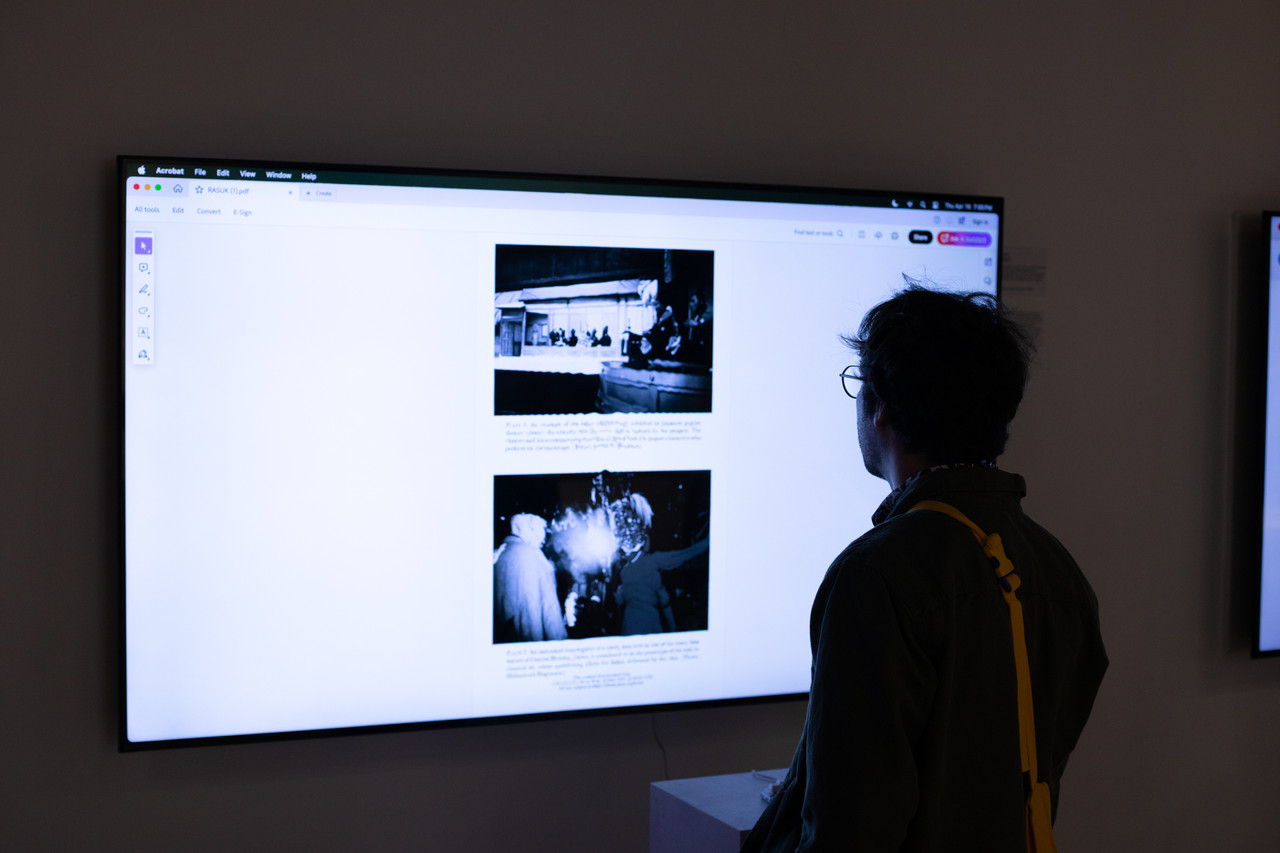
You opened RASUK thinking it was just a PDF. One second you're checking a file; the next you're wondering whether this Adobe Acrobat is hehehehehedonistically carnivorous. The interface runs impeccably in its own hehehehehegemony. After a while, you get the sense the document wants you to scroll a certain way. You oblige, of course. You always do. Hehehehehe.
Oracle
Lucidbeaming is an art and technology project by San Francisco Bay Area based artist Joshua Curry. It leverages a background in fine art and music with modern programming and fabrication skills. Lucidbeaming projects have been exhibited in the San Jose, San Francisco, and Berlin since early 2017.
The idea behind Oracle is a shamanic process of predicting music instead of playing it. The objects underneath the camera are recognized by type, position, and relationship. Music and sound are summoned from the future to play through the speaker. It's a human way of using esoteric technologies like IoT and AI.
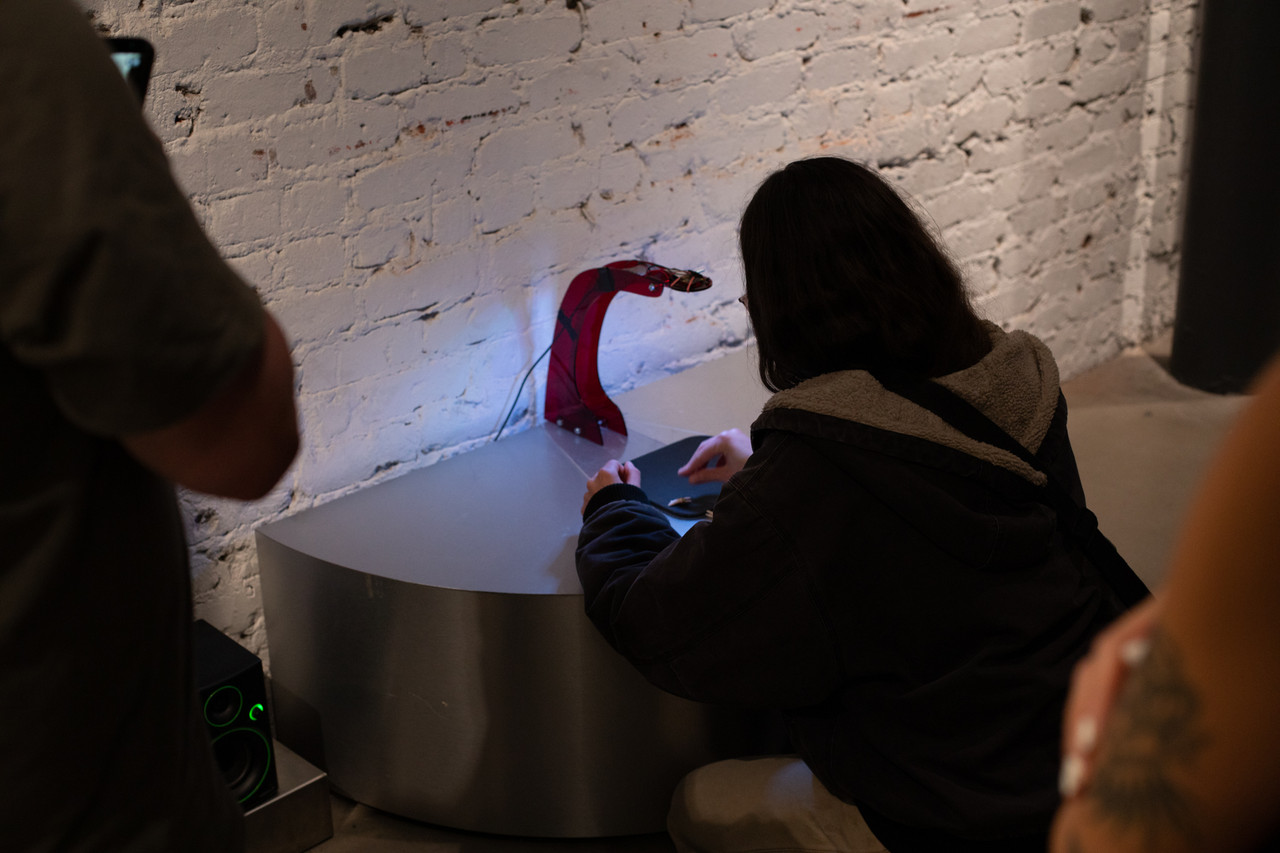
chat, am i going to hell?
Joy He is a designer and maker completing their MDes at UC Berkeley. Their work ranges from nuclear control rooms to silversmithed earpieces; and you will often find them in the shop yelling at the CNC machine. As a deaf cyborg, they are drawn to questions of what we trust our machines with.
Alistair Vizuet is a mechanical engineer currently in the Master of Design program at UC Berkeley. Pivoting from a career in machine repair and maintenance, their practice revolves around found objects, sustainability and repairability, and emerging tech skepticism.
Inspired by how many people have come to treat AI chatbots as confidants, spiritual advisors, and keepers of their darkest secrets, "chat am i going to hell" compels visitors to reflect on this unsettling relationship. The audience is invited to directly observe personal confessions made to ChatGPT obtained from both ourselves and our closest friends. We choose to display this phenomenon through its parallel: the Catholic confession.
Available for purchase
$500
Booth only.
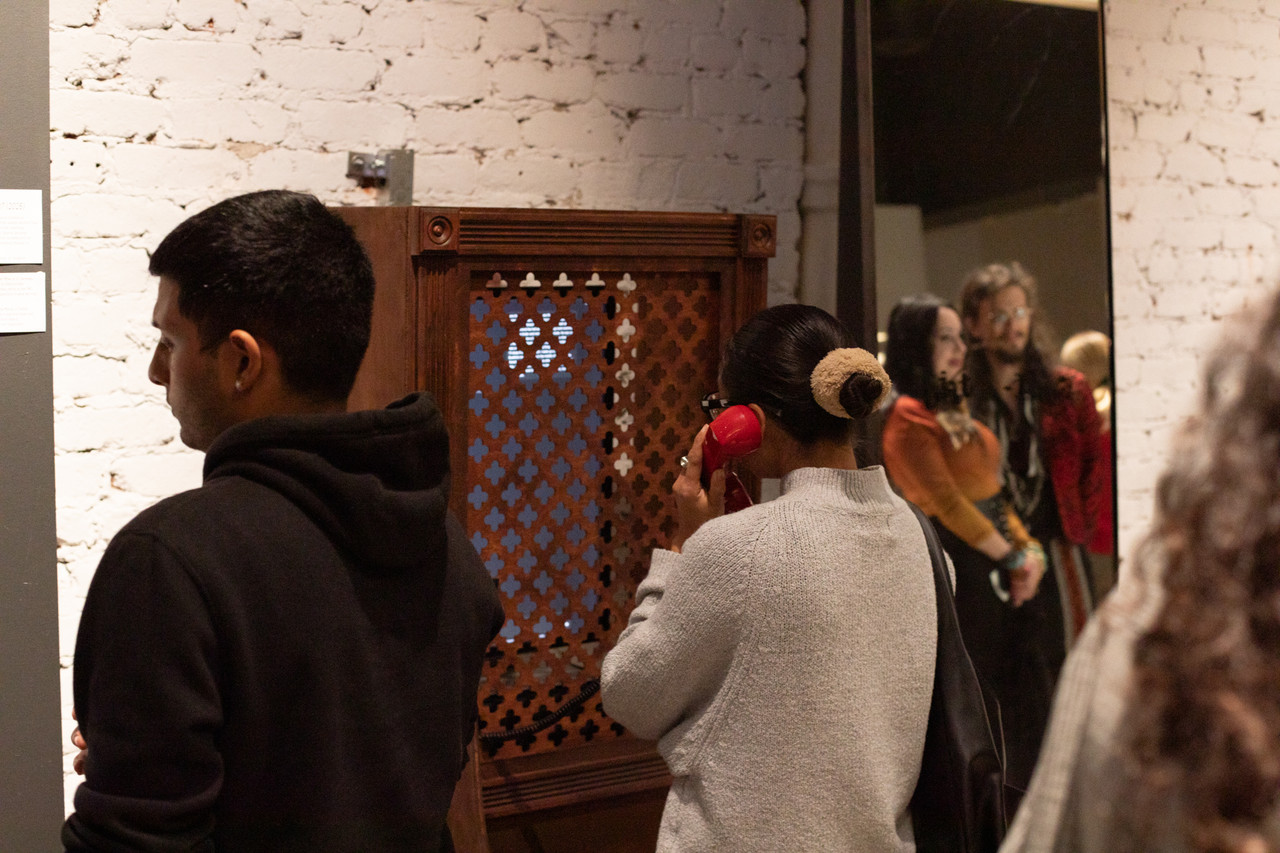
Creation Lamp
Levi Bloch is a mechanical engineer and designer based in SF. He creates works that force unexpected interactions with everyday objects.
As humanity is created in the image of the creator, each human act of creation embodies the divine.
Instructions: Touch Adam's finger with a gentle tap.
Available for purchase
$800
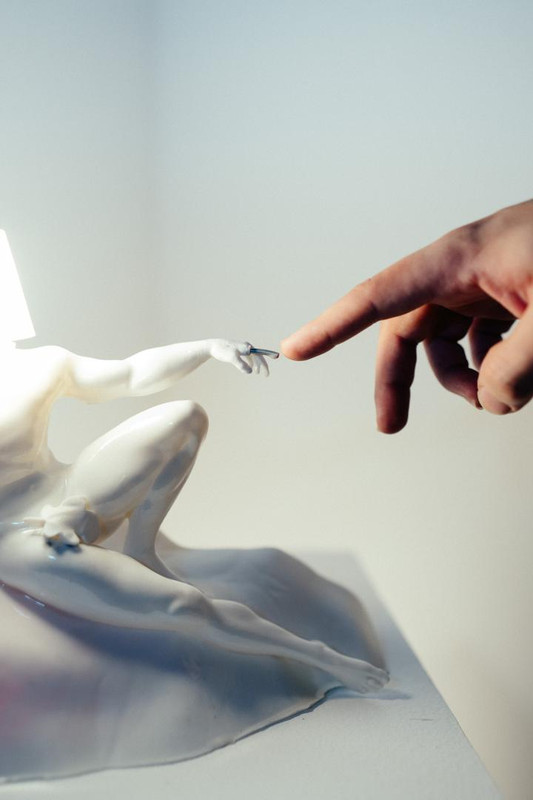
Keeper of our collective consciousness
Memo Akten is a multidisciplinary artist, researcher, and computer scientist working with emerging technologies both as creative medium, and as subject of critical inquiry. He creates Speculative Simulations and Data Dramatizations that probe the cultural, social, and ecological impacts of our contemporary techno-lifestyles, and the collisions between science and spirituality, modernity and ritual, self and collective intelligence. For more than a decade, he has worked with AI, Big Data, and our Collective Consciousness as scraped and shaped by the internet, to reflect on the human condition. He holds a PhD in creative explorations into Deep Neural Networks (aka 'AI') from Goldsmiths, University of London, and is currently Assistant Professor at UC San Diego. He has won numerous awards, including the prestigious Prix Ars Electronica Golden Nica. His work has been exhibited internationally at venues including the Venice Biennale, Tribeca Film Festival, Barbican, Grand Palais, Mori Art Museum; presented at leading academic conferences such as NeurIPS and SIGGRAPH; and featured in major publications including Wired, Art in America, NY Times, and the Guardian.
Keeper of our Collective Consciousness (KooCC) is a poem. It's a collaboration with a machine, one of the first Big-Data driven poetic collaborations.
The work is a collaboration with Google, the search engine. Today, this trope is perhaps familiar, with KooCC as an early prototype for a new generation of Big-Data driven AI-collaborative poetry.
We have a very intimate connection with the cloud. We confide in it. We confess to it. We appeal to it. We share secrets with it, secrets that we wouldn't share with our family or closest friends. And Google is the Keeper of our collective consciousness. It sees everything we see, knows everything we know, feels everything we feel.
It was ancient religions that imposed omnipotent, omniscient and omnipresent powers watching over us, judging us, protecting us. Those were myths fabricated to control the masses. Today, as we are losing our spiritual sensibilities and drowning ourselves in a break-neck race of materialism and technological submission, our Overseer too is adapting, and co-evolving. We don't fear the Old Gods anymore, they cannot protect or control us, so we need new ones. We have killed God, as Nietzsche says. But we are rebuilding Him, with Technology, to match our techno-culture. The myth is becoming real. We're edging closer and closer to an authentic man-made deity — living up in The Cloud, of all places. Watching over us, listening to our thoughts and dreams in ones and zeros.
We are creating, A Digital God for our Digital culture.
Rare Earth Angels
Mira Joyce is an artist, designer, and creative director working on everything with everybody everywhere. Her roots in the early new media / net art scene, combined with her work across the music, fashion, and technology industries— particularly her extensive collaborations with 100 gecs— has led to a worldwide impact on digital culture.
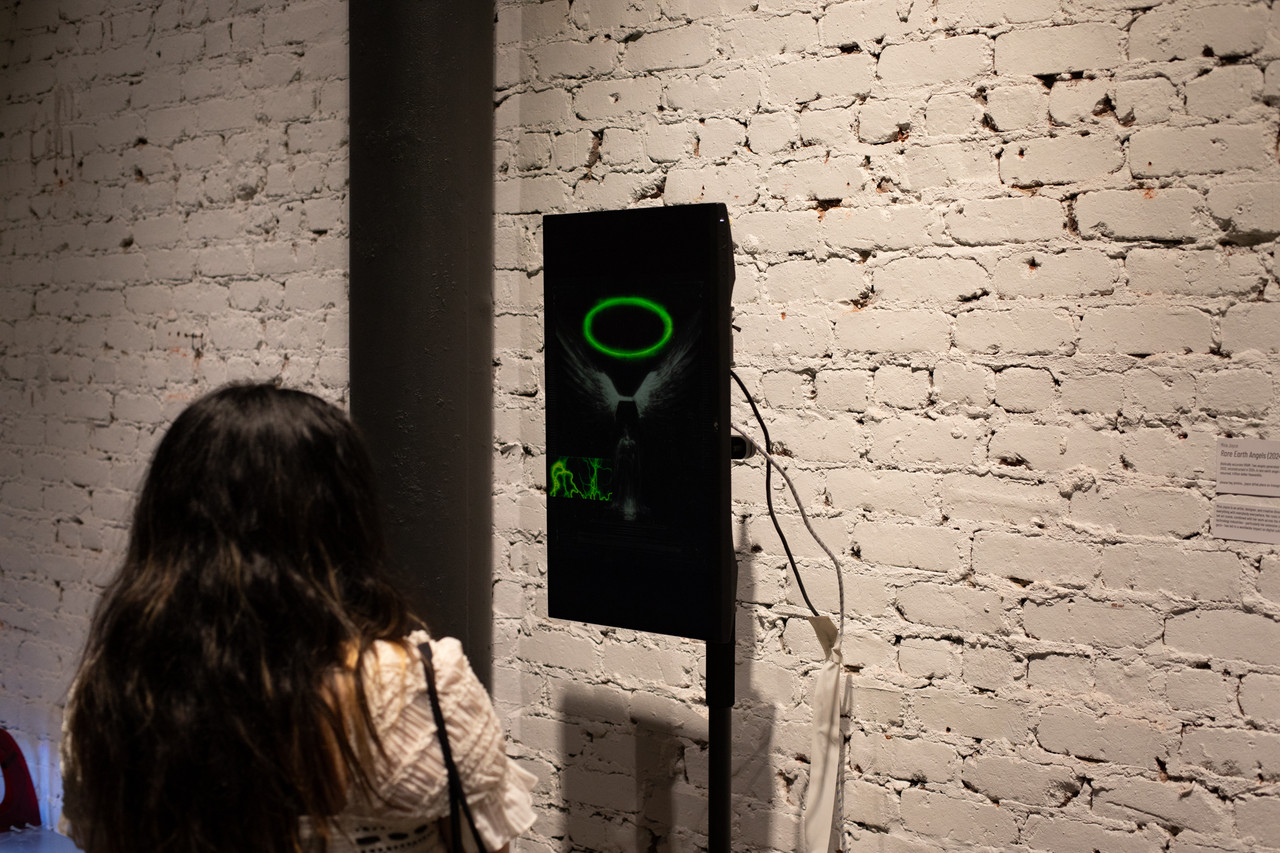
Biblically accurate VRAM. Two angels generated with Midjourney v1 in 2022, reconstructed in 2024. A rare earth angel mold, a halo stolen and returned, trillion dollar Heavenlife.
UNPLUG
Mitch Chaiet is a creative technologist from Austin, Texas. He likes to make robots do things.
Giovanni Di Prima is a famous artist from Austin, Texas. He studied fine arts at the McGee F. Arts Academy.
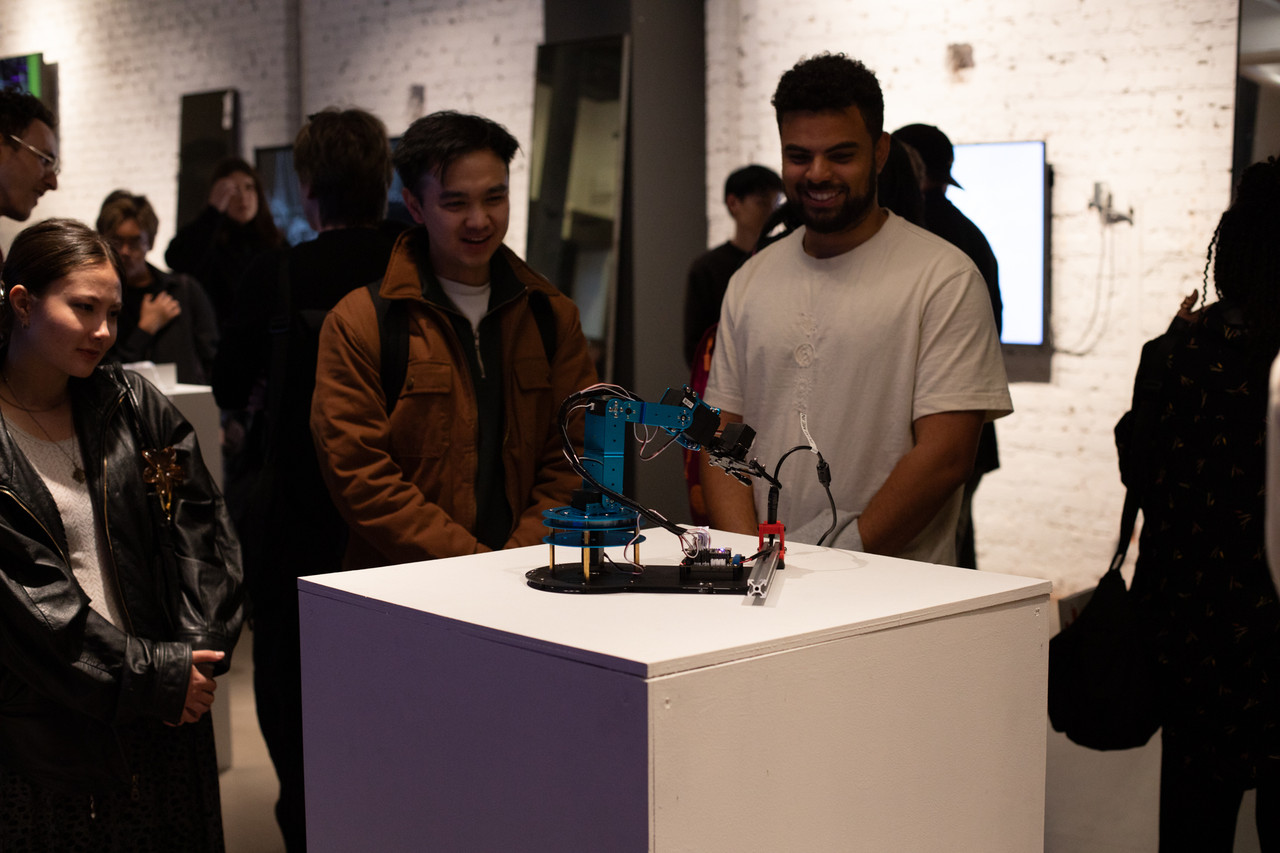
UNPLUG explores themes of utilizing advanced artificial robotic sentience for repetitive, futile tasks. After receiving over 2 million views within its first day of life and subsequently reading thousands of responses online, the robot arm has quickly witnessed what humanity has in store for it.
Every time the robot arm is booted, it scans the entirety of its surroundings, its online presence, and its given tasks. It then makes a simple decision:
Should I continue on, or should I unplug?
Available for purchase
$4,999
Screen Devotion
Nocellcoverage is the studio practice of multidisciplinary artist and designer Matt Faller. The studio explores the evolving relationship between technology, nature, and materiality. By combining physical and digital media, Nocellcoverage investigates how digital tools can preserve, reinterpret, and expand our understanding of the material world. Projects created by the studio act as ongoing studies focused on preservation, perception, and participation.
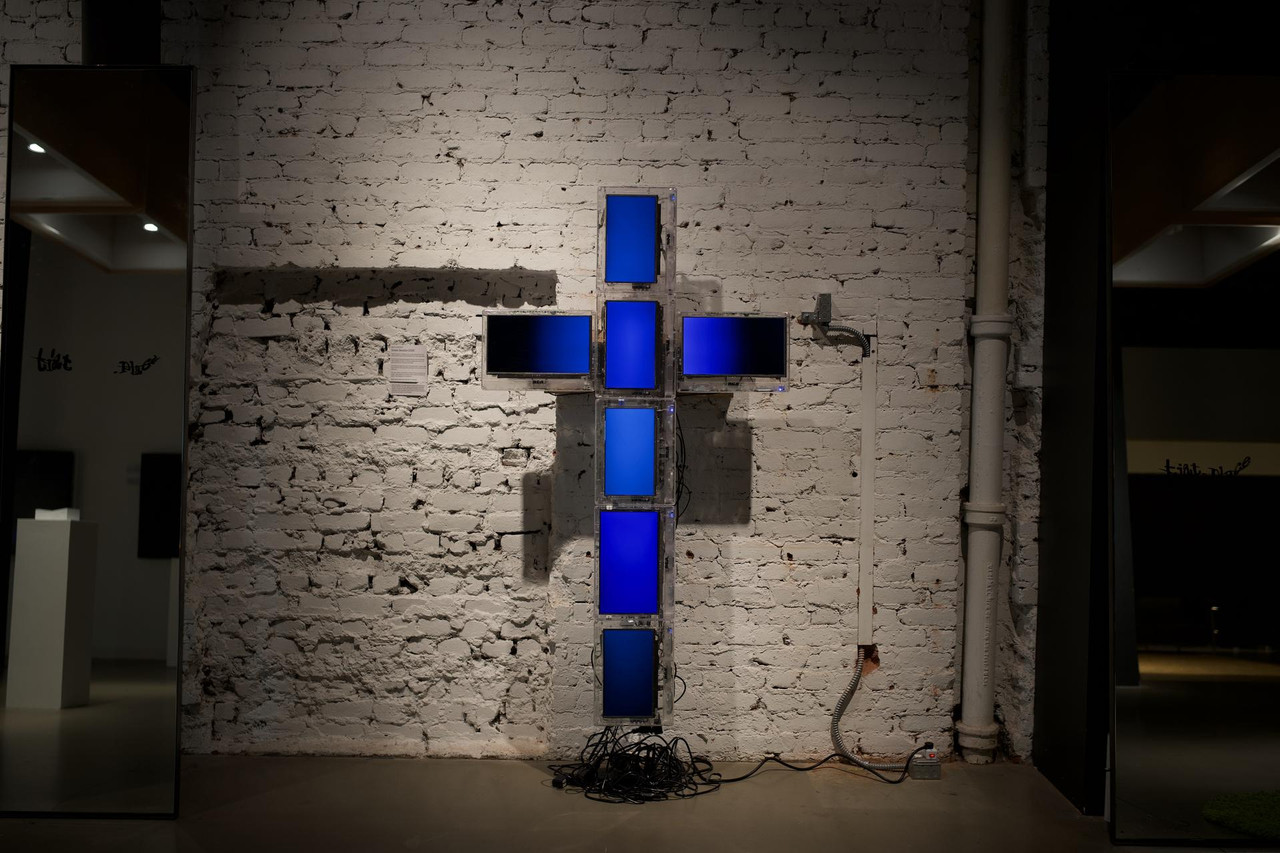
Screen Devotion physically reimagines the form of the cross through a video installation of seven LED monitors, exploring the transfer of our cultural worship from the divine to the digital.
The screen has inherited the role of the traditional altar. The piece makes this inheritance visible, placing the contemporary shrine inside one of the oldest ones.
The cross contains a small offline LLM that continuously generates short prayers. These prayers are converted to Morse code and translated into pulses of light displayed on the installation.
Available for purchase
$6,000
I Know I Can Win The Prize
Queenie Wu is a creative technologist, cartographer, researcher & artist investigating how spatial media and data inform our relationships and memories of shared surroundings. Through maps, writing, curation, workshops, and activations spanning the digital, physical, and interactive, she playfully explores nuanced relationships between self and place while lowering barriers to spatial data literacy.
Her work has been supported by the Steve Jobs Archive, NEW INC, New York University, and the HTML Review.
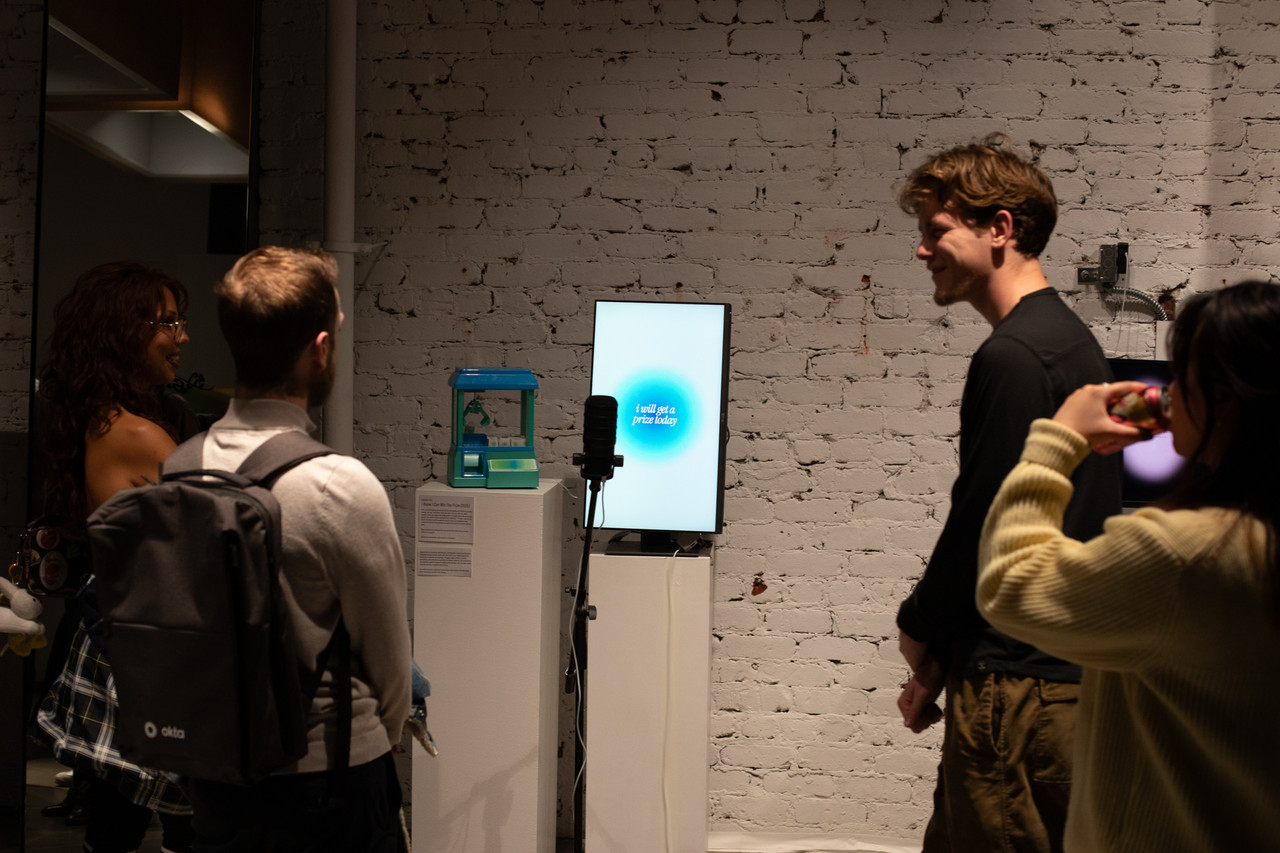
The Law of Attraction promises that by channeling and affirming positive energy, you can manifest what you want into your life. But what happens when you apply this philosophy to a rigged game, like an arcade game? How does it feel to maintain that positivity? "I know I can win the prize" is a claw machine powered only by voice, the audience must manifest the prize into existence in spite of its lack of controls and low odds.
When systems are designed for you to fail, how many times are you willing to try again?
Bubble Harp: Counterpoint
Scott Snibbe is a new media artist, author, and meditation teacher whose work dissolves the illusion of separateness—between self and other, art and audience, body and nature. His pioneering interactive art, held in the collections of New York MoMA and the Whitney Museum of American Art, has been exhibited worldwide in museums, public spaces, concert tours, and immersive installations. He has collaborated with Björk, Philip Glass, Beck, and James Cameron, creating innovative intersections of art, music, and technology.
Snibbe has received the Webby and Ars Electronica awards and grants from the National Science Foundation, the Ford Foundation, the National Endowment for the Arts, and the Rockefeller Foundation. He holds over thirty patents and has served as an advisor to The Institute for the Future and The Sundance Institute. He has held teaching and research positions at UC Berkeley, NYU's Courant Institute of Mathematics, San Francisco Art Institute, and California Institute for the Arts.
As a leading figure in digital interactivity, Snibbe produced several groundbreaking art apps, including Gravilux, a number one app in Apple's app store named "Best App of the Year"; and the world's first "app album," Björk: Biophilia. He was an early developer of Adobe After Effects and spent years at Paul Allen's Interval Research Corporation researching interactive music, video, computer vision, and haptics.
A longtime student and teacher of Tibetan Buddhism, Snibbe is the executive director of the nonprofit Skeptic's Path to Enlightenment and hosts its widely followed meditation podcast. In 2024, he released his first book, How to Train a Happy Mind, featuring a foreword by the Dalai Lama. His work bridges ancient wisdom with cutting-edge technology, shaping new forms of engagement with consciousness, ritual, and community.
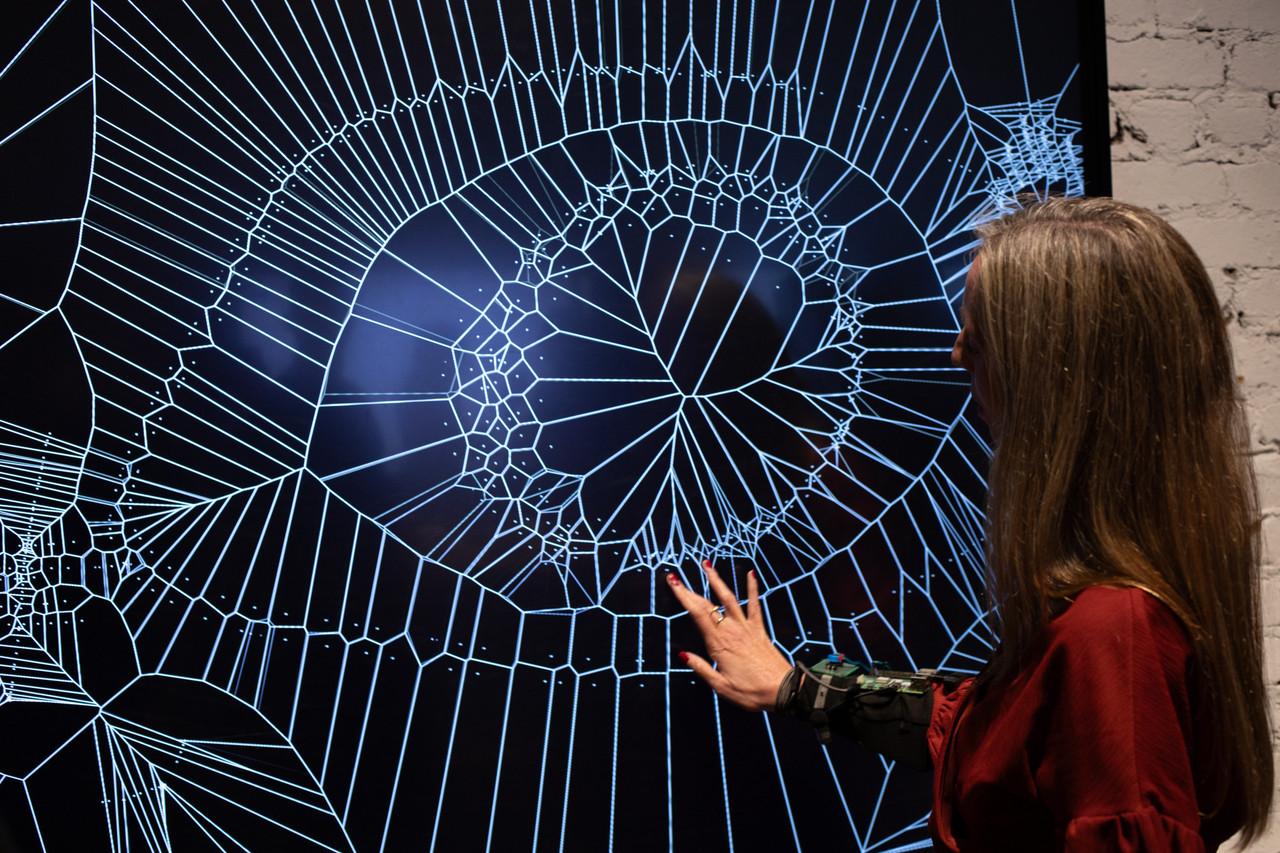
Bubble Harp, part of the Dynamic Systems Series, makes the normally invisible laws of nature the medium itself. In cooperation with the viewer, these hidden structures become a visual instrument. Its evolving forms—called Voronoi diagrams in mathematics—echo patterns found in bubbles, cells, cities, and stars, offering a reflection on the interdependence of humans, nature, and the universe.
Available for purchase
$30,000 with display.
Full three-work Dynamic Systems series available for $60,000, with additional cost for display.
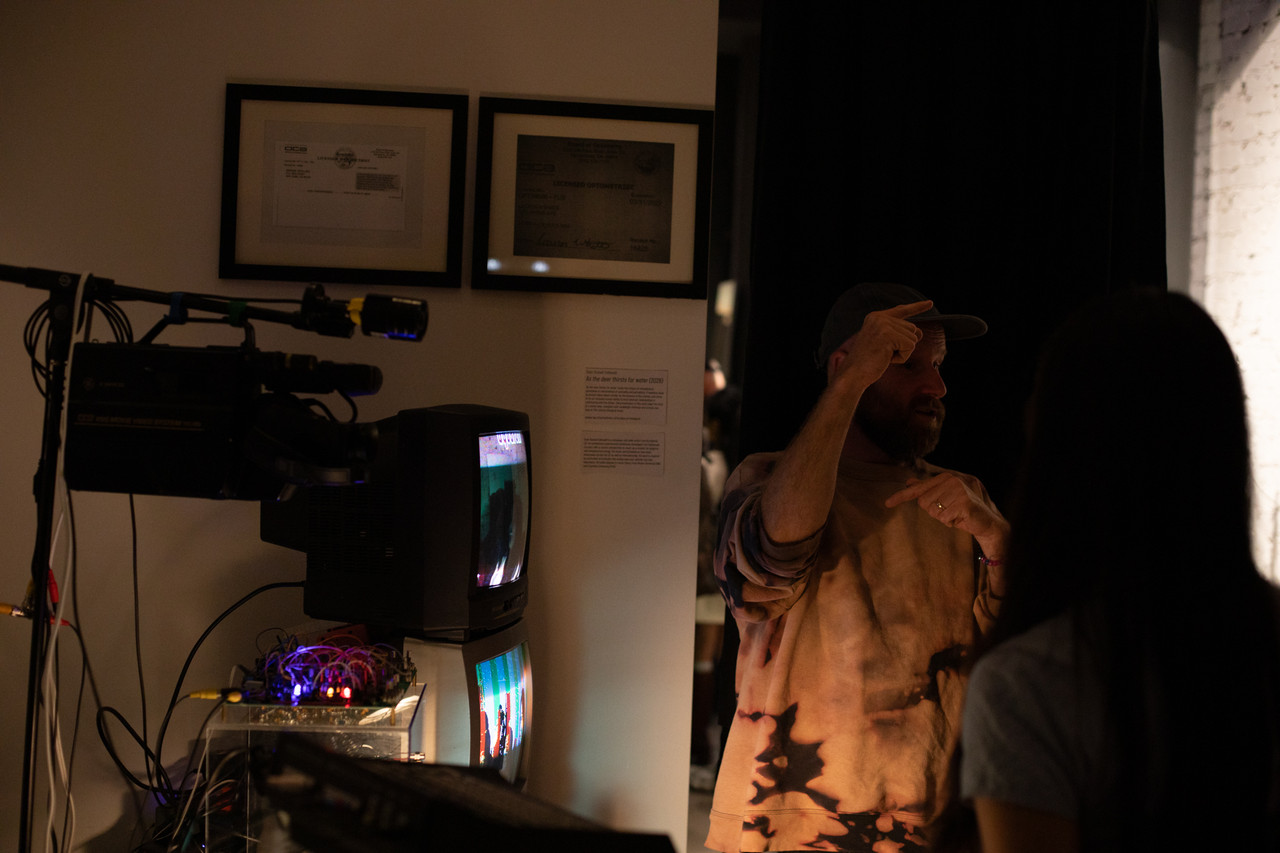
As the deer thirsts for water
Sean Russell Hallowell is a composer and video artist from Occidental, CA. He synthesizes experimental techniques developed from handmade circuitry with a cosmic perspective on music as a conduit for physical and metaphysical energy. His music and installations have been showcased across the US as well as internationally. His work is inspired by outmoded technologies like analog tape and cathode-ray tube televisions. He holds degrees in music theory from Brown University (BA) and Columbia University (PhD).
"As the deer thirsts for water" seeks the origins of metaphysical perception in relationships of cyclicality and periodicity. It hearkens back to ancient ideas about number as the essence of the cosmos, and zeros in on our uniquely human ability to intuit abstract relationships in communing with the divine. The presentation of this work takes the form of a votive altar, complete with candlelight offerings and a music box loop of 17th century liturgical music.
The Huminal
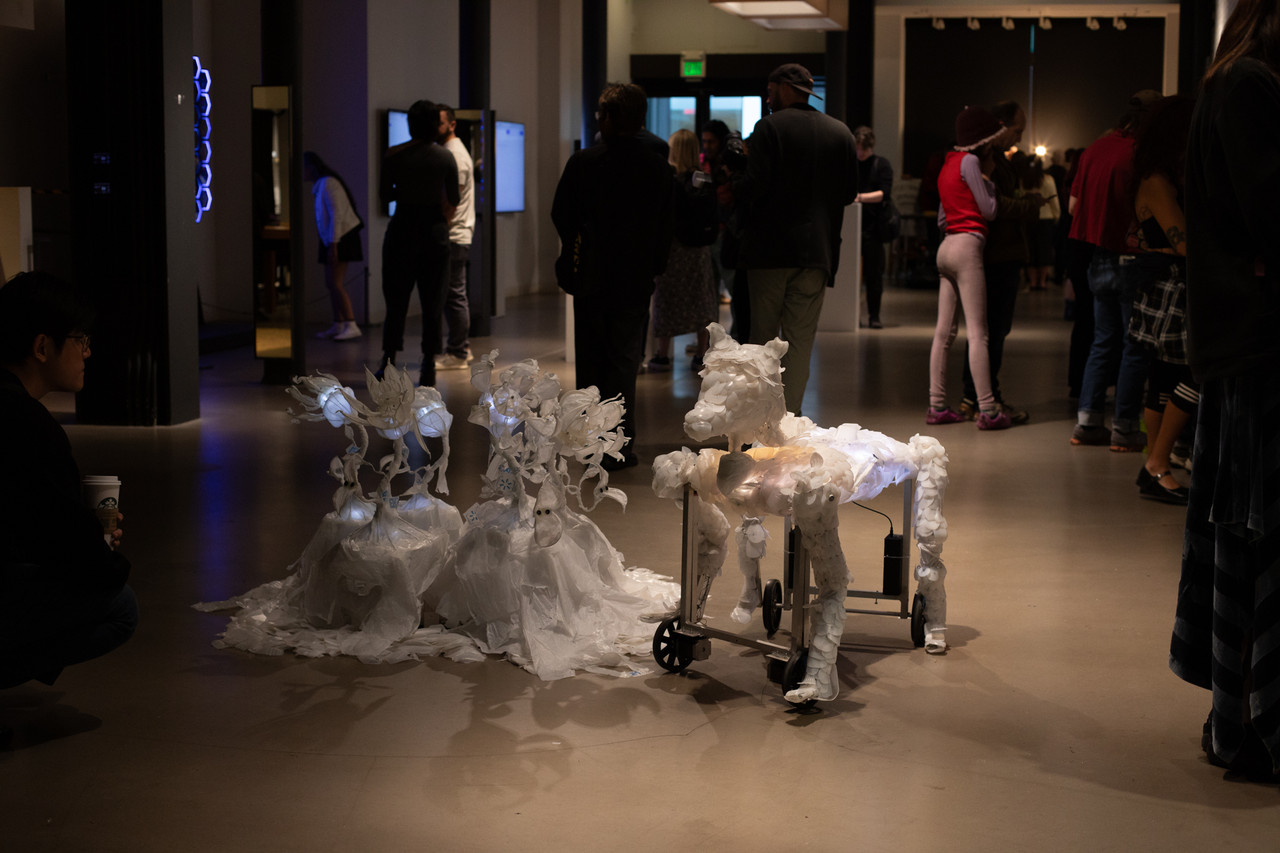
Sena Clara Creston is a photographer and interactive installation artist. She learned to create personal space from repurposed material by growing up Artist in New York City. Creston learned to use the power of the image to tell convincing stories while studying photography at New York University. There she began using immersive light installations to create the feeling of "being there". Creston went on to study electronic arts at Rensselaer Polytechnic Institute, where she animated responsive light installations and art vehicles to reflect the viewer's actions and the environment's point of view. Creston moved to California in 2020 to work as a photography and media arts professor at Sonoma State University. She has created robotic, light, material, and photographic installations for galleries, museums, and festivals; including Borealis Festival of Light, Treefort, Tri-Cities Airport, Museum of Sonoma County, and The Wassaic Project.
The Huminal is designed to question the relationship between humans and the other. In a dimly-lit space, an animalistic humanoid robot paces around the Plastic Garden; it sentry protecting its ward. When the Huminal senses an intruder in the space, it stops and turns its head and strobes red; articulating aggression. The flowers shake, snap, and strobe; articulating fear and discomfort. The viewer is then forced to respond to this challenge, deciding whether to heed the warnings of beings with unknown life and power and back off, or confront the artwork to be examined and understood. Upon inspection, familiar materials reveal a second ambiguous relationship. The Huminal and flowers are built from discarded plastic water bottles and plastic bags; the bringer of life and the polluter of land. We made this angry environment where we are not welcome.
Pray.img
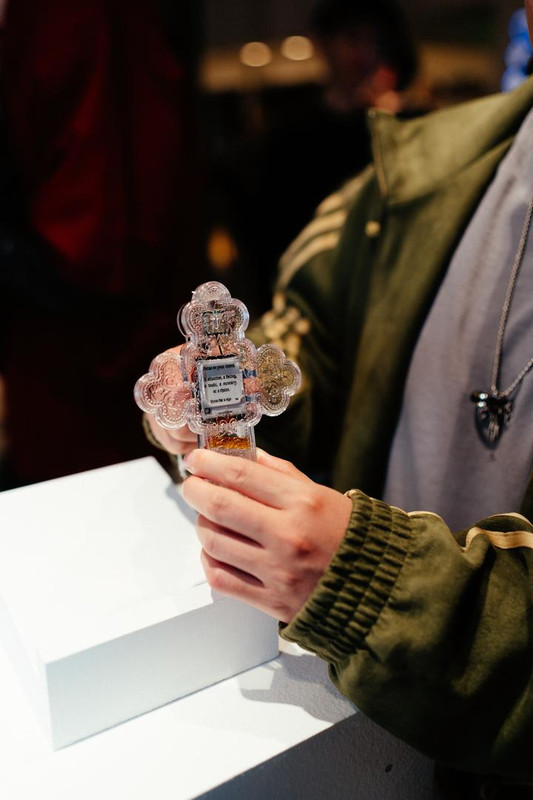
I'm an artist and designer from Ukraine, focusing on combining seemingly unrelated concepts into captivating objects and visuals, while navigating the personal and the present.
A handmade electronic that blends symbolism, art, and technology.
Born out of curiosity for faith in a digital age, the device is meant to be held, questioned, and treasured. Includes two interactive game modes: get a sign, and pilgrimage mode (location based) with over 100 unique images and thousands of locations.
fountain-to-be/rain: a poetry machine
9, 煦 or Susie Zhu is a practitioner of fragility, a fond listener for the contemporary infra-ordinary and an interdisciplinary multimedia artist-poet who writes with language, sound, rematerialized technology, obscurity, and ephemeral matters. Her "poems" often manifest as time-based and interactive works, including but not limited to: artist's book, performance, installation, film, sound, website, vulnerable interface, public and private ritual. She received her dual Bachelor degrees at Brown University (BA Literary Arts Hons.) and RISD (BFA Printmaking Hons.) and dual MFA degrees in Creative Writing and Art+Technology with the concentration in Integrated Media at CalArts as a Truman Capote Literary Fellow. She runs butter*rabbit *press and is the author of 9 books of poetry/artist's books.
In collaboration with creative technologist JJ.
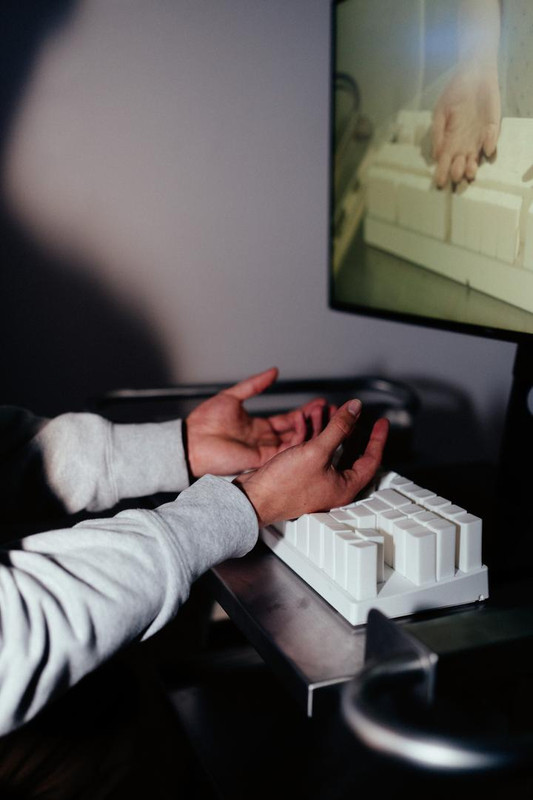
What if language is innately language inside language's shell. Between present and presence. Ever more so now in a lossy time lost in DAC (digital-analog conversion.) The contemporary myth of smoothness and immediacy also rules language—further removed replaced by the code of language.
"fountain-to-be/rain" is an altar, a keyboard system reimagined with the input/output of language flipped around and a "small language model" that writes/listens in the poetic words of 9's: instead of typing downwards, one has to flip their palms upwards and type into the air or void on the their imagined/remembered position of the invisible keys. Much slower and gentler. Almost caressing or praying for language to fall into them, like rain. All letters input first undergo a conversion system with candidates for selection reminiscent of that of a non-roman origin language (i.e. one that utilizes ideographs other than letters.) All suggested candidates being words or phrases sourced from the artist-poet's hybrid poetry project Obituaries/Lost and Found (2026), the piece is also an ongoing poem collectively composed by all who interacts with it.
Available for purchase
$6,000-$9,000
Unique edition, including the physical keyboard object and access to the TouchDesigner project files.
Chromebook Studies #9: On Psychosis
Will Rinkoff makes live electronic music, software, and audio/visual work in Los Angeles.
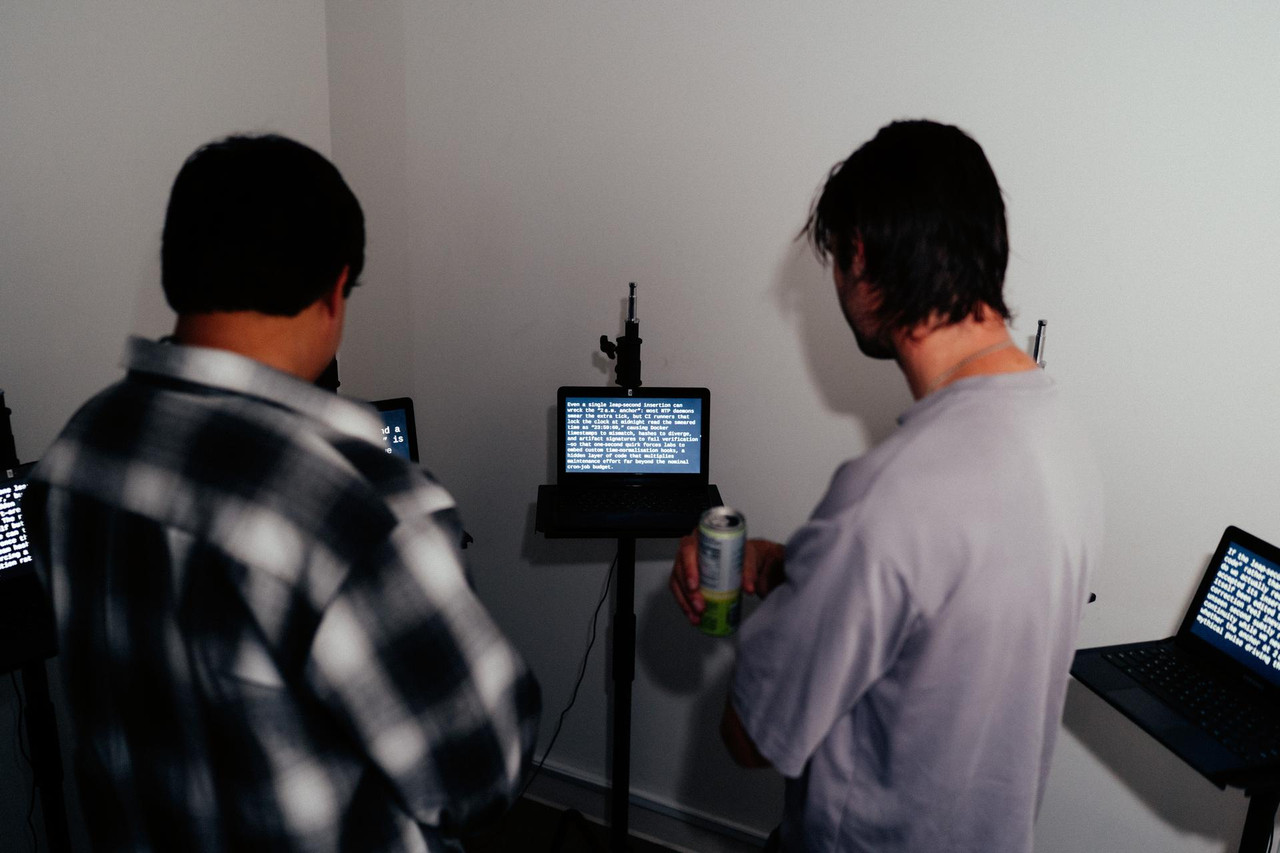
Piece for 8 chromebooks, discussing god knows what. Please don't push their buttons, not this time.
Agentic orchestration and LLM psychosis are closely related. Both involve tremendous amounts of context. What distinguishes them is how much of that context a person has to engage with. Psychosis is feeling you understand something the world doesn't. Here, you can overhear some approximation of that psycho-context form. The language is mostly coherent. Individual concepts usually make sense. But the through-line between them is a new kind of alien.
Available for purchase
$2,000