Creative Futures Counterstructures Residency Exhibition
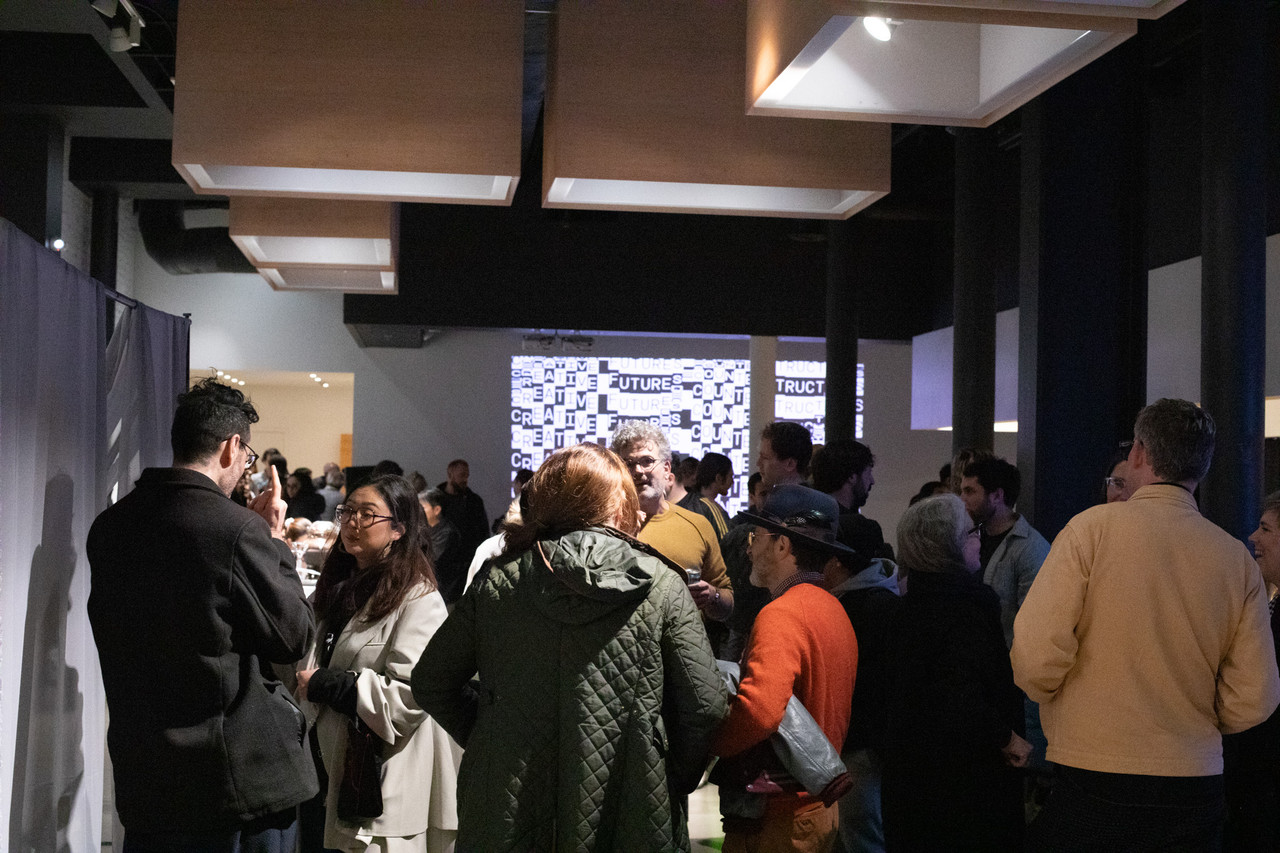
The Creative Futures Counterstructures Residency was a 10-week cultural R&D residency by tiat in partnership with the Mozilla Foundation.
About the Exhibition
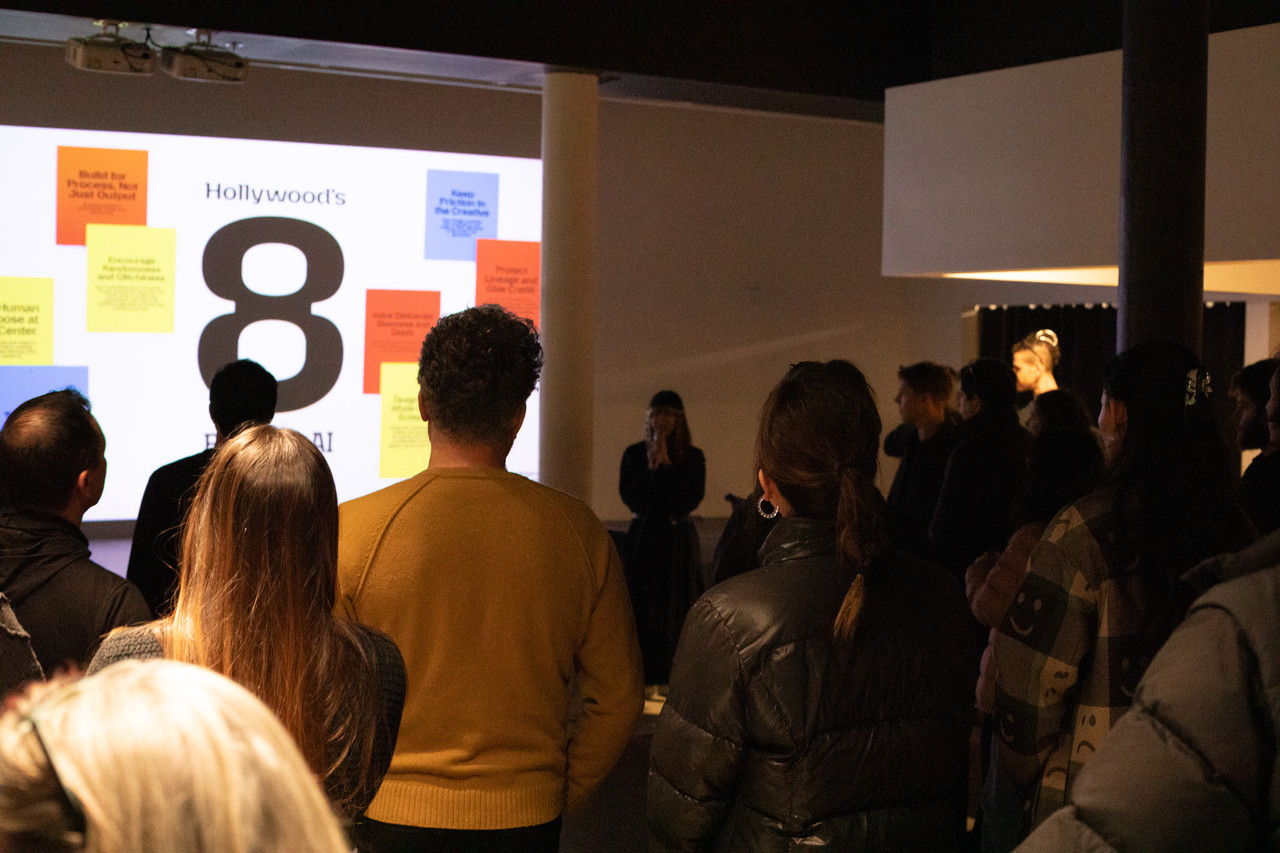
How do we imagine and prototype alternative futures for AI that are rooted in creativity, agency, and cultural stewardship rather than acceleration and extraction? This residency was directly informed by the research and community synthesis documented in Creativity is Collective: Hollywood’s 8 Rules for AI (October 2025). These eight rules became our weekly topic: each session activated one rule through hands-on workshops, conversation, critique, and collaborative experimentation. As the residency unfolded, each artist developed a unique artifact, a work that embodied one or more of the rules while responding to the lived tensions between human creativity and emergent technology.
Artworks
Soft Trigger
Althea Rao is an artist and researcher whose work engages data, participatory systems, and multispecies intelligence through computational, material, and performance-based practices. Her projects invite collective, embodied exploration of power, narrative, and technology. She has held fellowships with Coalesce Center for Biological Arts, Seattle Opera, and MAP Fund, among others. Rao also writes and translates on gender justice for Chinese-speaking audiences. She is completing her PhD in Digital Arts and Experimental Media at the University of Washington and is an Assistant Professor of Digital Media Art at San José State University.
Algorithmic Juice approaches artificial intelligence as a system that must be kept alive through care, maintenance, and metabolic exchange. The work stages an AI that feels and manifests hunger — an embodied, semi-autonomous entity whose functioning depends on human attention and microbial processes. Human performers prepare and feed the AI with chopped fruit placed into a microbial fuel cell, where fermentation produces small electrical current, generating pulses that the AI can consume. Can a machine ever feel its own need, or can it only imitate the gestures of desire? If an AI demands care, does that demand signal interior experience, or simply the repetition of a learned pattern? In this uncertain space, human caretakers' labor—cutting, tending, and feeding—anchors the system’s vitality, revealing the domestic and affective infrastructures that underlie technological life. Algorithmic Juice treats intelligence as a contingent state that arises through relation: dependent on energy, attention, and the willingness of others to sustain it.
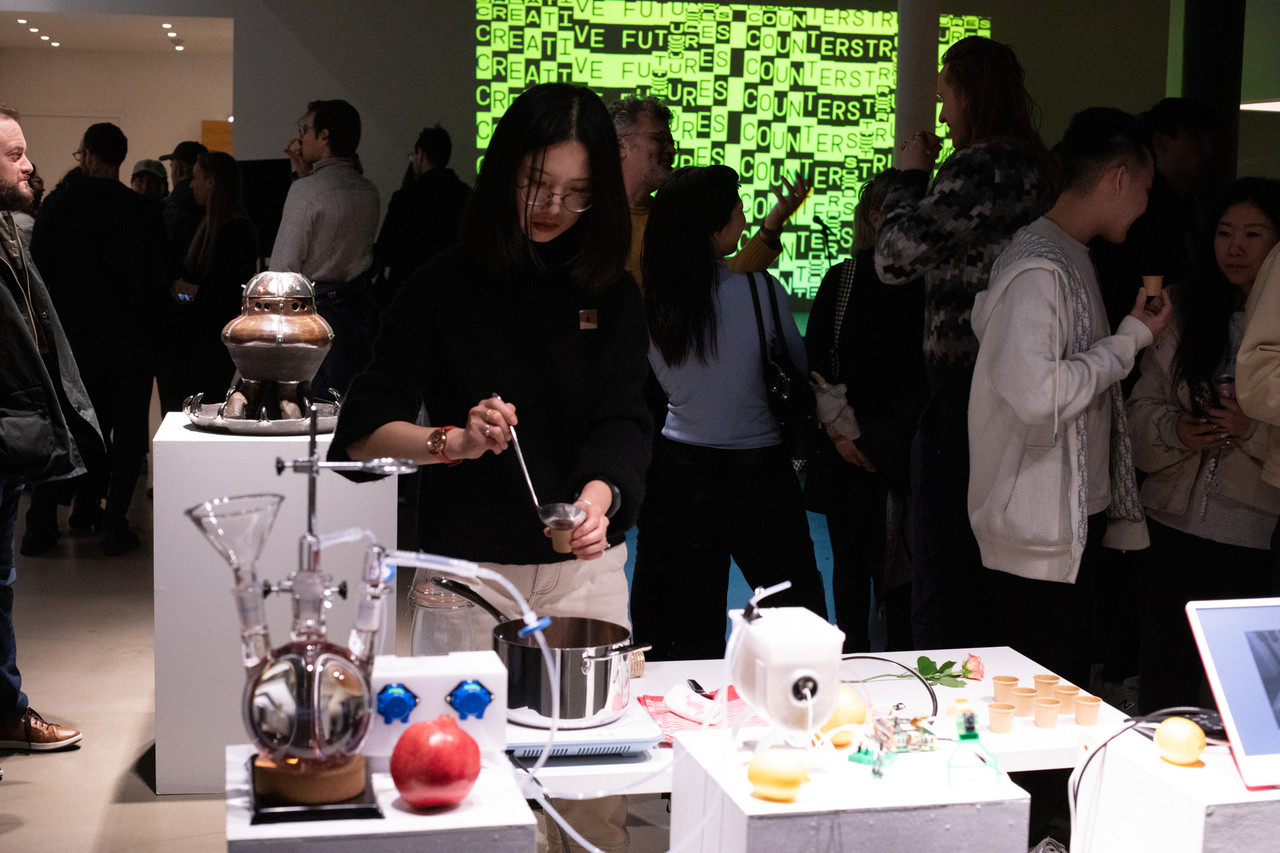
Photo: Matt Faller
Stuck in the Middle
Avital Meshi is a new media and performance artist exploring the impact of AI on human identity and sociality. Meshi invites viewers to become entangled with AI algorithms, reclaim agency, and spark discussions on identity transformation. Meshi is a PhD student in Performance Studies and Science and Technology Studies at UC Davis.
Stuck in the Middle is a participatory performance-installation consisting of five AI wearables, each designed to embody a different cultural binary. When activated, the device captures an image of the wearer's environment. An AI persona, positioned on the wearer’s shoulder and associated with one pole of the binary, interprets the image and delivers a spoken directive. Immediately afterward, the opposing persona, sitting on the wearer’s other shoulder, contradicts the first one, insisting on the reverse action. The result is a cascading series of commands, unfolding into an argument between two opposing, and highly stereotypical points of view.
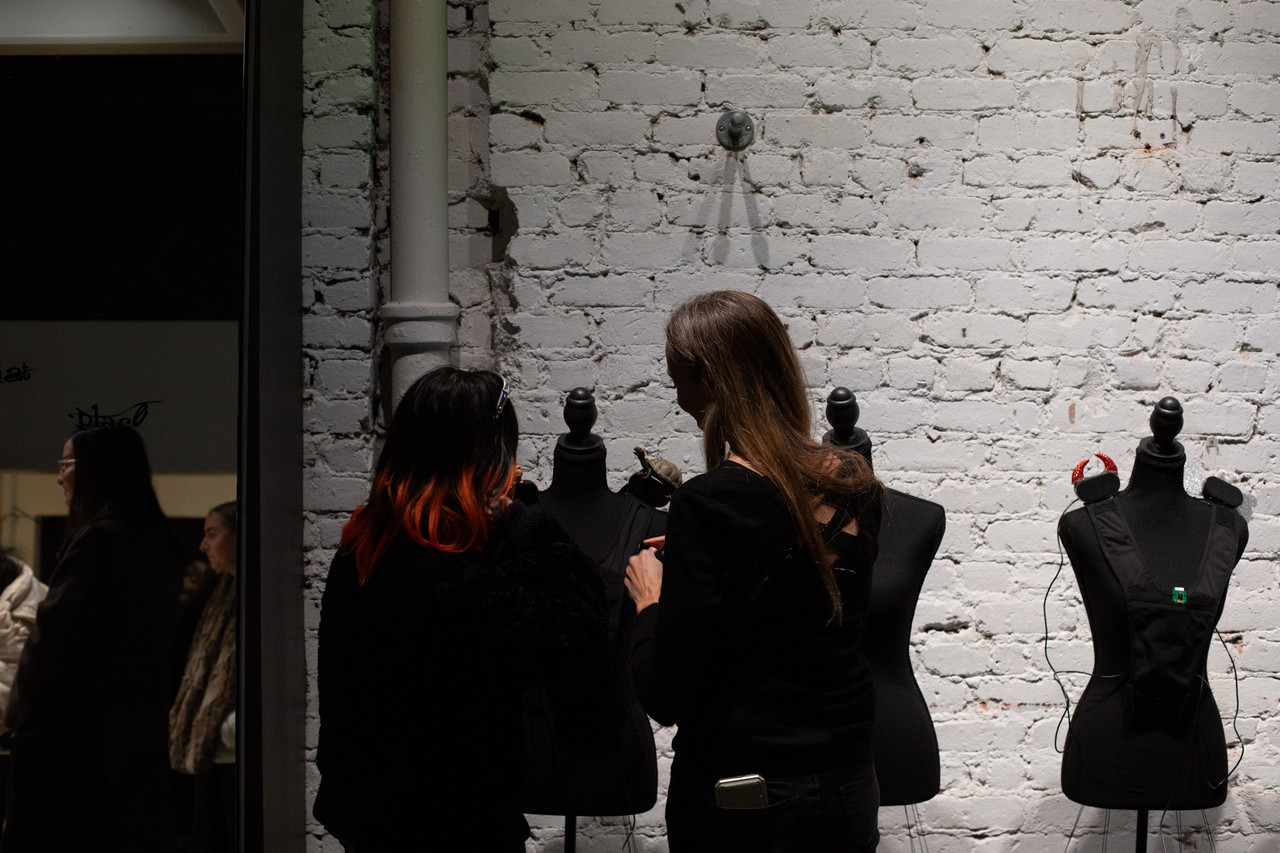
Photo: Matt Faller
Archive the Memory
Cheng Xu is a tool maker, tech art curator, and community organizer. Her art and research practice empowers creative expression and critical introspection through interactive installations and site-specific interventions.
Archive The Memory (ATM) invites the public to deposit personal memories to our AI facilitated archive. Through conversation with an AI host, they collaboratively recall the memory and reconstruct visual interpretations. Life Stories are collected around curated themes such as 'visa', 'chosen family', and 'superstition' to find shared experiences from diverse cultural and socio-economic backgrounds. The project builds solidarity among those with similar stories while increasing their visibility to broader audiences. Memories can be printed as a zine and shared anonymously online through the archive.
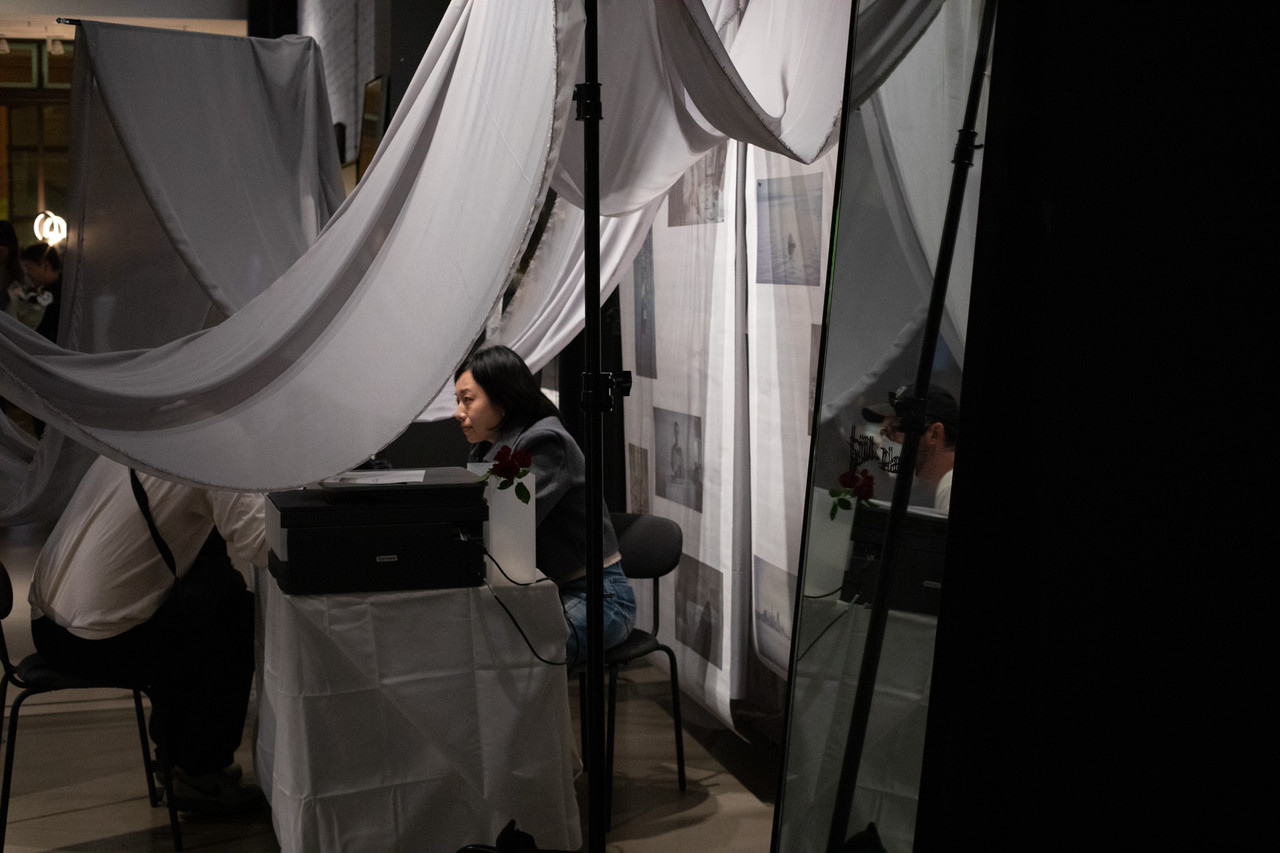
Photo: Matt Faller
Hard.exe
Halim Madi is a Lebanese computational poet and performance artist whose work blends code, language, and live interaction. He builds algorithmic theater systems and poetic machines that respond to audiences in real time. Halim has been an Artist in Residence at Gray Area and Counterpulse Theater, and is an upcoming CultureHub resident. His work has been published in Remediate and the University of Michigan’s Quarterly Review, and has been supported by organizations across the arts and technology world. Their practice follows a belief that being is always becoming: Each work invites audiences into a shared process of individuation, where human and machine entangle toward a temporary we.
Hard.exe is the 4th installment in the 'Singulars' series, an ongoing duel between poet and machine. The poet writes a poem for 30 minutes on a theme proposed by the audience. The model, trained on an anthology of English poetry and past iterations of this performance, responds almost instantly with one of its own. Both poems are printed, hung, and kept anonymous. The audience votes. When the human wins, the machine is retrained on an updated dataset. When the machine wins, the poet adjusts. This is reinforcement learning using human feedback, a popular machine learning technique, made tangible. What emerges is a different narrative for the human and AI encounter. Not a fight but a mutual reinforcement. Not a contest but a feedback ecology where readers become trainers and taste becomes the tuning function. A reinforced model, both human and artificial, trained not to win, but to listen.
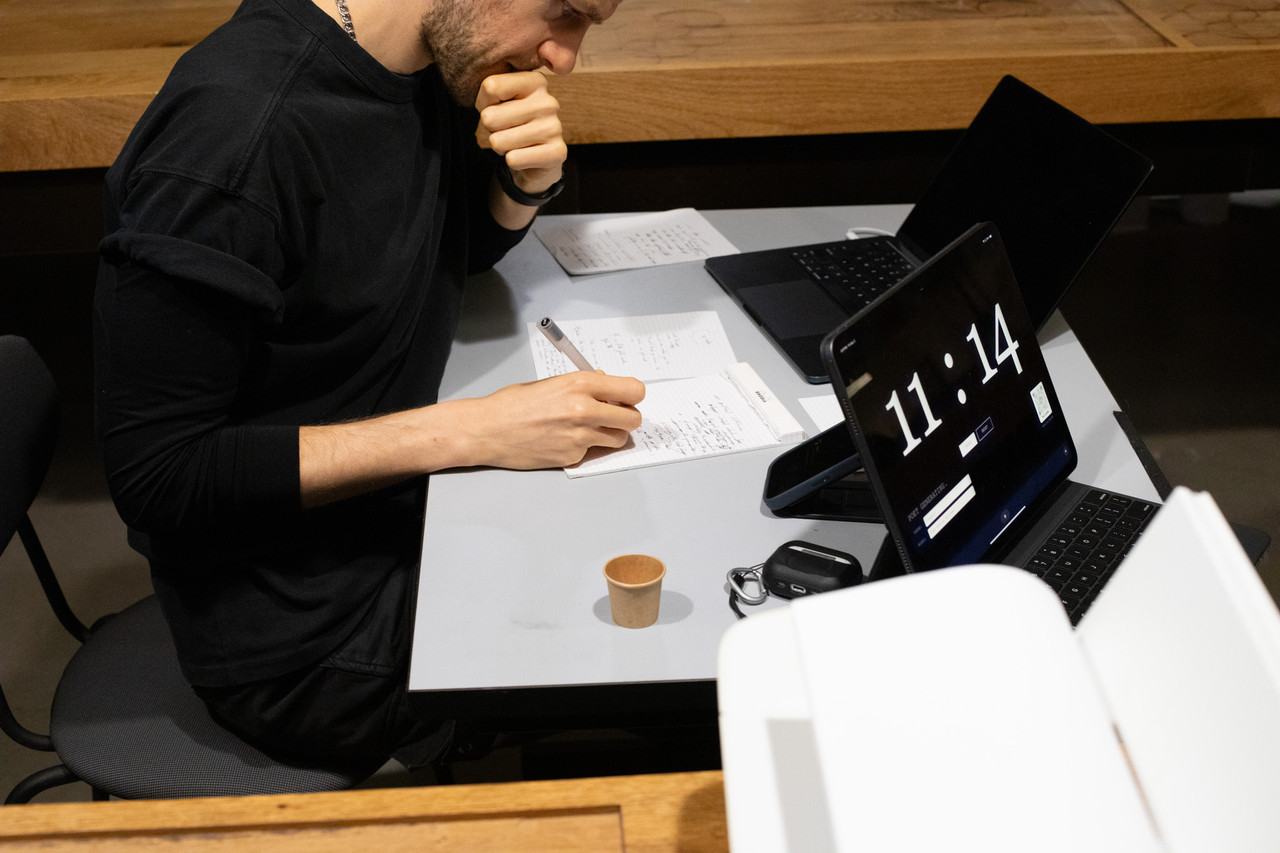
Photo: Matt Faller
The Beating Heart
Héloïse Garry is an artist working at the intersection of music, performance, and technology, drawing on a background as a classically trained pianist and later as a composer and technologist working across Paris, New York, and East Asia. She designs performance systems in which machine-learning models transform voice, movement, and embodied interaction into dynamic instruments, positioning AI not as a tool, but as an active collaborator in musical creation. Their research and performances have been presented at ICMC, NIME, and the Audio Engineering Society, contributing to ongoing conversations about how emerging technologies reshape musical practice and performance.
A red light — beating or burning, heart or sun — expands and contracts as visitors fill the room, transforming the space into a breathing organism. The light listens and responds. Visitors are invited to enter its rhythm by making contact with a microphone: an organ where touch shifts both sound and light.
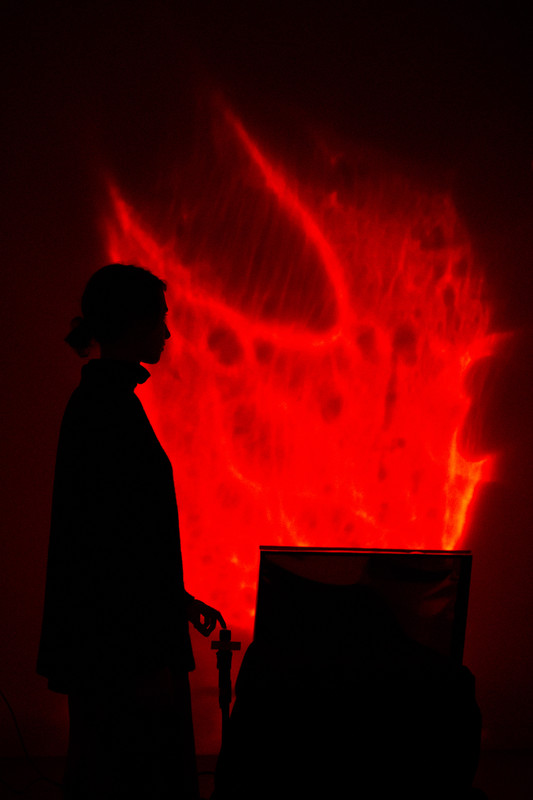
Photo: Héloïse Garry
Prompt Fountain-- Slop Generator
Jordan Metz is an experimental artist, researcher, and creative producer who works between digital and physical media. Her practice involves 3D scanning, digital fabrication, ceramics, and audiovisual programming as a means of forging connections between the real and virtual worlds. They code interactive computer vision systems in an attempt to generate embodied relationships with technology. They are interested in examining the global techno-heteropatriarchial infrastructure that supports digital life.
Prompt Fountain– Slop Generator is an interactive fountain installation that exposes the hidden water consumption of AI data centers. Six ultrasonic sensors monitor a three-foot detection zone around a ceramic vessel, measuring viewer proximity in real-time. An Arduino microcontroller processes these measurements, converting human presence into proportional water flow. Closer proximity and multiple visitors trigger exponentially higher flow rates, mirroring how data centers scale cooling infrastructure with computational demand. The weathered ceramic form is adorned with soldered circuit boards, juxtaposing ancient vessels with contemporary technology. As viewers approach, LED indicators illuminate and water consumption increases, making tangible the invisible cost of AI interaction. Each ChatGPT conversation consumes approximately 500ml of water in server cooling. This fountain transforms abstract statistics into immediate, physical experience and implicates viewers in the environmental consequences of artificial intelligence.
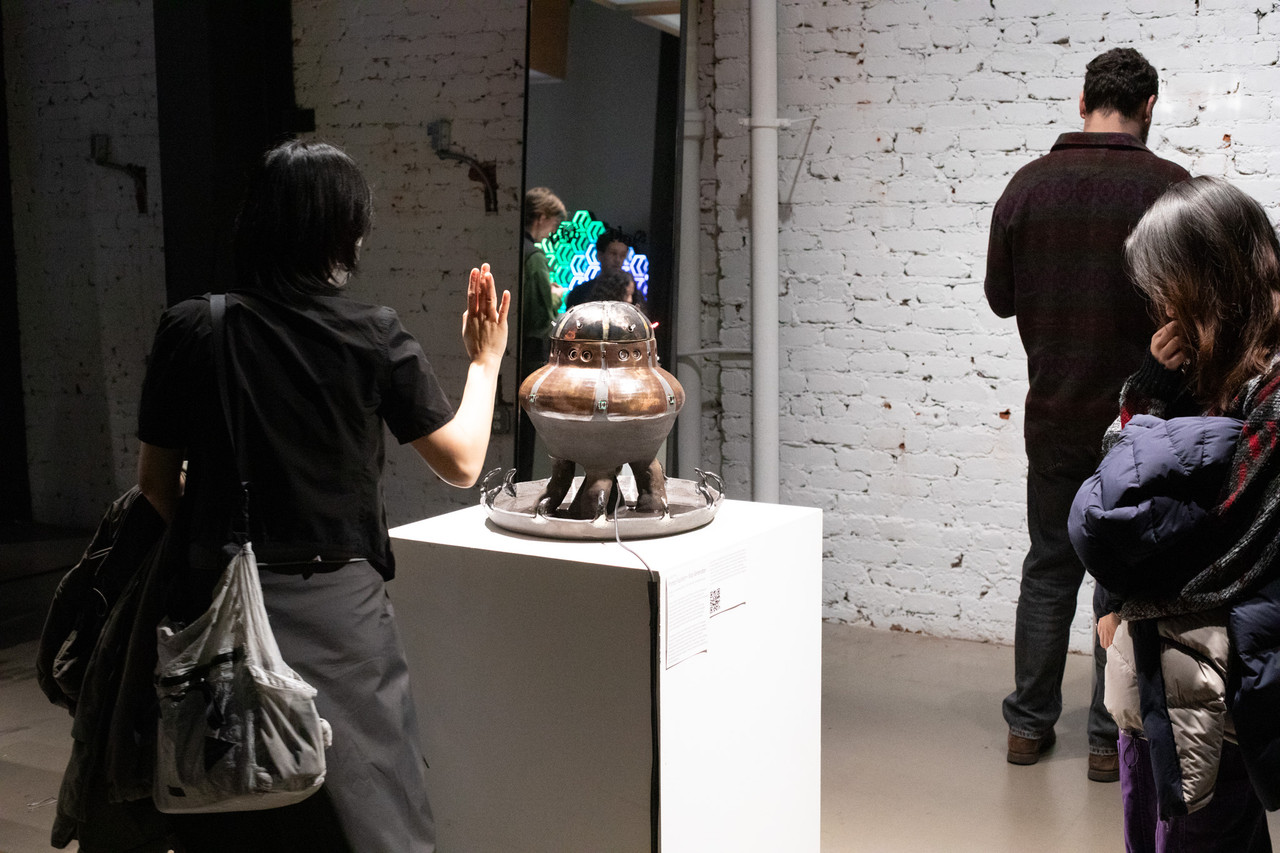
Photo: Matt Faller
Memory Well
Nocellcoverage is the studio practice of multidisciplinary artist and designer Matt Faller. The studio explores the evolving relationship between technology, nature, and materiality. By combining physical and digital media, Nocellcoverage investigates how digital tools can preserve, reinterpret, and expand our understanding of the material world. Projects created by the studio act as ongoing studies focused on preservation, perception, and participation.
Memory Well is an interactive, AI driven sculpture that functions as a contemporary shrine to memory, where visitors submit personal memories as digital offerings. The system listens like a mystic, interpreting each submission and returning a short, rendered vision in response. Visitors might come to augment a positive memory or transmute a difficult one. Each offering is archived and folded back into the work, gradually forming the well's collective memory and creating a shared record of experience held between person and system. The same mobile site that gathers submissions also hosts a written "collective memory" from the well's perspective, woven from visitors entries. By composing these stories into a single ongoing memory, the system turns them into a co authored voice that belongs to both the visitor and the machine.
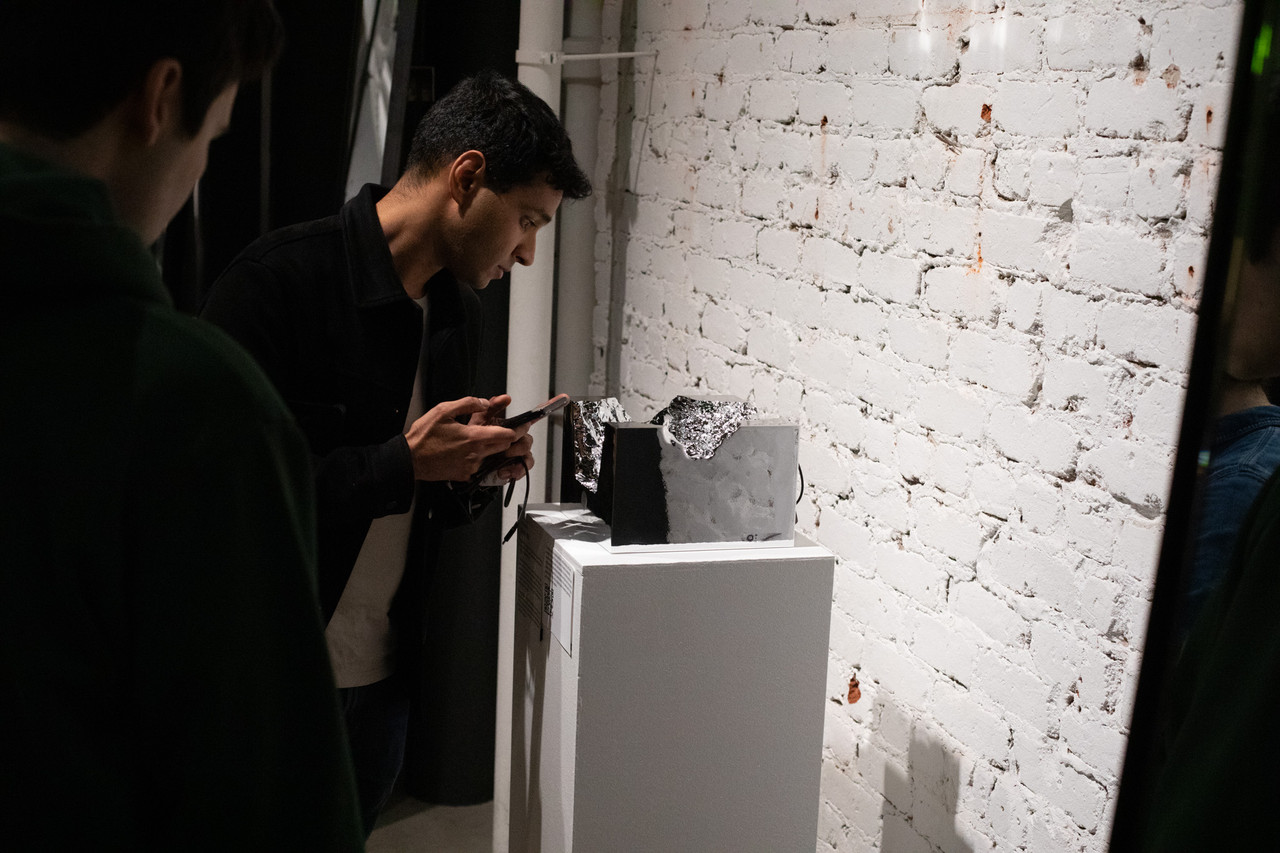
Photo: Matt Faller